Remodeling is rebounding and it's about time.
Just as the sales-driven housing recovery is bringing home the equity bacon for many underwater homeowners, home improvements can further boost home values and help sustain both the housing recovery and economic growth.
Spending on home improvements increased 9 percent in 2012, the first increase since 2007, according to the Joint Center for Housing (JCH) Studies at Harvard University.
When housing crashed in the late 2000s, so did the home improvement sector, leaving in its wake some 2.4 million so-called "inadequate homes."
These properties were likely converted to rentals or nonresidential use, became vacant or were permanently erased from the housing inventory, JCH says.
"With the US economy and housing market now recovering, investment in the nation's housing inventory is also picking up. Lenders and new owners are rehabilitating millions of foreclosed properties. Older homeowners are retrofitting their homes to accommodate their future needs... And with the huge echo-boom population moving into the home buying market over the coming decade, the remodeling industry can look to an even more promising future," the JCH report found.
The National Association of the Remodeling Industry (NARI) says property owners are feeling more secure about their economic future, according to its fourth quarter 2012 Remodeling Business Pulse Data.
Many property owners are using home improvements to increase their home's value, improve salability and enhance their investment in their home, but others are catching up on deferred maintenance, repairs and upgrades.
"Remodelers are indicating major growth in the future, with many saying that clients are feeling more stable in their financial future and their employment situations; therefore, they are spending more freely on remodeling needs,” says Tom O'Grady, chairman of NARI's Strategic Planning & Research Committee.
Among industry growth indicators NARI's membership found from the third quarter 2012 to the fourth quarter 2012, current business conditions were up 2.1 percent; customer inquiries up 3.9 percent; requests for bids up 3.7 percent; conversion of bids to jobs, up 3.5 percent and value of jobs completed up 4.3 percent.
In many cases, homeowners are remodeling instead of moving. That's especially true among homeowners with mortgages that are larger than the value of their home, even with a recovery underway.
These homeowners couldn't sell for a profit and rather than taking a loss, are hunkering
Showing posts with label Capital Improvements. Show all posts
Showing posts with label Capital Improvements. Show all posts
Tuesday, February 5, 2013
Tuesday, January 15, 2013
Sunday, January 13, 2013
FIRST TIME BUYER: Buying A Fixer-Upper Home For Your First Home
For many people who have been sitting on the fence waiting and wondering if the housing market is rebounding, the signs are showing an improved chance to get into real estate while prices and loan rates are still low.
Why a fixer-upper? In some areas, the housing market is very low on inventory, especially new and/or homes in top shape. Foreclosures and short sales, though, can offer better prices if you can deal with the home's maintenance needs.However, many of the homes on the market need some work and some need a lot of care. How do you know what to look for in a fixer-upper? If you're a first-time home buyer, purchasing a fixer-upper can be a good option because the price will be lower. But fixer-upper homes come with flaws and some can be huge.
Many first-time home buyers don't take into consideration the extra expenses needed to maintain a home. They carefully calculate the mortgage, downpayment, homeowners' association dues, property taxes, and other hard costs but they neglect to factor in the everyday repairs and maintenance for the property. Things like a new water heater, stove, microwave, central heating/air conditioning systems, washer/dryer and dishwasher repairs and even plumbing and roof repairs. These items might be new or relatively new when you move in but, in the not-too-distant future, they'll need repairing or replacing. When they do, the added costs can put a strain on homeowners' monthly budget.
With this in mind, buying a fixer-upper for your first home can be a great way to get into the real estate market at a good price. However, it's essential that you completely understand the home's necessary repairs before you buy. Things to consider include how much you'll save by buying a fixer-upper versus what you'll need to spend to make it livable, how old the home is,
Monday, December 3, 2012
REMODELING: Bathroom Remodels Add Value
Homeowners looking to add value to their home should start in one of the most central rooms of the home -- the bathroom.
HouseLogic, supported by the National Association of Realtors (NAR), reports that the top bathroom trends can even be real money savers.According to C.P. Hart, one of the UK's leading contemporary bathroom retailers and suppliers of bespoke bathrooms since 1937, a great bathroom can add real value to your property.
First, take note of energy conservation. Low-flow toilets can use a fraction of the amount of water of standard versions. Low-flow shower heads and faucets can also conserve water, a prime consideration for homeowners all across the drought-ridden Midwest and beyond.
The next trend will tug at the heart of every tech geek. HouseLogic reports it's all about technological advances. "You'll be able to create a custom showering experience more affordably than ever. For $300 for simple controllers to $3,500 or more for a complete luxury installation, programmable let you digitally set your preferred water temperature, volume, and even massage settings before you step in. To achieve a personalized showering experience, you'll need a 120-volt power source, and a thermostatic valve and controller in addition to your standard shower head or heads. Luxury models may include a steam system, a wi-fi source for music, multiple body spray outlets, tankless water heater, and a secondary controller to start the system from another room."
Take it a step further with docking stations for your iPod and integrated television screens in your mirrors!
C.P. Hart say it goes beyond saving energy and geeking out, however. Bathrooms can have focal points and finishes that can be real show stoppers. "Fittings and accessories should never be ignored when furnishing your washroom. A key piece, such as a basin, can really enliven the look and bring a touch of luxury to any space. Glass Design create bespoke washbowls that are a great example of cutting-edge design meets decadence. Each piece is uniquely designed, using materials that capture the soul of the product, adding a new lease of life to your abode."
Today's bathroom designs are about clean lines and organized beauty. Less is more, letting
Thursday, October 18, 2012
Sunday, October 14, 2012
HOME MAINTENANCE: Reduce the risk of tree damage to your home
(Money Magazine) -- Does the severe weather of the past several years have you looking up at your trees in fear? It's an understandable concern. A big storm could destroy the plants' majesty in a flash -- and send a quarter-ton branch crashing down onto your roof.

Still, before you preemptively chip a favorite tree into mulch, consider this: It may be contributing 8% to 10% to your home's value, according to Scott Cullen of the Council of Tree and Landscape Appraisers.
Here's how to keep your leafy assets from becoming a liability.
Schedule regular upkeep
Have your trees inspected every five years or so -- a free service offered by tree-care companies. An arborist will look for branches that are weak or hanging within 10 feet of a building, and send workers to remove them.
If necessary, they'll also buttress the tree against high winds by cabling limbs together. All this work costs about $200 to $400 a tree and is typically needed only once a decade.
In many cases the tree will more than cover the cost of its maintenance over a few years; a big shade tree will knock nearly $70 off annual air conditioning bills, says David Nowak of the U.S. Forest Service, and a large evergreen that blocks winter winds will reduce heating costs by around $60 a year.
Get removal right
When a tree becomes diseased or dangerously overgrown given its proximity to a house, your arborist will recommend taking it down.
Removing a substantial tree could cost $2,000 to $5,000, depending on its size and whether it is accessible by truck or requires climbing -- and what's underneath that the crew must protect.
You can have the stump ground down to just below grass or mulch height for $50 to $200
Monday, October 8, 2012
HOME IMPROVEMENT: Home remodeling projects that pay you back
Are you eager to renovate parts of your home but aren't sure which projects will actually add value to it? Before you start ripping out walls or buying expensive faucets, learn which remodeling projects can actually pay you back when you decide to sell.
Homeowners across the country are trying to increase the value of their homes through remodeling projects.
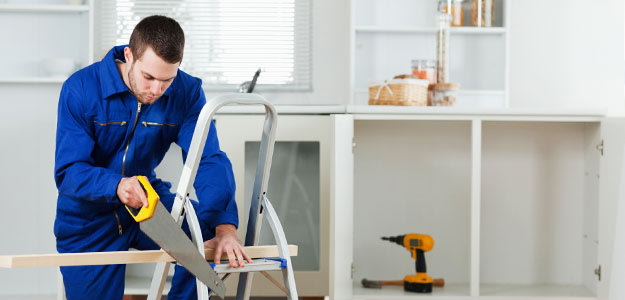
In fact, 30 percent of homeowners say their main reason for a home remodel was to increase the value of their home, according to an October 2011 national survey of homeowners and renters, commissioned by Hanley Wood LLC, a media and information company in the housing and construction arena.
But just what is a home renovation worth?
"Everything you do to improve your home can add some value," says Steve Melman, director of economic services for the National Association of Home Builders in Washington, D.C. But Melman adds an important caveat: "Paybacks for remodeling have been falling, just like the price of homes," so it's important to know which projects will give you the most bang for your buck.
Fortunately, there are certain remodeling projects that could pay off big down the road. Keep reading to learn more...
Remodeling Investment #1 - Replace Siding
One of the top remodeling projects for adding value to your home isn't anything too complicated or arduous. It's as simple as replacing the siding on the outside of your home.
Just like we dress for success on job interviews, your home needs to make a good first impression on potential buyers when they see it from the street. In the real estate world, this is called curb appeal.
In fact, if you replace your exterior siding with fiber-cement - a composite material made of sand, cement, and cellulose - your home could recoup 78 percent of the average nationwide cost of the project, $13,641, according to a 2011-2012 "Cost vs. Value Report" conducted by Remodeling magazine.
If you want to shell out a little less, try vinyl siding, which costs about $11,729 and has an average recoup percentage of 69.5. Foam-backed vinyl siding is also available for a similar recoup value, though it comes with a higher price tag of $14,274.
Seven of the top 10 projects in Remodeling's report are classified as siding, window, or door replacement. These projects cost less than $19,000 and boast an average cost-to-value ratio between 69 and 78 percent. Clearly, making a home's exterior look good can entice more potential buyers to see what else it has to offer.
Remodeling Investment #2 - Replace Old Windows
Want to make a great remodeling investment in your home and feel good about it?
Updating your windows could be the answer. Whether you select vinyl or wood windows to replace drafty old ones, you can recoup up to 69.1 percent of the project's cost on your home's resale value, according to Remodeling's "Cost vs. Value Report." Window replacement costs average from a low $11,000 to $19,000.
New windows do so much for the look of a home inside and out, and as Melman points out, they make cleaning a breeze (pun intended).
"I have a 90-year-old home with old windows," says Melman. "When you try to clean them, the ropes that lift them up usually break. It's a pain, and they aren't insulated like the new windows." If this scenario sounds all too familiar, you're not alone.
According to the Hanley Wood survey, "More than half of the nation's 76 million owner-occupied homes were built prior to 1970." That means there are a lot of old windows out there that need some serious TLC.
Remodeling Investment #3 - Install a New Roof
Frosting on a cake - it's what buyers see when they drive up to a home with a brand-spanking-new roof.
If missing roof tiles are making your home look like it's seen better days, it might be time to invest in something new and attractive that could pay back more than half of the construction costs.
An upscale new roof using standing-seam metal can be quite costly, demanding a $37,481
Friday, August 24, 2012
SELLING YOUR HOME: Home Improvements That Sell
In a mash-up survey of 450 real estate agents and 1,660 homeowners, homeowners get it - most of the time - when it comes to home improvements that help induce sales and higher prices.
Given today's home buyers are aware of soft market conditions that can put a drag on values, they want a home that's ready to appreciate and that's a home in the best shape possible.Realtor.com's home improvement survey, conducted online from June 6 to June 13, 2012, tapped agents and Realtor.com users who are homeowners planning to improve their home before putting it on the market.
Nearly 90 percent of real estate agents believe home improvements can help a home sell faster, and nearly 73 percent say home work can boost the price, provided the home improvements are the right home improvements.
Nearly three in four (71.4 percent) real estate agents say sellers too often underestimate the power of simple home improvements - repairs, painting and cosmetic upgrades.
Not so, say more than one in four (75.21 percent) of homeowners polled. They most certainly plan to repair broken household items before listing their home for sale.
Also, 65.9 percent of real estate agents said another common mistake among homeowners is not making "the right" home improvements for the local market. Like upgrades from home to home help pull up values overall.
Agents, 62 percent of them, also said too many homeowners make specialty improvements based on their own tastes rather than what might appeal to a buyer.
Recommended home improvements
The most common home improvements recommended by real estate agents included:
• The vast majority, 96.5 percent, of real estate professionals surveyed recommend sellers repair household items that are broken before putting a home on the market.
• More than half, 63.8 percent, of real estate agents recommend sellers make kitchen improvements.
• Most, 59.3 percent, of real estate professionals recommend sellers make bathroom improvements.
What sellers improve
Are sellers complying with real estate agents' recommended home improvements? Again, for the most part, yes.
The most common improvements made by home sellers:
• A majority, 75.21 percent, of sellers planning renovations will repair broken household items before selling their home.
• Most, 53.43 percent, of owners plan to add new flooring before selling their home.

Tuesday, May 1, 2012
HOME IMPROVEMENTS: HomeGain 2012 National Home Improvement Survey Results

HomeGain.com announced today that it has released the results of its
nationwide home improvement and home staging survey. Past findings from
the survey have been a guide for thousands of home sellers in preparing
their homes for sale.
HomeGain recently surveyed nearly 500 real estate agents nationwide to determine the top 10 low cost*, do-it-yourself home improvements for people getting their home ready to sell.
The
top five nationwide home improvements that real estate professionals
recommend to home sellers, based on average cost and return on
investment (ROI) to sellers, are:

Costs are averages and rounded up.

Cleaning and de-cluttering continues to rank as the top suggested home improvement
(since the survey was originally conducted in 2003). This low cost home
improvement is recommended by 99% of real estate professionals. The
average recommended cost for this project is $402 with a returning value
of just over $2,000 to the home’s sale price, or a 403% return (ROI).
In
past surveys, Home Staging and Lightening and Brightening were battling
it out for the number two spot on the top 10 list. In the 2011 survey,
Lightening and Brightening reclaimed the number two position and held
on to it in 2012. Home Staging, however, fell to the number five
position.
The options to landscape the yard and repair electrical and/or plumbing stay in the top five, both jumping past Home Staging.

“In a buyer’s market, sellers need to dress their homes for success before putting them on the market,” said Louis Cammarosano,
General Manager at HomeGain. “The HomeGain results show that
do-it-yourself home improvements like cleaning and de-cluttering and
lightening and brightening your home are cost effective ways of
increasing your chances of selling faster and closing closer to the
asking price than homes rushed to the market with no improvements.”
Rounding out the top 10 DIY home improvements are:

The
home improvements with the highest price increases to a home’s resale
value continues to be Updating the Kitchen and Bathroom ($3,255 price
increase), followed by Repairing Electrical & Plumbing ($3,175 price
increase) and Painting the Exterior of the Home ($2,176 price
increase).

Surveyed REALTOR® commentary:
“Clients just need to clean and de-clutter.”
“We’ve had a few high-end homes staged and it didn’t do any good. Most likely because they were overpriced to begin with!”
“Resort
area in Colorado. Most homes are well kept but even the nicest homes
need focused attention when it comes to preparing to sell.”
“What
I recommend a seller do will depend on their home. Power washing is
commonly needed, and sometimes repairing cracked concrete
walkways/patios/stoops. These items I wouldn’t consider to be
improvements, but maintenance
Wednesday, April 25, 2012
REMODELING: Economy Sparks Remodeling: How To Ensure A Successful Project
Springtime generates a lot of home improvement activity. Many buyers are out shopping for their new home. With the purchase of their home, the desire to remodel often comes next. For others, the drastically fluctuating housing prices are causing homeowners to stay put and that’s causing them to want to remodel their existing footprint.
Some of the most popular remodeling projects have to do with creating homes that are livable for all ages. The National Association of Home Builders says, in 2010, that 62 percent of surveyed builders were working on “aging in place” modifications.Whether it’s a room addition or the renovation of a kitchen to upgrade amenities and make the space feel more comfortable to suit your needs, precautionary steps to get the most out of your remodeling project will create the best outcome.
That means granny flats or in-law apartments (extra rooms with kitchenettes) are becoming staples in homes. As baby boomers ease into their golden years this type of remodeling project will continue to grow. Entry-level bedrooms are also popular additions due to the ease of access for the elderly.
Some remodeling companies are now requiring their staff to become Certified Aging in Place specialists so they can offer expertise in designing and modifying buildings and homes for the elderly. Another hot trend is using outdoor living space to expand the home’s square footage. What’s hot in outside remodels? It may be expensive but natural stone is all the rage. Gourmet grilling kitchens, fireplaces, flat screen TVs with surround sound and big comfy couches turn the backyard into a cozy space to relax and entertain.
But regardless of which type of remodel you’re planning to do, finding the right contractor for the job is vital and that can be a difficult task.
The National Homebuilders Association offers some tips for homeowners to help them navigate the process. Here are some important precautionary measures to take before your hire a remodeler.
Check with NAHB.org to find a remodeler who is a member of the National Association of Homebuilders. You can also check with the Better Business Bureau at BBB.org to look up the company’s rating. Of course, family and friends can also offer referrals but checking with professional associations can help provide background information that a friend might not be able to.
Another great way to find a remodeler is to scope out the companies who are working in the
Sunday, April 22, 2012
MARKET TRENDS: Builders' Costs Rise While Homes and Condos Shrink
Most Canadian builders are targeting the move-up custom home market this year, but houses and condos are getting smaller.
Builders say the average size of a new single-detached house built in Canada this year will be about 1,900 square feet, and they think house sizes will shrink even further. That's down from the 2,000 square feet predicted in last year's annual Pulse survey of members by the Canadian Home Builders' Association.
British Columbia has the largest average house size at 2,200 square feet, while homes in Quebec, Saskatchewan and Manitoba average 1,500 square feet.
In the Greater Toronto Area, where there are more condominiums under construction than anywhere else in North America, the average new condo last year was 820 square feet, a reduction of 52 square feet from 2010, and 100 square feet smaller than six years ago. That represents an entire 10X10-foot room.
This year, builders across the country expect the average condo size to stay at around 800 square feet.
However, smaller houses don't mean lower prices. Two-thirds of builders predict that new home prices will rise this year.
The cost of serviced lots is the main concern of builders, with about one-third of those surveyed
Saturday, April 7, 2012
CAPITAL IMPROVEMENTS: Did You Sell Your Home After Making Improvements?
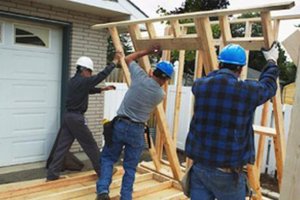
It’s no secret that finishing your basement will increase your home’s value. What you may not know is the money you spend on this type of so-called capital improvement could also help lower your tax bill when you sell your house.
Tax rules let you add capital improvement expenses to the cost basis of your home. Why is that a big deal? Because a higher cost basis lowers the total profit—capital gain, in IRS-speak—you’re required to pay taxes on. The tax break doesn’t come into play for everyone.
A rule of thumb: A capital improvement increases your home’s value, while a non-eligible repair just returns something to its original condition. According to the IRS, capital improvements have to last for more than one year and add value to your home, prolong its life, or adapt it to new uses. Capital improvements can include everything from a new bathroom or deck to a new water heater or furnace. Page 9 of IRS Publication 523 has a list of eligible improvements. There are limitations. The improvements must still be evident when you sell. So if you put in wall-to-wall carpeting 10 years ago and then replaced it with hardwood floors five years ago, you can’t count the carpeting as a capital improvement.
Repairs, like painting your house or fixing sagging gutters, don’t count. The IRS describes repairs as things that are done to maintain a home’s good condition without adding value or prolonging its life. There can be a fine line between a capital improvement and a repair, says Erik Lammert, tax research specialist at the National Association of Tax Professionals. For instance, if you replace a few shingles on your roof, it’s a repair. If you replace the entire roof, it’s a capital improvement. Same goes for windows. If you replace a broken window pane, repair. Put in a new window, capital improvement. One exception: If your home is damaged in a fire or natural disaster, everything you do to restore your home to its pre-loss condition counts as a capital improvement.
How capital improvements affect your gain To figure out how improvements affect your tax bill,
Thursday, March 29, 2012
NEIGHBORHOOD NEWS: Long-stalled lab building underway in Longwood

The developers of a long-stalled laboratory building in Boston’s Longwood Medical Area have resumed construction of the $300 million project, part of a burst of development activity in the region’s health care sector.
The complex, to be called Longwood Center, will be a multitiered glass building containing street-level shops and laboratory space at what is now a large vacant lot at Brookline and Longwood avenues.
Builders had stopped construction in the fall of 2008, when the economic downturn left them struggling to find tenants and financing. But health care and medical companies that guarded their cash during the downturn are again in expansion mode, with a range of projects moving forward in Boston and Cambridge.
Longwood Center, which will be on one acre adjacent to the Joslin Diabetes Center, is being developed by a joint venture of Newton-based National Development, Charles River Realty Investors, and Alexandria Real Estate Equities Inc. The companies are soon expected to name another partner.
Dana-Farber Cancer Institute, whose main clinical building is down the street from the Longwood Center site, has expressed interest in occupying the complex.
The project is one of several in the Longwood Medical Area. Brigham and Women’s Hospital is planning to move forward next year with a 360,000-square-foot clinical and laboratory building, and Massachusetts Eye and Ear Infirmary is building a treatment center on Huntington Avenue.
“We’re seeing a lot of activity not only in the Longwood Medical Area, but a lot of the universities’ institutions around the area as well,’’ said Peter Farnum, a senior managing director at the real estate firm Cassidy Turley FHO.
Boston Mayor Thomas M. Menino said in a statement Thursday that Longwood Center promises to create 400 new jobs.
“New research and development space is important to Boston’s strong and growing life sciences
Wednesday, March 21, 2012
REMODELING: How to get a better bid
(MONEY Magazine) -- Budgeting for a large remodeling project presents a bit of a chicken-and-egg problem: You won't have a feel for the cost until you get bids from contractors.
 But unless you give pros a ballpark figure from the start, they'll have to guess at what to include in their bids -- and they'll come back to you with a huge range of prices for very different plans."A faucet can cost $200 to $900, a window can be $400 to $1,200," says Madison contractor Mike Gasch. "I need to know where to aim."
 Albert Paxton, an estimator who provides such data to claims adjusters and contractors, pegs average per-square-foot costs of remodeling jobs at this:
With a less involved project -- in the kitchen, say, you might be refacing the cabinets and replacing the countertops and appliances instead of tearing out everything -- cut your number by about 30%, says Paxton.
Albert Paxton, an estimator who provides such data to claims adjusters and contractors, pegs average per-square-foot costs of remodeling jobs at this:
With a less involved project -- in the kitchen, say, you might be refacing the cabinets and replacing the countertops and appliances instead of tearing out everything -- cut your number by about 30%, says Paxton.
To solve this conundrum, do some calculations first.
1. Start with average costs |
When insurance companies need to pinpoint construction costs, they multiply the length by the width of the space and then multiply that by the project's typical cost per square foot.
- Kitchen: $174
- Powder room: $133
- Master bathroom: $160
- Family room: $92
2. Tweak to fit the scope
These numbers are for gut remodels, meaning the room is demolished right down to the framing and rebuilt.
9 remodeling tips to make your home feel bigger
For a cosmetic update, as in fresh paint on the cabinets plus new lighting and hardware, reduce it by about 60%.
3. Adjust for your location
A plumber working in Manhattan might charge twice the hourly rate of one in Statesboro, Ga.
Same goes for everyone from laborers to architects. In a metro area along the Northeast or Pacific seaboards, add 30% to 40% (use your judgment about your market). In a rural area, especially in the South or Midwest, drop it by 15% to 20%.
4. Modify for style
These figures assume you're buying mid-range fixtures and finishes. If you're going upscale, as in
Wednesday, February 29, 2012
SELLING YOUR HOME: Remodeling Improvements That Entice Buyers
Over the last few years, some homeowners have opted to stay put for the time being and that's caused them to consider remodeling instead of moving. But most homeowners know that one day they might need or want to sell their home so which remodels help to add value and entice buyers?
Here are a few of the renovations that are adding value to homes and creating appeal from home buyers.There are a few areas that are better than others to improve. It's pretty easy to understand why these home remodels are enticing buyers when you consider the way the housing market has been for the past several years.
Aging in Place
With the tough economic times, more short sales and foreclosures, extended families are combining homes and reducing their cost of living by residing together in one larger house. The National Association of Home Builders found that 62 percent of builders in a survey were working on home projects that were helping families "age in place". Included in these types of remodels are placing a bedroom on the entry-level of a home, wider doorways that would accommodate a wheelchair, and overall modifications for the elderly including reducing steps outside and inside.
At one time, these designs might have been unattractive but with many Americans wanting to "age in place" and extended families living together, remodels like these are becoming common, necessary, and valued.
Savvy Kitchen
The great rooms that bring the kitchen and the eating areas together are still popular. More space is preferred so families can have room to sit and spend time together over a meal even if that means having less space to actually prepare the food. Cabinets and shelving are being customized to suit the homeowners' needs and many are favoring pantries or utility rooms. Kitchens are taking on the look of a chef's cooking space with open shelving and islands to help homeowners be able to quickly prepare meals and still mingle with guests and family.
Totally Wired
Fast-placed, busy buyers who often work from home will find smart homes that are wired and built to handle all the high-technology needs a huge plus when it comes time to market and sell their homes. Another plus is having space-saving workstations in the home. Remodeled homes
Wednesday, February 8, 2012
HOME MAINTANENCE: Home repairs: Which jobs come first?
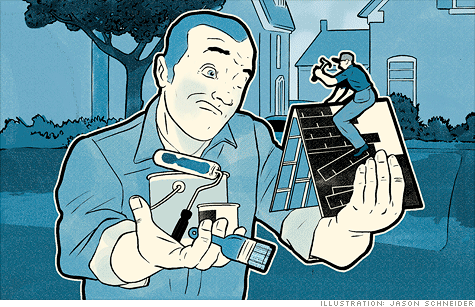
Should you get a paint job or a new furnace? "There's no homeowner's manual that tells you when to do what," says Naperville, Ill., home inspector and structural engineer Mark Waldman.
Emergencies aside, the project that could cause the most damage and expense if left unfixed is the priority. Below the order in which to tackle your biggest repair needs.
1. Electrical system
Danger signs: Circuit breakers that trip frequently, lights that dim when you turn on the vacuum or outlets that are loose, hot, or accept only two-prong plugs.
How to check: Spend $300 to $500 for a licensed electrician to open up your main panel to look for trouble and to tighten any loose connections. He'll also spot-check switches, outlets and light fixtures to ensure that the wiring is in safe working order.
Replacement cost: $4,000 to $10,000 to rewire the house.
Prolong its life: Flip every circuit breaker off and on again once a year to prevent corrosion. Add new circuits ($100 to $500 each) to take the heaviest electrical loads, like window air conditioners, off the old wires.
2. Basement
Structural problems downstairs mean shifting and cracking upstairs -- at the very least -- so there's little point in doing other repairs until you've fixed the building's foundation.
Danger signs: Bowed or split beams, rotted posts, piles of sawdust (evidence of wood-boring insects), tiny mud trails (indications of termites), or large cracks in the masonry foundation -- especially if the cracks are horizontal, which tends to indicate a bigger problem.
How to check: A contractor will usually take a look free of charge. If he recommends significant repairs, hire a home inspection engineer (find one at nabie.org) to investigate ($350 to $500).
Replacement cost: Major foundation work can cost $3,500 to $8,000; new posts or beams could run $1,200 to $2,500.
Prolong its life: Water is the cause of cracked concrete, rotten timbers and wood-eating pests. So keep your basement dry by making sure the landscape slopes away from the house and maintaining the next two items on the list: the roof and gutters.
3. Roof
Water leaking into your home from above can lead to a host of pricey problems: rot, insects, electrical shorts and mold.
Danger signs: Dampness or stains on ceilings; curling, missing, or broken shingles; smooth
Subscribe to:
Comments (Atom)