Showing posts with label Home Maintenance. Show all posts

Friday, March 22, 2013

INSURANCE: 7 Flood Insurance Myths


Much of what you know about federal flood insurance may be flood insurance myth.
Myth #1: Hurricanes, not floods, are the No. 1 natural disaster and cause the biggest economic losses in the United States.
Hurricanes grab the headlines, but because floods happen in virtually every part of the country, they cause more losses than any other type of natural disaster.
What causes floods?
  • Rising rivers
  • Storms
  • Early snowmelts
  • Manmade problems from the construction of roads, shopping malls, homes, and industrial complexes
  • Hurricanes

Myth #2: Everyone who lives in a flood zone has to buy flood insurance.

Nope. You must buy flood insurance only if you meet all three of these criteria:
  • You buy a home in a special flood hazard area where there’s a 1% chance of flooding in any year.
  • Your community participates in the National Flood Insurance Program.
  • You buy your home using a loan from a federally insured financial institution, or a Fannie Mae- or Freddie Mac-guaranteed loan.
If you don’t meet these three requirements, no one will make you buy flood insurance.

About 5.6 million home and small-business owners live in the more than 21,000 communities that participate in the flood insurance program, according to the Government Accountability Office.

Myth #3: Flood insurance is always expensive.

Flood insurance through the National Flood Insurance Program is sometimes expensive and sometimes cheap, depending on how much your home and its contents are worth.
  • It can cost up to $6,000 a year if you buy the highest possible coverage of $250,000 and live in a high-risk area.
  • It could cost $472 for $35,000 in damage coverage in a high-risk area.
  • It can cost as little as $129 a year for $20,000 of rebuilding coverage and $8,000 in contents in a low-risk area.
Premiums vary a lot based on where you live. If you want to buy $250,000 of building coverage and $100,000 of contents coverage, you’d pay about:
  • $6,000 in a high-risk coastal area
  • $2,700 in a high-risk inland area
  • $400 a year in a low-to-moderate-risk inland area.

Myth #4: Taxpayers are footing the bill for federal flood insurance.

The NFIP doesn’t spend any tax dollars. The government sets the premium rates high enough

Tuesday, February 5, 2013

HOME IMPROVEMENT: Home Improvement Growth Latches Onto Housing Recovery

Remodeling is rebounding and it's about time.

Just as the sales-driven housing recovery is bringing home the equity bacon for many underwater homeowners, home improvements can further boost home values and help sustain both the housing recovery and economic growth.

Spending on home improvements increased 9 percent in 2012, the first increase since 2007, according to the Joint Center for Housing (JCH) Studies at Harvard University.

When housing crashed in the late 2000s, so did the home improvement sector, leaving in its wake some 2.4 million so-called "inadequate homes."

These properties were likely converted to rentals or nonresidential use, became vacant or were permanently erased from the housing inventory, JCH says.

"With the US economy and housing market now recovering, investment in the nation's housing inventory is also picking up. Lenders and new owners are rehabilitating millions of foreclosed properties. Older homeowners are retrofitting their homes to accommodate their future needs... And with the huge echo-boom population moving into the home buying market over the coming decade, the remodeling industry can look to an even more promising future," the JCH report found.

The National Association of the Remodeling Industry (NARI) says property owners are feeling more secure about their economic future, according to its fourth quarter 2012 Remodeling Business Pulse Data.

Many property owners are using home improvements to increase their home's value, improve salability and enhance their investment in their home, but others are catching up on deferred maintenance, repairs and upgrades.

"Remodelers are indicating major growth in the future, with many saying that clients are feeling more stable in their financial future and their employment situations; therefore, they are spending more freely on remodeling needs,” says Tom O'Grady, chairman of NARI's Strategic Planning & Research Committee.

Among industry growth indicators NARI's membership found from the third quarter 2012 to the fourth quarter 2012, current business conditions were up 2.1 percent; customer inquiries up 3.9 percent; requests for bids up 3.7 percent; conversion of bids to jobs, up 3.5 percent and value of jobs completed up 4.3 percent.

In many cases, homeowners are remodeling instead of moving. That's especially true among homeowners with mortgages that are larger than the value of their home, even with a recovery underway.

These homeowners couldn't sell for a profit and rather than taking a loss, are hunkering

Thursday, December 20, 2012

ENERGY EFFICIENCY: Even higher heating bills in new forecast for winter

Figures exceed predictions made in October

Despite recent mild temperatures, colder days — and higher heating bills — are still on their way, according to a forecast released Tuesday by the federal government.

Heating oil consumers can expect to pay a record high average of $2,544 to warm their homes this winter, about $450 more than last year, according to an analysis by the Energy Information Administration.

Tuesday’s estimates were slightly higher than those released earlier in the season. In October, the agency predicted an average cost of $2,494 for the winter. Even a small increase, however, can have a significant effect in the Northeast, where 32 percent of households depend on oil heat, a considerably bigger proportion than elsewhere in the country.

Those who rely on natural gas — about 51 percent of Northeasterners — will pay an average of $1,031, close to $200 higher than last year. That estimate is about $20 higher than predicted in October, but overall prices have been falling as new sources of natural gas have become available in the ­United States.

Heating bills are expected to be that much higher because the government forecasts a more typical winter. Last year’s unusually warm weather kept thermostats lower, but this year the government expects consumption for heating oil and natural gas customers to increase by about 18 percent.

The rising cost of oil heat is of particular concern for low-income households that depend on federal fuel assistance to warm their homes. Applications are flooding in to the offices of Action for Boston Community Development Inc., an agency that administers heating aid in Boston and surrounding municipalities, said its president, John Drew. Last year, the group processed 18,000 applications; this year he expects to see as many as 24,000.

“We have an awful lot of people in need,” he said. “They’re more desperate than last year.”

And the aid they get may not be enough, he said. The maximum heating oil benefit this year will

Sunday, December 9, 2012

HOME MAINTENANCE: How to winter-proof your home

Winter can provide a much-needed respite from mowing and watering grass in sweltering summer temperatures and constantly swatting small, annoying insects. So now that the temperature is dropping, you might be planning to spend all of your free time on the sofa watching TV.

But don't pick up that remote just yet. There are six home improvement projects you really need to tackle in order to get ready for the winter. The good news? Unlike your grass - which requires constant mowing and watering - if you perform these winter projects now, you can relax on the sofa for years to come.

Must-Do Project #1: Replace Your Roof

Is your roof older than your college-age kids? If so, you may want to replace your roof now - while the weather isn't too harsh.
In fact, while you may have only minimal leaks or damage now, if you wait until the middle of winter, a severe snow or ice storm can exert enough pressure to cause the roof to collapse.
But how can you tell if your roof needs replacing?
Home improvement expert Jeanne Huber recommends replacing the roof if it's older than 20 years or if the majority of the roof has seen better days.

Huber, who writes a weekly home improvement column for The Washington Post, notes some early warning signs to observe:
  • Inside the house there may be water stains on the heater, damp areas around the fireplace, and dark spots on the ceiling; in addition, there may be peeling paint underneath the roof overhang.
  • Outside, look for buckled shingles, cracks in the caulk and rusted flashing, in addition to an accumulation of asphalt in the gutters. Also, the presence of moss may signal that the roof is decaying.
If Huber has just described your roof, it's time to consider replacing it.

Must-Do Project #2: Install Heated Floors

If you cringe at the thought of icy-cold feet during the winter, installing heated floors is a must-do project that will increase your comfort level and save on heating costs.
In fact, according to the National Association of Home Builder's (NAHB) article "LSC Members Provide Green Heating Choices for Energy-conscious Consumers," radiant floor heating

Tuesday, October 30, 2012

HOME MAINTENANCE: 12 steps to winterize your home


The leaves are turning, the mornings are getting chilly, and winter isn't too far away. It's time once again for my annual checklist of important things that I recommend you do to get your home ready for the coming change of seasons.
On the inside
__ Check smoke detectors: Change your smoke detector batteries, and check for proper operation. Also, check the date on the bottom of the smoke detector. Smoke detectors have a life span, and if yours is more than 10 years old, it may not work properly in a fire, so replace it with a new one. Also, make sure you have a smoke detector at each sleeping room, and one centrally located on each level of the home.
__ Install a carbon monoxide detector: If you have a furnace, fireplace, water heater, or other appliance that's fueled by propane or natural gas, or if you have an attached garage, install a carbon monoxide detector. They just plug in, and you can get them inexpensively from most home centers and other retailers. If your existing carbon monoxide detector is more than 5 years old, replace it with a new one.
___ Check gas appliances: Speaking of gas appliances, consider having your utility company or heating contractor inspect flues, fittings, and other components of your natural gas or propane appliance and heating systems for potential problems.
___ Change furnace filters: Always put in new furnace filters in the fall. It's a simple and inexpensive way to add to your home's efficiency and your family's comfort.
___ Check and seal heating ducts: Crawl a little, save a lot. Check the ducts in your attic, basement, and crawl space for gaps between ducts and fittings, and seal them with a quality metallic tape, not regular duct tape, which doesn't last. Also, check to be sure that all of the ducts are off the ground and adequately supported.
___ Check insulation levels: Increased insulation can make a huge difference in both your comfort and your heating bills, so don't put off having your insulation levels inspected. Call your local utility company or building department to learn what levels are optimum for your area. Check the attic, underfloor, kneewalls, skylight shafts and ductwork. Upgrade underinsulated areas as needed, either as a do-it-yourself project (home centers and hardware stores have all the supplies you need) or with the help of a licensed insulation contractor.
On the outside
___ Check the roof: A roof that leaks not only has the potential to cause significant structural damage, it also wets insulation, which causes a drop in the insulation's ability to resist heat loss. Examine roofing shingles and flashings, and repair or replace them as needed. It's much easier and safer to take care of these problems now than during winter's ice and rain.
___ Seal masonry surfaces: Apply a sealer to concrete driveways and walkways, brick patios and other exterior masonry. Masonry sealers prevent water from penetrating into cracks and crevices where it can freeze and cause serious damage. You can find sealers at home centers, paint stores and masonry supply retailers. Apply with a brush, roller or sprayer.
___ Check weatherstripping: Gaps around doors and windows waste expensive heated air and create chilling interior drafts. Check and replace or adjust weatherstripping and door sills to create an airtight seal. Everything you need can be found at home centers, hardware stores and many other retailers.
___ Handle yard chores: Many plants require pruning this time of year, and lawns should be

Monday, October 29, 2012

HOME HEATING: 10 essentials when buying, storing firewood


With rising fuel costs and wildfires in a lot of forested areas, whether you buy firewood or cut your own, you're almost sure to see an increase in the cost of the wood you burn this year. So whether that firewood is your primary source of heat or just cheery ambiance on a cold night, it pays to invest wisely and then protect your investment.
Buying firewood
If you buy firewood, there are a number of different sources where you can locate it. Many people turn to their local newspaper, Craigslist or maybe a community bulletin board. Other -- and sometimes more reliable -- sources of firewood include local tree-trimming services, fireplace shops, and retailers that sell and service chainsaws and related cutting equipment.
Firewood is sold by the cord, which is a stack of wood 4 feet high, 4 feet deep and 8 feet long (128 cubic feet). Firewood is obviously irregular in shape, so the stack also includes the air spaces between the pieces.
That's what a cord should look like in a perfect world. Ideally, the dealer you're buying the wood from will deliver it in a truck that makes verification of the load easy, such as a 4-by-8-foot truck bed, with wood stacked 4 feet high. That doesn't always happen, and you need to be careful when you see a truck roll up with wood tossed in the back: A sloping pile of firewood in a standard pickup truck may contain only 3/4 of a cord.
The other thing you'll be looking for when you buy your wood is whether it's dry, also sometimes called "seasoned," or whether it's "green." Dry firewood has been out in the air for a while since it was cut, allowing a significant amount of the wood's moisture to evaporate, typically down to a moisture content of around 20 percent or less. Green wood still has a lot of the moisture in it -- as much as 40 percent -- so when you burn it, the fire has to first evaporate that moisture. Therefore the wood burns cooler, and you get less heat energy per cord.
Visually inspect the wood that you buy. Dry wood feels light, has loose bark and darkened ends with clearly visible splits, and makes a very definite "thunking" noise when you hit two pieces together. Wet wood is just the opposite, and will sound dull and heavy when knocked together.
You'll typically pay a little more for dry wood, but it's worth the cost if you plan to burn it right away. If you're going to store the wood for burning next season, then you can save some money by buying green wood and letting it dry.
There are a couple of other ways to save some money when you buy your wood. If you have a truck or a trailer, you might be able to pick the wood up yourself at the dealer's lot and save delivery charges, and also verify your full cord at the same time. If you have wood delivered, there'll be an extra charge for stacking, so do that chore yourself if you can. Also, you can usually get firewood in full rounds, or pre-split. If you're ambitious, consider getting rounds -- they're cheaper, and you can get some great outdoor exercise by doing your own splitting.
Storing and seasoning the wood
Most people store a good portion of their wood supply outside where it can continue to dry and season, and keep a small portion nearby where it's accessible and ready for use.
Long-term storage areas should be located outside where wind and sun can help with the drying. However, to minimize danger in the event of a wildfire, and also to protect your home's siding in case the firewood contains any insects, the wood shouldn't be stacked directly against your house. Also, wood that's left out in the elements, even if it's dry, will reabsorb water from rain and snow, as well as from the ground. This will cause it to become too wet to burn efficiently, and eventually it will rot.
Ideally, consider creating an outdoor storage shed for your firewood, with a raised floor, a sloped roof for runoff, and open sides for easy access and unimpeded air circulation. Make it large enough to hold a year's worth of wood -- typically two to four cords, depending on your burning habits.
After the wood is dry, most people create a smaller storage area inside the house, such as in the garage or basement. Depending on your habits and the accessibility of your outside supply, the inside supply could be as small as two or three days' worth, or large enough to accommodate several weeks of wood.
Finally, create some storage right at the fireplace or wood stove. One very nice solution is a canvas carrying bag with enclosed ends and sides. The wood is stacked in the bag for carrying, then the bag hooks over a decorative metal frame near the fireplace for storage, containing the wood inside the bag to minimize the mess.
You might also consider a decorative metal tub or other container to hold one or two nights' worth of wood while keeping the dirt and chips contained. While not quite as neat, there are also a number of very attractive open metal storage racks offered by various manufacturers.
Any wood that you store inside needs to be far enough away from the fireplace that it can't combust. And most importantly, never store newspapers, kindling, pinecones or other easily combustible fire-starting materials next to your fireplace. They can and do start house fires!

Sunday, October 14, 2012

HOME MAINTENANCE: Reduce the risk of tree damage to your home

(Money Magazine) -- Does the severe weather of the past several years have you looking up at your trees in fear? It's an understandable concern. A big storm could destroy the plants' majesty in a flash -- and send a quarter-ton branch crashing down onto your roof.

Still, before you preemptively chip a favorite tree into mulch, consider this: It may be contributing 8% to 10% to your home's value, according to Scott Cullen of the Council of Tree and Landscape Appraisers.

Here's how to keep your leafy assets from becoming a liability.

Schedule regular upkeep
Have your trees inspected every five years or so -- a free service offered by tree-care companies. An arborist will look for branches that are weak or hanging within 10 feet of a building, and send workers to remove them.

If necessary, they'll also buttress the tree against high winds by cabling limbs together. All this work costs about $200 to $400 a tree and is typically needed only once a decade.

In many cases the tree will more than cover the cost of its maintenance over a few years; a big shade tree will knock nearly $70 off annual air conditioning bills, says David Nowak of the U.S. Forest Service, and a large evergreen that blocks winter winds will reduce heating costs by around $60 a year.

Get removal right
When a tree becomes diseased or dangerously overgrown given its proximity to a house, your arborist will recommend taking it down.

Removing a substantial tree could cost $2,000 to $5,000, depending on its size and whether it is accessible by truck or requires climbing -- and what's underneath that the crew must protect.

You can have the stump ground down to just below grass or mulch height for $50 to $200

Monday, October 8, 2012

HOME IMPROVEMENT: Home remodeling projects that pay you back


Are you eager to renovate parts of your home but aren't sure which projects will actually add value to it? Before you start ripping out walls or buying expensive faucets, learn which remodeling projects can actually pay you back when you decide to sell.
Homeowners across the country are trying to increase the value of their homes through remodeling projects.
In fact, 30 percent of homeowners say their main reason for a home remodel was to increase the value of their home, according to an October 2011 national survey of homeowners and renters, commissioned by Hanley Wood LLC, a media and information company in the housing and construction arena.
But just what is a home renovation worth?
"Everything you do to improve your home can add some value," says Steve Melman, director of economic services for the National Association of Home Builders in Washington, D.C. But Melman adds an important caveat: "Paybacks for remodeling have been falling, just like the price of homes," so it's important to know which projects will give you the most bang for your buck.
Fortunately, there are certain remodeling projects that could pay off big down the road. Keep reading to learn more...

Remodeling Investment #1 - Replace Siding

One of the top remodeling projects for adding value to your home isn't anything too complicated or arduous. It's as simple as replacing the siding on the outside of your home.
Just like we dress for success on job interviews, your home needs to make a good first impression on potential buyers when they see it from the street. In the real estate world, this is called curb appeal.
In fact, if you replace your exterior siding with fiber-cement - a composite material made of sand, cement, and cellulose - your home could recoup 78 percent of the average nationwide cost of the project, $13,641, according to a 2011-2012 "Cost vs. Value Report" conducted by Remodeling magazine.
If you want to shell out a little less, try vinyl siding, which costs about $11,729 and has an average recoup percentage of 69.5. Foam-backed vinyl siding is also available for a similar recoup value, though it comes with a higher price tag of $14,274.
Seven of the top 10 projects in Remodeling's report are classified as siding, window, or door replacement. These projects cost less than $19,000 and boast an average cost-to-value ratio between 69 and 78 percent. Clearly, making a home's exterior look good can entice more potential buyers to see what else it has to offer.

Remodeling Investment #2 - Replace Old Windows

Want to make a great remodeling investment in your home and feel good about it?
Updating your windows could be the answer. Whether you select vinyl or wood windows to replace drafty old ones, you can recoup up to 69.1 percent of the project's cost on your home's resale value, according to Remodeling's "Cost vs. Value Report." Window replacement costs average from a low $11,000 to $19,000.
New windows do so much for the look of a home inside and out, and as Melman points out, they make cleaning a breeze (pun intended).
"I have a 90-year-old home with old windows," says Melman. "When you try to clean them, the ropes that lift them up usually break. It's a pain, and they aren't insulated like the new windows." If this scenario sounds all too familiar, you're not alone.
According to the Hanley Wood survey, "More than half of the nation's 76 million owner-occupied homes were built prior to 1970." That means there are a lot of old windows out there that need some serious TLC.

Remodeling Investment #3 - Install a New Roof

Frosting on a cake - it's what buyers see when they drive up to a home with a brand-spanking-new roof.
If missing roof tiles are making your home look like it's seen better days, it might be time to invest in something new and attractive that could pay back more than half of the construction costs.
An upscale new roof using standing-seam metal can be quite costly, demanding a $37,481

Sunday, October 7, 2012

HOME MAINTENANCE: Five tips to help you avoid DIY disasters


Do-it-yourself (DIY) home improvement projects can be fun, empowering, and cost-effective. When everything goes right, that is. But when things go wrong, a DIY improvement can turn into a B-I-G disaster.
That's why it may sometimes be wiser to hire a professional contractor, says Marie Leonard, owner of her own home improvement business and author of the DIY book "Marie's Home Improvement Guide."
She encourages people to ask themselves if they have the skills, tools, and attitude to deal with their proposed project. "If you answer yes to all of them, go for it," Leonard says.
If you answer "no" to any of the above, Leonard suggests hiring someone else to get the job done.
Not sure where you fall on that scale? Read on for some tips that could help you avoid a DIY disaster and clues that it might be time to call in the pros.

Tip #1 - Make Safety Your First Priority

Quick: How do you know if a contractor is good? Answer: He's got all his fingers. Yes, home construction projects can be dangerous, which is why the best contractor might be considered the one who has the fewest disasters. So if you do want to go the DIY route, follow their lead and put safety first.
Here are a few safety tips from Leonard to get you started:
"Get goggles if you don't have them, and wear them as a matter of course," Leonard advises. "I keep a pair of safety goggles with my tools in a protective case because they get scratched easily."
Wearing goggles when sanding or sawing wood can keep particles from getting into your eyes

Saturday, October 6, 2012

HOME MAINTENANCE: 5 must-do tasks for fall maintenance


Fall is here. That means beautiful trees, pumpkins, and that unmistakable smell that signals the end of summer and the soon-to-be winter months. 

Fall also means getting your home ready for the onslaught of winter. For those that live in the extreme southern portions of the country, winter might not be much different than other months. For people in most states, winter means snow and freezing, and that can cause expensive problems if people don't take the time and effort to get prepared during the fall months.
 Here are five basic home maintenance tasks to complete before the first snowfall.

Clear gutters
Once the leaves fall, do a final cleaning of your gutters and downspouts. Clogged gutters makes runoff from snow freeze within the gutters. This is especially true for older gutter systems, and it may lead to the gutters separating from your roof. This not only causes damage to your gutters, but also to the underlying structure of the roof that holds the gutter. If you don't like cleaning out your gutters, invest in gutter guards.

Do an energy audit
Do you know where your heat and air conditioning is escaping? An energy audit is the way to find out. Although you can pay private contractors to perform the audit, your gas or electric company might send somebody to your home free of charge. Depending on the age of your home, sealing areas where the heat or air conditioning is escaping can result in substantial savings over time. Even the smallest leaks add up over time. You can also do this yourself by examining for cracks in doors and windows and looking for any areas where you can see daylight coming through. The audit will check other areas like electrical and cable outlets on outside walls.


Trim trees
Have your trees trimmed every few years to assure that accumulated ice doesn't cause a dead branch to fall on to your roof. Once the leaves fall and you can see the branches of your trees, look for any larger-sized branches that appear dead and would fall onto yours or your neighbor's roof. If you knew the limb was dead and it damaged a neighbor's home, your homeowners insurance may not cover the damages.

Test your home generator
If you live in an area with extreme weather or have medical or other essential devices that require electricity, investing in a home generator might be wise. If you have one, test it, along

Monday, August 20, 2012

DOWNSIZING: Why I Love My Minimalist Kitchen

Whether you’re moving into a smaller space, or just need to create more space in your kitchen, downsizing to a minimalist kitchen can make you happier.


A kitchen doesn't have to be big to be fabulous — just use some creative storage solutions. All images: Lara Edge for HouseLogic
You know that feeling you get after a major haircut? When your head feels 10 times lighter? That’s nothing compared to how you’ll feel when you downsize your kitchen to a minimalist kitchen. I’m still reveling in the feeling of light-headedness it gave me.

I won’t bore you with gritty details of why my husband and I had to leave our kitchen that was big enough to be its own apartment and had enough counter space to tease you into collecting every imaginable kitchen gadget.

The point is: I don’t miss that kitchen. I love, love my new minimalist kitchen.

Here’s why:

It saves me money

It’s simple economics: When you have less storage space, you buy less. Seriously. ‘Nuff said.

It’s keeping Alzheimer’s at bay

It forces me to be creative, exercising my mind to seek alternative solutions. Some of my solutions:

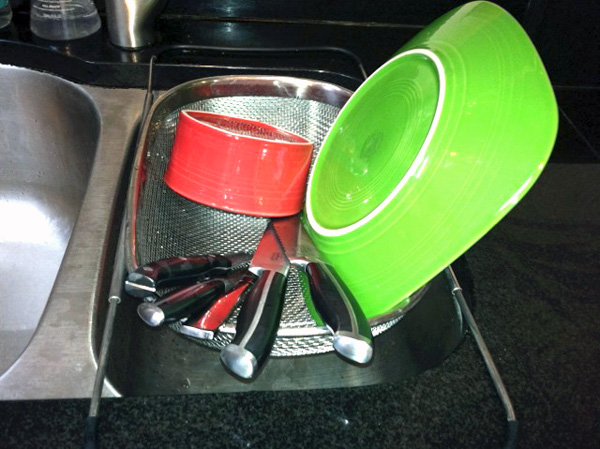
Since my countertop space is limited, I didn’t want to waste part of it with a dish rack. Instead I made my large strainer a multi-tasker:

Pitchers as vases: Instead of keeping vases and pitchers, I just use pitchers to show off my flowers.

One set of glasses for all beverages: I must have eliminated four shelves of glasses when I downsized. Who really needs

Monday, August 13, 2012

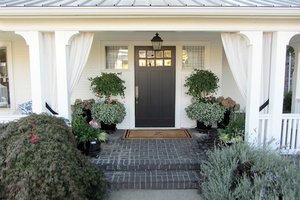
HOME DESIGN: 5 Porch Pick-Me-Ups Under $500

Sprucing up your porch is more than a cosmetic upgrade — it’ll boost your curb appeal and help preserve the value of your home. As a bonus, you’ll even get some neighborhood bragging rights. Here are five simple porch pick-me-ups, each costing less than $500.


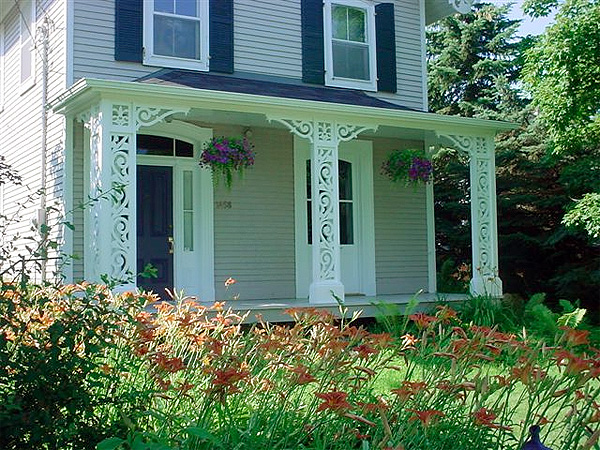
1. Adding architectural pizzazz
Sweeten your porch’s appearance with a wide variety of architectural trim pieces in weather-resistant wood or low-maintenance synthetics (PVC or polyurethane). They’re readily available at home improvement centers.


Most porch trim pieces install with nails or screws and require basic tools and moderate do-it-yourself skills. Or, hire a handyman for a few hours at $30-$60 an hour.


Add decorative brackets (starting at $20 each) where support posts meet the ceiling.
Span the space above porch stairs with a fancy fretwork spandrel ($200 for 6 feet).
Shapely corbels ($30 and up) lend charm under the eaves.


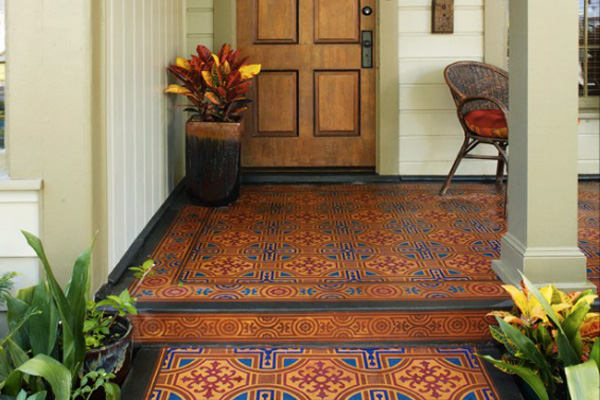
2. Painting the floor
You’re walking on sunshine when you splash color on a porch floor. Use good-quality exterior paint made for porch floors ($30-$45 per gallon) and follow the manufacturer’s guidelines for prepping the surface so the paint won’t peel.


If the old paint dates prior to 1978, find out if the paint is lead-based. If necessary, remove lead paint.


Once the basecoat dries, you can add a painted design, such as a faux rug, using stencils. Or outline your motif with quick-release painter’s tape to ensure crisp edges.


3. Fanning a breeze


Stir up your own cooling breezes by adding a ceiling fan to your porch. Be sure to select a ceiling fan model designed for outdoor use ($75-$250).


Wiring a fan is a task you can do yourself in less than an hour if there’s an existing electrical box and you have the right electrical tools. Or, hire an electrician ($75-$200) to wire the fan.


4. Creating privacy


If your exposed porch leaves you feeling like a goldfish in a bowl, add home privacy using one or more of these makeover strategies:


Louvered shutters: Tall louvered panels, or shutters, filter light while allowing breezes to blow freely across your porch. Select shutters in wood, vinyl, or PVC; prices start at about $50 for a 12-by-64-inch shutter.


Install one or more shutters floor-to-ceiling or just above the rail to create a private spot on the porch. You’ll need an afternoon to install shutters, typically by securing wood cleats to the floor and fascia and fastening the shutters to the cleats with screws.


Outdoor fabric: Add a little romance, color, and pattern to your porch with fabric panels that draw closed for privacy. Weather-resistant curtain panels with grommet tops come in a variety

Wednesday, August 8, 2012

SELLING YOUR HOME: 10 DIY projects to sell your home faster

With the troubled housing market of the past five years and banks still reluctant to lend, its no wonder homeowners hoping to sell are sitting on the market for months at a time. Buyers, meanwhile, are trying to find a balance between their dream home and one that's affordable.
(Photo: Mary Hutchison | Flickr)For those trying to sell a house, what are some quick and easy DIY projects that can help sell your home faster? We asked experts to share step-by-step instructions for completing projects bound to modernize your home, from resurfacing cabinets to eliminating home odors to re-caulking bathroom grout.

1. Create a welcoming entrance 
If you don't immediately impress potential buyers as they enter the home, you're setting yourself up for a tough sell. Creating a welcoming entrance is arguably the most effective way to sell your home faster.

Doug Perlson, co-founder and CEO of RealDirect.com, shares the following tips for instantly improving curb appeal:

  • Remove weeds and make sure plantings are trimmed and don't appear overgrown.
  • Replace old address numbers with modern exterior ones. It’s a quick and inexpensive update.
  • Paint the front door and refrain from excessive decoration.
  • Part of what makes an entrance appealing is what you don't see. Specifically, your entrance should not be crowded with shoes, keys, mail, etc.

2. Mulch 
Applying mulch to your front and back yards is another inexpensive way to make your home more appealing to buyers.

Jason Cameron, TV host and TruGreen partner, shares these strategies for mulching:

  • Apply a one- to three-inch layer of mulch – any thicker, and roots will begin growing in the mulch instead of the soil, making them susceptible to drought and low temperatures.
  • Check the depth of the mulch in your landscape beds. It should be two to three inches deep. Add more mulch if you do not have the minimum level in place, but do not exceed four inches. When rainfall is limited, mulch not only conserves soil moisture, but moderates soil temperature and helps deter weeds.
  • Make sure your mulch is not too close to the base or trunk of the plant, as it could cause decay and winter injury.

3. Eliminating odors 
You may not notice odors in your home, but prospective buyers will.

Jill M. Banks of Happily Better After Room Redesign & Home Staging suggests using baking soda as a way to fight odors: "Baking soda is a natural odor neutralizer, so if a spot in the carpet still smells funky after cleaning, try sprinkling some baking soda on it, leave it for 15 minutes or so, then vacuum."

She says baking soda can also be used in garbage disposals, trash cans, washing machines and refrigerators to knock out mystery smells.

4. Resurfacing cabinets 
Replacing your cabinets is undoubtedly a major expense and will likely require a professional to complete. Resurfacing your cabinets is a cost-effective way to spruce up your kitchen, though.

Design expert Kathy Peterson offers the following steps to a perfect cabinet:

  • Step 1: Remove hardware, doors and drawers.
  • Step 2: Clean the surface.
  • Step 3: Deglaze it with liquid sand, then clean again.
  • Step 4: Paint and, depending on the style you're looking for, add a tint over the paint (design kits can help you with this).

5. Baseboard repairs 
The baseboards in your home are subject to plenty of wear and tear over the years. To make some easy repairs, Frank Foti, business manager adviser for Mr. Handyman, offers these tips:

  • Strike nails flush with face of trim board using a nail punch or awl tool.
  • Patch holes and/or small cracks/dents with wood filler; sand; re-paint.

Monday, July 16, 2012

Home Maintanence: Today’s families are prisoners of their own clutter


Tell me about it. That sums up Boston parents’ reaction to new research by UCLA-affiliated social scientists concluding that American families are overwhelmed by clutter, too busy to go in their own backyards, rarely eat dinner together even though they claim family meals as a goal, and can’t park their cars in the garage because they’re crammed with non-vehicular stuff.
The team of anthropologists and archeologists spent four years studying 32 middle-class Los Angeles families in their natural habitat — their toy-littered homes — and came to conclusions so grim that the lead researcher used the word “disheartening” to describe the situation we have gotten ourselves in­to.
At first glance, the just-published, 171-page “Life at Home in the Twenty-First Century” looks like a coffee table book. But it contains very real-life photos of pantries, offices, and backyards, and details a generally Zen-free existence. Architectural Digest or Real Simple this is not. 
Among the findings detailed within:
• The rise of Costco and similar stores has prompted so much stockpiling — you never know when you’ll need 600 Dixie cups or a 50-pound bag of sugar — that three out of four garages are too full to hold cars.• Managing the volume of possessions is such a crushing problem in many homes that it elevates levels of stress hormones for mothers.

• Most families rely heavily on convenience foods even though all those frozen stir-frys and pot stickers saved them only about 11 minutes per meal.
• Even families who invested in outdoor décor and improvements were too busy to go outside and enjoy their new decks.
• A refrigerator door cluttered with magnets, calendars, family photos, phone numbers, and sports schedules generally indicates the rest of the home will be in a similarly chaotic state.
The scientists working with UCLA’s Center on Everyday Lives of Families studied the dual-income families the same way they would animal subjects. They videotaped the activities of family members, tracked their moves with position-locating devices, and documented their homes, yards, and activities with thousands of photographs. They even took saliva samples to measure stress hormones.
The goal, said Jeanne E. Arnold, lead author and a professor of anthropology at UCLA, was to document what is right in front of us, yet invisible.
“What we have is a time capsule of America,” she said. “No other study has been done like this. Imagine how exciting it would be if we could go back to 1912 and see how people were living in their homes. That’s the core of any society.”
Arnold said she admired the way the families coped with their busy lives, but even so, the $24.95 book (available on Amazon) presents a frightening picture of life in a consumer-driven

Monday, June 25, 2012

HOME HEALTH: Are you a hoarder? How clutter can take over your home, life


The Mayo Clinic defines hoarding as the excessive collection of things, along with the inability to discard them.Such behavior creates unsanitary conditions and, in severe cases, the inability to function normally.
Although hoarding has become more recognized in recent years thanks to television reality shows, it is a psychological disease that experts say is often related to or a symptom of obsessive-compulsive disorder. The major issue, they say, is that many people who have the disorder fail to recognize it as a problem, making treatment extremely challenging.
Although hoarding carries both denial and shame for many people, there is hope for change in the form of therapy and anti-clutter strategies.
Dr. Amy Austin has encountered only one case of hoarding at her Palm Desert practice. "Unfortunately, she stopped coming," said Austin. "She was not ready for treatment."
Austin, who is an addiction specialist, says hoarding is more of an obsessive-compulsive disorder, but, like addiction, those with hoarding disorders are resistant to change. "What we are talking about is an anxiety disorder. People decrease levels of anxiety by hoarding."
When a patient comes to Austin with this problem, they first talk about the issues in the person's life, including their relationships. "If they need a psychiatrist, we can work with one for possible medications," said Austin. "Treating an obsessive-compulsive disorder is commonly a combination of therapy and medication."
Is there hope for treatment?
"I always come from a place of hope," said Austin. "No one is broken — they just need help. There is hope for everybody and anything."
A fresh start
Cory Chalmers, owner of Steri-Clean, which serves California's Coachella Valley, is a hoarding cleanup specialist.
"In 1995, I was working as a paramedic in the San Bernardino area," says Chalmers,

Friday, June 22, 2012

SELLING YOUR HOME: Porch Perfection: Welcomes Buyers Instantly


When the weather turns warmer, front porches across the country are put to use again. However, not all porches or front entryways are put to "good" use. Sometimes over the cold winter months they've taken a beating and are badly in need of repair. Other times they're used as storage for overflow from the garage, basement, or house and that is not a welcoming sight for buyers.

So, it simply makes sense that after a long winter or a period of non-use, front porches might need some maintenance. This doesn't have to be the kind of work that takes weeks to do nor does it have to be extremely costly.In real estate, we talk about the importance of a few key elements to help sell your home: location, pricing, and curb appeal. These are some of the highest influential factors that buyers consider. The reasons are obvious. Location is vital to most buyers, pricing is critical (especially in today's marketplace), and curb appeal gets buyers off the street and inside to view your home.

Creating and maintaining porch perfection is about the little things that you do. In fact, some simple repairs, replacements, and re-arranging can brighten up and refresh a worn- out porch.
Start by looking at your porch with a critical eye. If you have been storing items on your porch that should have a home elsewhere, move them now. If you have old carpets, beat up or discolored mats, toss them out and replace them. Look at the lighting on your porch. Is it just one tiny bulb? Perhaps an inexpensive lighting system would brighten the porch, creating a more enticing and safer entryway.

Examine the hardware. Are the door handles corroded? Are they hard to turn to open the door? Think of it this way, if the door hardware looks worn and the doors are banged up, the impression is that this home is not well maintained on the outside and the inside. Some buyers won't go any further. If the home looks messy from the outside, all they will see is the front of your door. See your home the way you would if you were seeing it for the first time, just as the buyers are.
Add some appealing decor. There are a couple of rules that apply when it comes to staging an

Thursday, June 21, 2012

HOME IMPROVEMENTS: Forget Cost Vs. Value, Homeowners Use Improvements To Pump Up Style, Not Equity


Sure, most home improvements will hold or boost equity, even in the worst market, but today's homeowners are more concerned that improvements enhance their home's form and function rather than its value.

Homeowners also say rather than cut into their
 home improvementbudget, they are more likely to slash expenses in other areas including vacations and other big-ticket purchases, in another example of an emerging trend that finds beleaguered homeowners hunkering down to hold onto their most valuable asset by making it more their own.A new survey of homeowners planning to build, remodel or decorate in the next two years, found the vast majority, 86 percent, saying it's more important to improve their home to "improve the look and feel of the space," compared to 47 percent who say it important the work increases their home's value.

The Houzz & Home Survey, which comes with a really cool infographic of the results, analyzes remodeling and decorating project histories and plans of Houzz users in the U.S. and Canada.
The survey also examined motivations behind the projects, homeowners’ plans for hiring remodeling and design professionals or doing it themselves, and how the economy plays a role in decorating and remodeling plans.

"We expected that in this economy Americans' highest priority would be increasing home value, but instead we found people are focused on pleasing themselves, not the next owner," said Liza Hausman, vice president of marketing for Houzz.

"Homes today are doing double or even triple duty as workplace, stay-cation, gym and more," Hausman added.

Many don't have an option, according to a recent National Association of the Remodeling Industry (NARI) survey of homeowners forced to stay in their homes years longer than they originally expected because the economy ruined their plans.

NARI found, instead of sulking about their house arrest, long timers have begun to turn their cells into cozy personalized nests - homes that better reflect individual lifestyles to make them