Showing posts with label Staging Your home. Show all posts

Friday, September 14, 2012

HOME DESIGN: Decorate With Intention: The Art of Compromise


One of the questions I hear most often is, How do you decorate a home when your significant other has a completely different style? If you are new to merging different styles under one roof, chances are that you could use a blueprint for moving forward. Walk through these 10 steps for simple strategies for blending styles without stepping on too many toes.
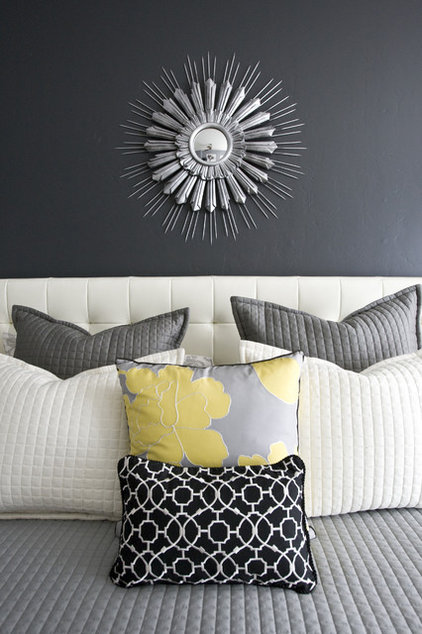
Step 1: Commit to Respecting Each Other

Set an intention from the beginning that you will value each other's opinions and preferences, and lend equal weight to each point of view.

Think about blending styles rather than blending personalities. It keeps things more civil and allows you to see more options. After all, many of us are drawn to more than one style. Look at this as a design dilemma (which it is) rather than trying to read too much into it. We all have our own likes and dislikes, and that's OK.
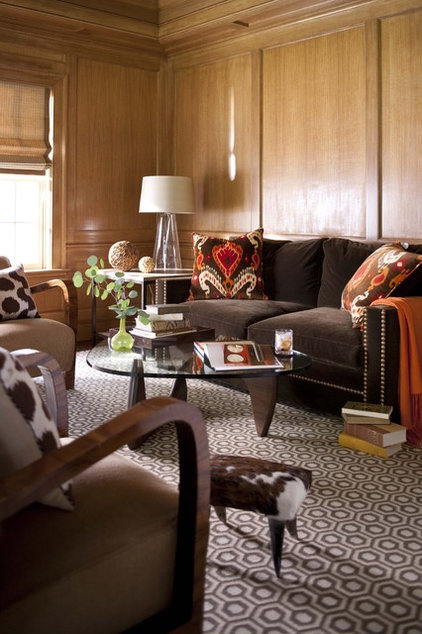
Case in point: This living room is a great example of merging traditionally masculine elements (wood-panel walls, rich browns, hex print rug, cowhide stool) with a touch of boho glam (printed pillows, persimmon throw, velvet sofa, glass lamp) for a look that keeps everyone happy.
Step 2: Make Your Wish Lists

Sit down separately and write up lists of everything your heart craves in a home. At this point don't worry about budget or space limitations; let your imagination run free and just get it all down on paper.
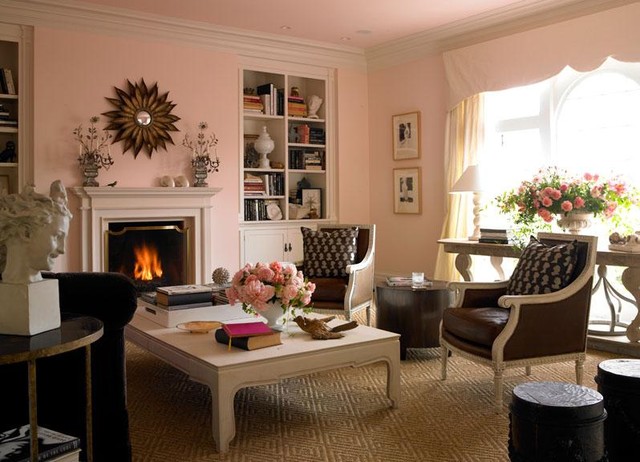
Don't be afraid to ask for what you really want. If pink walls are what your heart desires, list it. Try to avoid guessing what your partner will think. You might be surprised.
Step 3: Set Your Priorities

Once you have your wish list complete, pick your top five items, in order of importance, and have your partner do the same. It's important to know which items are the most meaningful to each of you and where there is some wiggle room.

To take it a step further, work together to make a joint list of priorities. This list should point to five things you want to create in a home together, from the specific (uncluttered, sunny) to the less tangible but equally important (warm, laid-back).
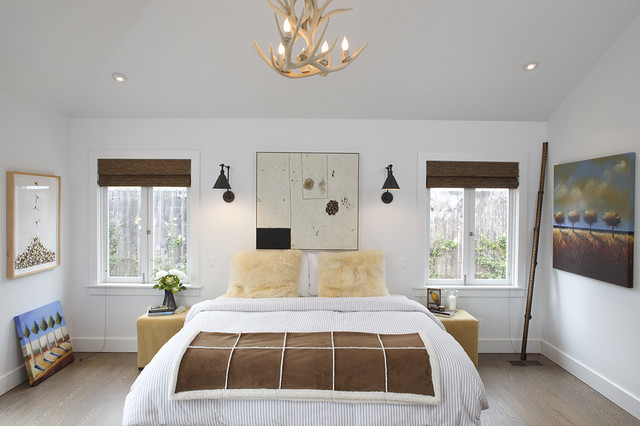
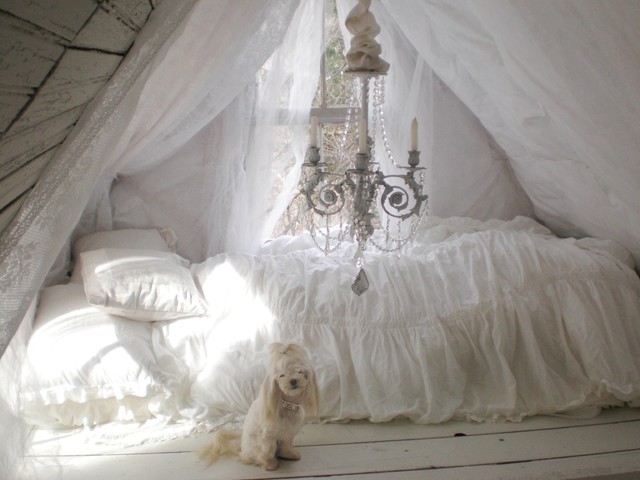
traditional bedroom Loft
Step 4: Define Your Limits

If there are things that completely horrify you, now is your chance to exercise your veto power. The point here is to avoid major conflicts down the road, not to pick a fight now. So stick with the few things that really are deal breakers for you, and ask your partner to do the same.

If your partner claims to hate some of your favorite looks, don't worry. In step 9 you'll have a chance to bring back a little of what you love, even if your partner doesn't get it.
Step 5: Agree to Blend Styles in Main Spaces

Shared spaces like the living room, where you spend lots of time together, should reflect both of you. Now is the time to compare your lists and try to find items that will work together.

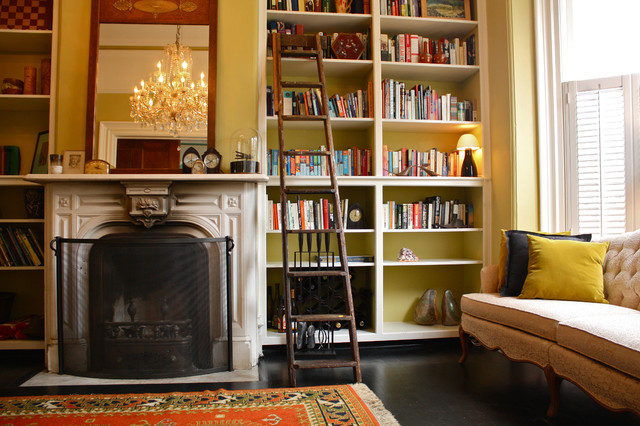
Case in point: In this living room a dark floor, traditional furniture and a library ladder build a classic foundation for the room, while the rich green paint behind the bookcases and a sparkly chandelier

Friday, August 24, 2012

SELLING YOUR HOME: Home Improvements That Sell


In a mash-up survey of 450 real estate agents and 1,660 homeowners, homeowners get it - most of the time - when it comes to home improvements that help induce sales and higher prices.

Given today's home buyers are aware of soft market conditions that can put a drag on values, they want a home that's ready to appreciate and that's a home in the best shape possible.Realtor.com's home improvement survey, conducted online from June 6 to June 13, 2012, tapped agents and Realtor.com users who are homeowners planning to improve their home before putting it on the market.

Nearly 90 percent of real estate agents believe home improvements can help a home sell faster, and nearly 73 percent say home work can boost the price, provided the home improvements are the right home improvements.

Nearly three in four (71.4 percent) real estate agents say sellers too often underestimate the power of simple home improvements - repairs, painting and cosmetic upgrades.

Not so, say more than one in four (75.21 percent) of homeowners polled. They most certainly plan to repair broken household items before listing their home for sale.

Also, 65.9 percent of real estate agents said another common mistake among homeowners is not making "the right" home improvements for the local market. Like upgrades from home to home help pull up values overall.

Agents, 62 percent of them, also said too many homeowners make specialty improvements based on their own tastes rather than what might appeal to a buyer.

Recommended home improvements
The most common home improvements recommended by real estate agents included:

• The vast majority, 96.5 percent, of real estate professionals surveyed recommend sellers repair household items that are broken before putting a home on the market.
• More than half, 63.8 percent, of real estate agents recommend sellers make kitchen improvements.
• Most, 59.3 percent, of real estate professionals recommend sellers make bathroom improvements.
What sellers improve
Are sellers complying with real estate agents' recommended home improvements? Again, for the most part, yes.
The most common improvements made by home sellers:

• A majority, 75.21 percent, of sellers planning renovations will repair broken household items before selling their home.
• Most, 53.43 percent, of owners plan to add new flooring before selling their home.

Saturday, August 11, 2012

STAGING YOUR HOME: 5 Inexpensive Kitchen Staging Tips

The kitchen is one of the most important selling points of a home. It is really the heart of the house and is always a price factor/decision influencer depending on its condition, and therefore demands strict attention for a vendor. When staging your home, the kitchen needs to present well to the buyers. 

Here are 5 Inexpensive Kitchen Staging Tips to ensure that your buyers will fall in love with your home. 

1. Deep Cleaning.  Nothing turns a potential buyer off more than a dirty home. Scrub the kick boards and vacuum the corners. Polish the fixtures.  Wipe down all the cabinets, inside and out. Polish the hardware. 

Check out Home Staging Channel’s comprehensive Kitchen Cleaning Checklist.  It will guide you to cleaning your kitchen — sink, cabinets, refrigerator, oven, down to the floor.

kitchen after bg property styling
  

2.  Check the Walls.  Clean them with a sponge and warm water.  Tone down bright room colours by painting walls with white or a light neutral colour. Patch, repair or replace any uneven walls. 

3.  De-Clutter and depersonalise.  Concentrate on the countertops.  Buyers like to see lots of empty workspace. Put away all appliances, dishes, and all pots and pans.  Show off the countertops and keep it clean & organised in drawers and cabinets.   Organise the fridge and cupboards as well.

kitchen after bg property styling


4.  Evaluate your Worktops. Consider replacing your worktops if these are worn out, chipped, or scratched. 

5.  Accessorise.  Give your kitchen that show home finish.  Place a green plant or a fruit

Wednesday, August 8, 2012

SELLING YOUR HOME: 10 DIY projects to sell your home faster

With the troubled housing market of the past five years and banks still reluctant to lend, its no wonder homeowners hoping to sell are sitting on the market for months at a time. Buyers, meanwhile, are trying to find a balance between their dream home and one that's affordable.
(Photo: Mary Hutchison | Flickr)For those trying to sell a house, what are some quick and easy DIY projects that can help sell your home faster? We asked experts to share step-by-step instructions for completing projects bound to modernize your home, from resurfacing cabinets to eliminating home odors to re-caulking bathroom grout.

1. Create a welcoming entrance 
If you don't immediately impress potential buyers as they enter the home, you're setting yourself up for a tough sell. Creating a welcoming entrance is arguably the most effective way to sell your home faster.

Doug Perlson, co-founder and CEO of RealDirect.com, shares the following tips for instantly improving curb appeal:

  • Remove weeds and make sure plantings are trimmed and don't appear overgrown.
  • Replace old address numbers with modern exterior ones. It’s a quick and inexpensive update.
  • Paint the front door and refrain from excessive decoration.
  • Part of what makes an entrance appealing is what you don't see. Specifically, your entrance should not be crowded with shoes, keys, mail, etc.

2. Mulch 
Applying mulch to your front and back yards is another inexpensive way to make your home more appealing to buyers.

Jason Cameron, TV host and TruGreen partner, shares these strategies for mulching:

  • Apply a one- to three-inch layer of mulch – any thicker, and roots will begin growing in the mulch instead of the soil, making them susceptible to drought and low temperatures.
  • Check the depth of the mulch in your landscape beds. It should be two to three inches deep. Add more mulch if you do not have the minimum level in place, but do not exceed four inches. When rainfall is limited, mulch not only conserves soil moisture, but moderates soil temperature and helps deter weeds.
  • Make sure your mulch is not too close to the base or trunk of the plant, as it could cause decay and winter injury.

3. Eliminating odors 
You may not notice odors in your home, but prospective buyers will.

Jill M. Banks of Happily Better After Room Redesign & Home Staging suggests using baking soda as a way to fight odors: "Baking soda is a natural odor neutralizer, so if a spot in the carpet still smells funky after cleaning, try sprinkling some baking soda on it, leave it for 15 minutes or so, then vacuum."

She says baking soda can also be used in garbage disposals, trash cans, washing machines and refrigerators to knock out mystery smells.

4. Resurfacing cabinets 
Replacing your cabinets is undoubtedly a major expense and will likely require a professional to complete. Resurfacing your cabinets is a cost-effective way to spruce up your kitchen, though.

Design expert Kathy Peterson offers the following steps to a perfect cabinet:

  • Step 1: Remove hardware, doors and drawers.
  • Step 2: Clean the surface.
  • Step 3: Deglaze it with liquid sand, then clean again.
  • Step 4: Paint and, depending on the style you're looking for, add a tint over the paint (design kits can help you with this).

5. Baseboard repairs 
The baseboards in your home are subject to plenty of wear and tear over the years. To make some easy repairs, Frank Foti, business manager adviser for Mr. Handyman, offers these tips:

  • Strike nails flush with face of trim board using a nail punch or awl tool.
  • Patch holes and/or small cracks/dents with wood filler; sand; re-paint.

Tuesday, August 7, 2012

HOME MAINTANENCE: How to Measure Your Home’s Square Footage


One of the most confusing and misleading metrics in the home building and home selling business is area — the “size” of a house.
The problem is that there’s no adopted standard; everyone measures it differently. There has been a move in the past few years to create a universal standard like the one architects use (specified in AIA contracts), but it isn’t mandatory and isn’t yet widely used.
Many state boards of real estate specify a process to measure house area, but it’s a recommendation, not a requirement. So “house area” means different things to different people.
The one thing that is always true is that area is never measured from the inside of the walls; the area of a house always includes all wall thicknesses interior and exterior.

Gross area

Not surprisingly, builders and real estate agents often want to show the largest number they can, so they sometimes measure the entire perimeter of the house on both floors. They may or may not include porches, stairs and two-story spaces. Because you don’t know their basis, it can be very hard to compare one house to another.
A relatively impartial source is your county auditor or assessor. They calculate the size of the house for tax purposes and therefore measure all houses the same way. And although their measurements aren’t always a true reflection of the size of the house, they use the same protocol, so it’s easier to compare one house to another.
But county records show only the gross areas contained within the perimeter of the foundation, which doesn’t accurately reflect the “livable” space within.

Defining separate spaces

A better way is to list areas separately, rather than combining them into one number; that’s the way we calculate areas at our office:
We first measure the perimeter of the house at the exterior wall sheathing — not the siding or brick, just the framing — on both floors.
Next we subtract the upper part of any two-story spaces and deduct the area of stairs on the

Monday, July 16, 2012

Home Maintanence: Today’s families are prisoners of their own clutter


Tell me about it. That sums up Boston parents’ reaction to new research by UCLA-affiliated social scientists concluding that American families are overwhelmed by clutter, too busy to go in their own backyards, rarely eat dinner together even though they claim family meals as a goal, and can’t park their cars in the garage because they’re crammed with non-vehicular stuff.
The team of anthropologists and archeologists spent four years studying 32 middle-class Los Angeles families in their natural habitat — their toy-littered homes — and came to conclusions so grim that the lead researcher used the word “disheartening” to describe the situation we have gotten ourselves in­to.
At first glance, the just-published, 171-page “Life at Home in the Twenty-First Century” looks like a coffee table book. But it contains very real-life photos of pantries, offices, and backyards, and details a generally Zen-free existence. Architectural Digest or Real Simple this is not. 
Among the findings detailed within:
• The rise of Costco and similar stores has prompted so much stockpiling — you never know when you’ll need 600 Dixie cups or a 50-pound bag of sugar — that three out of four garages are too full to hold cars.• Managing the volume of possessions is such a crushing problem in many homes that it elevates levels of stress hormones for mothers.

• Most families rely heavily on convenience foods even though all those frozen stir-frys and pot stickers saved them only about 11 minutes per meal.
• Even families who invested in outdoor décor and improvements were too busy to go outside and enjoy their new decks.
• A refrigerator door cluttered with magnets, calendars, family photos, phone numbers, and sports schedules generally indicates the rest of the home will be in a similarly chaotic state.
The scientists working with UCLA’s Center on Everyday Lives of Families studied the dual-income families the same way they would animal subjects. They videotaped the activities of family members, tracked their moves with position-locating devices, and documented their homes, yards, and activities with thousands of photographs. They even took saliva samples to measure stress hormones.
The goal, said Jeanne E. Arnold, lead author and a professor of anthropology at UCLA, was to document what is right in front of us, yet invisible.
“What we have is a time capsule of America,” she said. “No other study has been done like this. Imagine how exciting it would be if we could go back to 1912 and see how people were living in their homes. That’s the core of any society.”
Arnold said she admired the way the families coped with their busy lives, but even so, the $24.95 book (available on Amazon) presents a frightening picture of life in a consumer-driven

Friday, June 22, 2012

SELLING YOUR HOME: Porch Perfection: Welcomes Buyers Instantly


When the weather turns warmer, front porches across the country are put to use again. However, not all porches or front entryways are put to "good" use. Sometimes over the cold winter months they've taken a beating and are badly in need of repair. Other times they're used as storage for overflow from the garage, basement, or house and that is not a welcoming sight for buyers.

So, it simply makes sense that after a long winter or a period of non-use, front porches might need some maintenance. This doesn't have to be the kind of work that takes weeks to do nor does it have to be extremely costly.In real estate, we talk about the importance of a few key elements to help sell your home: location, pricing, and curb appeal. These are some of the highest influential factors that buyers consider. The reasons are obvious. Location is vital to most buyers, pricing is critical (especially in today's marketplace), and curb appeal gets buyers off the street and inside to view your home.

Creating and maintaining porch perfection is about the little things that you do. In fact, some simple repairs, replacements, and re-arranging can brighten up and refresh a worn- out porch.
Start by looking at your porch with a critical eye. If you have been storing items on your porch that should have a home elsewhere, move them now. If you have old carpets, beat up or discolored mats, toss them out and replace them. Look at the lighting on your porch. Is it just one tiny bulb? Perhaps an inexpensive lighting system would brighten the porch, creating a more enticing and safer entryway.

Examine the hardware. Are the door handles corroded? Are they hard to turn to open the door? Think of it this way, if the door hardware looks worn and the doors are banged up, the impression is that this home is not well maintained on the outside and the inside. Some buyers won't go any further. If the home looks messy from the outside, all they will see is the front of your door. See your home the way you would if you were seeing it for the first time, just as the buyers are.
Add some appealing decor. There are a couple of rules that apply when it comes to staging an

Sunday, May 13, 2012

SELLING YOUR HOME: Get the best price possible for your home


Without proper exposure, sellers may be leaving money on the table.


Wouldn't it be nice to sell your home without the hassle of exposing it to the public? Selling off-market works occasionally, but most sellers who try it eventually end up having to put their home on the market. This wastes time and could delay the sale.


There are other drawbacks to trying to sell without full market exposure. One is that it's difficult to prepare your home for sale if prospective buyers are coming through. You have to stop work, and buyers see a work in progress.


It doesn't make a good impression if your home is shown before it's ready. Buyers remember what they see, not what you tell them it will look like when you finish painting a room or replacing outdated light fixtures.


Sellers in a desirable Oakland, Calif., neighborhood were asked by neighbors who needed a larger home if they could see the house before it went on the market. The buyers were so turned off by the poor appearance that they not only didn't buy the house, but they didn't even want to see it when it came on the market. So you can lose buyers by letting them see the house before it's ready.


A potentially more serious downside of selling without exposing your home to the market is that you'll never know what it could have sold for with the benefit of promotion. You might be leaving money on the table.


HOUSE HUNTING TIP: Effective marketing is one of the essential components of realizing the best price possible for your home. The other two are properly preparing your home for sale and pricing it right for the market.


You'll get the best results by listing with a real estate agent who has a marketing plan that includes broad exposure. Find out exactly what an agent will do to encourage buyers to look at

Sunday, March 18, 2012

SELLING YOUR HOME: 6 rules of curb appeal

It's that time of year again, when I take a moment to talk to all of you who are thinking of putting your home on the market this spring. If real estate's favorite old adage is "location, location, location," then it's got to be followed closely by, "You get only one chance to make a first impression."
You can't change your home's location, but you can certainly do everything within your power to make that first impression a strong one, so let's go over the basics of that all-important must-have for a successful sale: curb appeal.
Start with a step back
You've seen the outside of your house so many times that you don't really see it anymore. So now's the time to look at it with new eyes, from the perspective of a prospective buyer. And if you can't do it objectively, get a friend, a neighbor or your real estate agent to do it for you.
Put yourself in the buyer's shoes, and make a written list of those things that might raise some concerns for you if you were thinking of buying it. And while the front of the house is the primary focal point, don't overlook the sides and rear of the house as well. Here are some things to keep in mind:
Exterior paint: The color and condition of your home's exterior paint job is one of the single most important things to a prospective buyer. The color makes a visceral impact the moment a buyer walks up, and while you might have thought that the hot pink siding with neon purple trim was a great showcase of your individuality when you painted the house, it's going to severely limit the home's appeal.
And no matter what color the house is, if the paint job is faded and peeling, it's an immediate warning sign to buyers that the house hasn't been maintained, so they'll have their magnifying glass out to look for other defects.
If you're handy with a brush and an airless sprayer, you might just want to undertake a repainting project yourself. A long weekend and a few hundred dollars in paint can make a world of difference in how well the home shows and how quickly it sells.
If you don't want to paint the entire house -- or if it doesn't really need it -- just painting the trim, exterior doors, garage door or window shutters can make a big difference as well.
Roofing: A bad roof is another indicator of a general lack of maintenance, and may point a finger at potential structural and even mold problems resulting from leaks. Roofs are expensive to replace, but depending on your market and your desire to reap top dollar from the sale, you may want to take a hard look at the economics of re-roofing.
Talk with your agent about the pros and cons of re-roofing now versus crediting the cost of a new roof to the buyer in escrow.
Driveway and walkways: Driveways are a pretty dominant feature in most homes. Clean any oil-stained concrete, and repair small cracks before they get larger. For asphalt driveways, a seal-coat can often make a big difference in appearance and help prolong the asphalt as well.
For concrete or asphalt that's badly damaged, it's time to be thinking about replacement. You

Friday, February 17, 2012

SELLING YOUR HOME: 5 ways to make buyers fall in love with your home

It’s no secret, men and women are wired differently. But recent research shows that when it comes to features that motivate them to buy, the connection between the sexes isn’t a battle.

America’s most lovable features

While there’s a small difference in what they love the most, our recent survey showed both men and women agree on which top features make them fall in love with a home.
When we asked first-time home buyers “which home amenity would make you, personally, fall in love with a home?,” here were the top answers:
AmenitiesAll RespondentsMenWomen
Master Bathroom70%64%75%
Walk-in Closet63%55%72%
Gourmet Kitchen56%51%62%
Outdoor Deck55%51%58%
Wood Floors50%46%53%
Pre-wired for entertainment system (e.g., home theater, surround sound)35%42%28%
Pool27%27%26%
Hot Tub24%26%22%
Other15%15%15%

The big feature conflict

While men and women agree that the master bath,