Showing posts with label Gardening. Show all posts

Thursday, March 14, 2013

GARDENING: 5 Great Gardening Apps


Let’s just agree there’s an app for everything, and gardening is no exception. I tried out a number of apps for the iPhone (though some of these have Android versions) and picked a few that will help your garden grow.

1. Food Gardening Guide (free for iPhone, iPad, Android): Mother Earth News has produced this delightful and comprehensive guide on how to grow your own food. Chapters are titled “All About Growing (whatever),” and they deliver info on planting, harvesting and storage, saving seeds, pest and disease prevention, growing, and kitchen prep. For instance, did you know you can harvest carrots, store them over the winter, and replant in spring to generate seeds? Now you do.
Food Gardening Guide

2. Landscaper’s Companion ($5.99 iPhone, iPad; $4.99 Android): This is a planting reference for just about anything you can stick into soil — trees, shrubs, annuals,perennials, bulbs, and on and on. For each species, the app provides its growing zone, watering and sun needs, height, width, and bloom time -- plus a pretty picture. You can also scroll through images, pick a plant that sparks your interest, and then research it.
Landscaper’s Companion

3. Garden ID (free for iPhone, iPad): A personal gardening guru that customizes information for your particular slice of heaven. Allow the app to use your current location, and it suggests fruits, vegetables, and herbs that can thrive in your edible garden anytime, and even varieties you can plant now. Select a veggie, and Garden ID gives you planting, growing, and harvesting tips. As a bonus, it also names plants that like to grow together, like corn that shades lettuce, giving it a longer growing season. You'll also learn which plants don’t get along, like cauliflower and tomatoes.
Garden ID

4. Garden Tracker (99 cents for iPhone, $3.99 for iPad): A digital gardening journal that helps you keep track of what you planted where, when you watered and fertilized each plant, and days until harvest. It also gives info on sunrise, moon phases, and USDA Hardiness Zones. It’s a great planning

Sunday, October 14, 2012

HOME MAINTENANCE: Reduce the risk of tree damage to your home

(Money Magazine) -- Does the severe weather of the past several years have you looking up at your trees in fear? It's an understandable concern. A big storm could destroy the plants' majesty in a flash -- and send a quarter-ton branch crashing down onto your roof.

Still, before you preemptively chip a favorite tree into mulch, consider this: It may be contributing 8% to 10% to your home's value, according to Scott Cullen of the Council of Tree and Landscape Appraisers.

Here's how to keep your leafy assets from becoming a liability.

Schedule regular upkeep
Have your trees inspected every five years or so -- a free service offered by tree-care companies. An arborist will look for branches that are weak or hanging within 10 feet of a building, and send workers to remove them.

If necessary, they'll also buttress the tree against high winds by cabling limbs together. All this work costs about $200 to $400 a tree and is typically needed only once a decade.

In many cases the tree will more than cover the cost of its maintenance over a few years; a big shade tree will knock nearly $70 off annual air conditioning bills, says David Nowak of the U.S. Forest Service, and a large evergreen that blocks winter winds will reduce heating costs by around $60 a year.

Get removal right
When a tree becomes diseased or dangerously overgrown given its proximity to a house, your arborist will recommend taking it down.

Removing a substantial tree could cost $2,000 to $5,000, depending on its size and whether it is accessible by truck or requires climbing -- and what's underneath that the crew must protect.

You can have the stump ground down to just below grass or mulch height for $50 to $200

Saturday, October 6, 2012

HOME MAINTENANCE: 5 must-do tasks for fall maintenance


Fall is here. That means beautiful trees, pumpkins, and that unmistakable smell that signals the end of summer and the soon-to-be winter months. 

Fall also means getting your home ready for the onslaught of winter. For those that live in the extreme southern portions of the country, winter might not be much different than other months. For people in most states, winter means snow and freezing, and that can cause expensive problems if people don't take the time and effort to get prepared during the fall months.
 Here are five basic home maintenance tasks to complete before the first snowfall.

Clear gutters
Once the leaves fall, do a final cleaning of your gutters and downspouts. Clogged gutters makes runoff from snow freeze within the gutters. This is especially true for older gutter systems, and it may lead to the gutters separating from your roof. This not only causes damage to your gutters, but also to the underlying structure of the roof that holds the gutter. If you don't like cleaning out your gutters, invest in gutter guards.

Do an energy audit
Do you know where your heat and air conditioning is escaping? An energy audit is the way to find out. Although you can pay private contractors to perform the audit, your gas or electric company might send somebody to your home free of charge. Depending on the age of your home, sealing areas where the heat or air conditioning is escaping can result in substantial savings over time. Even the smallest leaks add up over time. You can also do this yourself by examining for cracks in doors and windows and looking for any areas where you can see daylight coming through. The audit will check other areas like electrical and cable outlets on outside walls.


Trim trees
Have your trees trimmed every few years to assure that accumulated ice doesn't cause a dead branch to fall on to your roof. Once the leaves fall and you can see the branches of your trees, look for any larger-sized branches that appear dead and would fall onto yours or your neighbor's roof. If you knew the limb was dead and it damaged a neighbor's home, your homeowners insurance may not cover the damages.

Test your home generator
If you live in an area with extreme weather or have medical or other essential devices that require electricity, investing in a home generator might be wise. If you have one, test it, along

Sunday, August 12, 2012

LANDSCAPING: Keeping Your Patio More Private


One of the most relaxing and entertaining places in the home is the patio. Despite the fact that it’s outdoors, it can be an extension of your living space and a great place for dining with friends and family, lounging on a warm afternoon, or even hosting intimate parties with guests. In order to make it feel like a part of your home, it is important to create some privacy.
Keeping your patio private doesn’t have to involve large costs or renovations.  In fact, you can make use of what you already have rather than spending money on new items.
To help you keep your patio more private, here are a few ideas:
  • Plan a good spot for your patio. If you don’t have a patio yet and are planning to construct one, choose a spot where you can be concealed from neighbors. You may even find that you can use one side of the house to help conceal the area.
  • Plant flowers and greenery around your patio. This can be done by planting plants in pots or creating flower bed border. Or, you can simply move potted plants from other areas of your yard, so you don’t have to spend anything.
  • Add a pergola to your patio. Adding a roof will not only create privacy, but it will also provide more protection from extreme weather conditions, thus enabling you to enjoy it whenever you’d like. A pergola is a roofing option that adds elegance to your patio, and its classic appearance creates a cozy feel. However, if a pergola is too large of an investment for you right now, there are many other roofing options available.
  • Screen in your patio. There are three benefits of using a screen on your patio. First, it protects your patio from complete exposure to the outside. Second, despite being concealed, you still have a view of what is happening outside. Third, the screen helps keep out pesty insects, so you can enjoy your relaxation and meals in peace.
  • Install a fence. Place a fence or elevated border around your patio, so you can have a little privacy when eating breakfast or having a romantic dinner with your spouse. You can even

Friday, July 20, 2012

VIDEO: GARDENING, Gardening on top of Skyscrapers - Profiles in Design video

Sunday, June 24, 2012

OUTDOOR SPACE: Use of outside living areas growing in priority, complexity


As Americans try to maximize the space of their existing homes, they're increasingly looking outside to create new, rejuvenating places.
"More people are realizing that home begins when you set foot on your property, not just when you enter your front door," says garden designer Julie Moir Messervy, author of Home Outside: Creating the Landscape You Love (Taunton Press). "You can think of your outside as an extension of the inside."
An outdoor living/grilling area ranked as the third-highest priority space, after a separate laundry room and additional closets/storage, in a recent survey of 4,000 readers by Better Homes and Gardens magazine.
Clients see the outdoors as another room of their home, says Josh Baker of BOWA, a high-end remodeling firm in the Washington, D.C., area. He says he does "a lot of pools and other outdoor areas" to create a resort feel.
Messervy says homeowners want not only an "outside away room" to relax and entertain but also — in a new push toward "homesteading" — a spot to raise vegetables and livestock.
"People are keeping chickens even in Boston and Cambridge (Mass.), where many of our projects are," and others are keeping bees on flat roofs, Messervy says. "The definition of curb appeal has changed."
"Our editors predict an even bigger boom in home food gardens," Better Homes and Gardens says in its overview of 2012 garden trends. Many homeowners have limited space, so it expects more will grow food on rooftops and vertical lattices, or plant

Thursday, April 12, 2012

GARDENING: 7 Killer Ways to Get Rid of Weeds

Here are 7 ways to murder weeds with household items. You’ll save money and show no mercy to your garden’s uninvited guests.
Nothing ruins your garden or yard like weeds, those uninvited guests that rob your plants of space and nutrients. So murder those weeds most foul, but without harmful chemicals that can do you in, too. 


Here are 7 ways to kill weeds with weapons you already have around your house. 


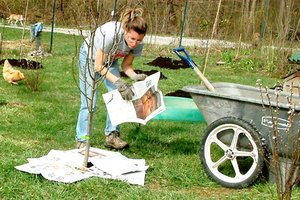
1. Newspaper: A carpet of newspaper, which blocks sunlight and oxygen from reaching the soil, will smother weeds already sprouted and prevent new ones from growing. Throw down newspaper in 10-sheet layers, wet to hold it down, and cover with an inch or two of mulch. If weeds begin to grow in the mulch, add more layers, making a mulch-newspaper lasagna, which eventually will decompose and nourish the soil.


2. Old shower curtains and carpet samples: Spreading these useless items in garden paths or between rows will keeps weeds from ever showing their unwanted heads. Cover with mulch. 


3. Corn gluten meal: This corn by-product stops seeds from growing into weeds. Since the meal will prevent germination, spread it around established plants, and after seedlings and transplants have taken hold in the soil. After harvest, spread the meal to prevent late-season weeds. 


4. Vinegar: The acetic acid in 5% vinegar is a desiccant that sucks the life out of plant leaves. It’s most destructive to young plants with immature roots, though it just rolls off weeds with waxy leaves, like pennywort or thistle. Make sure you cover desirables before spraying, because vinegar is an equal opportunity killer. Keep your spray on-target by removing the bottom from a 2-liter plastic soda bottle, and placing it over the weed. Spray vinegar into the mouth of the bottle, which will keep it from splattering on your vegetables. 


5. Vodka: Don’t know if vodka makes weeds fall down dead or drunk, but 1 ounce mixed with 2 cups of water and a couple of drops of dish soap will dry out weeds that live in the sun. Doesn’t

Friday, April 6, 2012

LANDSCAPING: Add A Living Privacy Screen to Your Small Home

A living privacy screen around your small home’s yard does triple-duty: It promotes privacy, security, and beauty. 


Here’s how: 
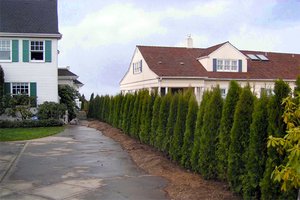
Block neighbors’ view from their second-story windows: Opt for mature, tall evergreens for year-round privacy. Plant tall, upright trees: American holly, Leyland cypress, cedar, pine (note size and circumference of the tree at maturity and choose accordingly). 


Block street views: Use shorter, thicker shrubs and hedges. Plant fast-growing shrubs: Red and yellow twig dogwood, American hazelnut, forsythia, Chinese privet. For security: Thorny hedges are dense, and the “ouch” factor discourages intrusion (you’ll want to consider these carefully if you have small children). Plant: Spanish bayonet (yucca), roses, flying dragon (poncirus), firethorn (pyracantha). “Oohs” and “aahs”: Combine ornamental trees, hedges, and trellises of flowering vines for a living privacy screen of year-round beauty. 


Ornamental hedges: Burning bush, purple lilac, tri-color willow. Ornamental trees: dogwood, Japanese maple, smoke tree. Small, confined areas: Tall grasses and bamboo work well to screen patios and garden sitting spots. 


Tall ornamental grasses: plume grass (Erianthus ravennae), maiden grass. Get in the zone Where you live makes a big difference in what you plant. The U.S. Department of Agriculture plant zone will help you decide. Climate and soil conditions are key. If you’re unsure of local conditions, hire a landscape architect or landscape designer to help develop a plan, or ask your state cooperative extension service for advice. 


How much will it cost? Traditional fencing for an 70-by-90-foot lot could run $3,000 to

Friday, January 20, 2012

WINTER GARDEN: Feeding Birds in Winter: To Stop or Not to Stop?

Heading out the door for a midwinter getaway, you congratulate yourself on your laudable stewardship of all the lives that depend on you--the dog is at the kennel, the goldfish is with a neighbor and a friend will come over to water your plants. But wait a minute! Your birdfeeders are already half empty, and you haven't even left the driveway. What will happen to those cute little chickadees when they fly in for black-oil sunflower seed but find nary a crumb?
Wild birds are resourceful, gleaning most of their food from the natural habitat; except in extreme or unusual circumstances, they manage to find enough to eat to survive. But birds that have become used to supplemental feeding may suffer when that food supply is suddenly missing, especially in winter. Experts offer a variety of tips and insights:
Keep feeders full when winter is toughest. Birdfeeders are most attractive to birds in winter, when natural food supplies are least available. Seed eaters such as finches, sparrows, titmice and chickadees may flock to feeders--in higher numbers than natural food sources alone in the immediate area could support. Seeds that are merely a welcome supplement under normal winter conditions may suddenly become vital in the space of one fierce ice storm or blizzard.
In general, it's more important to keep feeders going in the winter, especially during cold weather, say Donald and Lillian Stokes, residents of Massachusetts and authors of more than a score of nature guides.
"Chickadees have a fixed territory they stay in during the winter," Lillian says. "If they have come to depend on your food source, it's harder on them when it is removed during cold weather."
Feeders aren't birds' only source of food. "The real problems occur when an ice storm covers all the twigs and branches where they usually get insect larva and seeds. Then they really could use the supplemental feeder. Studies have shown that chickadees and their like fare better in winter if they have access to supplemental food at feeders."
Put up large-capacity feeders if necessary. The best suggestion is to find someone to replenish the feeders. "We usually have some large feeders that we use when we are on vacation," she says. "They hold a lot of seed and we have someone come once or twice a week to fill them and also check if there is a bad storm. If you have close neighbors that run reliable feeding stations and your birds could go next door if they needed to, then maybe they wouldn't be as affected if you stopped feeding."
Encourage neighborhood birdfeeding. Florida isn't a landscape that commonly comes to mind when one imagines a harsh winter habitat. But over the last few decades, ornithologists have recorded neotropical migrants overwintering there and in other southeastern states, rather than fleeing to Central or South America. In these cases, it's not so much seed that is in short

Sunday, October 30, 2011

LANDSCAPING & MAINTENANCE: Keeping Up The Yard Through The Winter


This is the time when people start to want to stay indoors a bit more, especially when the temperatures significantly drop.

The good news is that if you prepare ahead, you can save yourself time and money. Taking some good housekeeping steps now will allow you to step outside into the fresh spring air next year to a well-preserved outdoor space.


But you can't neglect your outdoor patios and decks, especially if you plan to sell soon. Buyers won't want to see broken-wood decks or corroded wrought iron patio sets in your backyard.
Where to begin? First, if your deck is looking a little worn and tired, make the necessary repairs now. Don't wait until you can stick your foot through a board (like I did). That's not only dangerous but it also mandates a quick fix.


Give your deck a good cleaning and sealing or staining before the weather gets too cold and wet to do this. Make sure you check for loose nails and get rid of any splintery edges by sanding them down. Seal with waterproofing sealants. For these, generally the weather has to be above 32 degrees F and 50 degrees F for sealing and stains, respectively, to work properly.


Put the clippers to work. Take a good look around your yard and decide which plants need to go. Many annuals may have been killed by frost and it's time to clear them away. Keep your flowers keep them looking good by trimming away dead leaves. If you cut your plants back now it will cause them to grow and flower more effectively later on.


Add seasonal plants. You can still have some nice color in your yard if you get the right plants for

Monday, October 3, 2011

LANDSCAPING & GARDENING: Autumn Landscaping

Fall is the perfect time to add new life to your yard. The heat of the summer has passed and cold, hard frosts are still weeks or months away. This second chance planting season allows you to amp up your curb appeal.


Here are some lovely ideas for autumn planting!


Selecting the right plants, trees, and shrubs can be overwhelming. Many nurseries are full of colors, sizes, and varieties of plants. There are so many choices you don't know where to begin.


The initial step is to create a plan of action. Without a solid design plan you may end up having random plants that look ... random. Think both long and short term. What plants do you want now and how do you want your yard to appear years down the road.


To make sure everyone is on the same page, illustrate your plan on a large sheet of paper. Make notes for shapes of flower beds, what types of plants you want, where you'll mulch, and what size plants you'll need.

Friday, April 29, 2011

LANDSCAPING & GARDENING: 3 Gardening mistakes to avoid

Gardening is not rocket science: If you can dig a hole, turn on a spigot, and snip a dead flower off a vine, you can tend a garden.


Still, gardeners need to make judgment calls. How much water does this shrub need? Will that tree get enough sun? Is this hole deep enough? It’s easy to misjudge and make a mess out of the landscaping. Here are common garden blunders.


1. Too many changes too soon. The excitement of warm spring weather often creates a passion for yard work. But what looks like a spring weed might be a fall-blooming vine. Encourage buyers to: Live with their land for a year and observe how many hours of sunlight each part of the garden gets. Test the pH of the soil to determine if acid- or alkaline-loving plants will be happy in that particular patch of heaven.


2. Too much togetherness. Trees and shrubs that look properly spaced when you plant them will crowd each other and compete for water, sun, and nutrients in a few years. Encourage buyers to: Read spacing instructions. Give trees plenty of space—they can always fill in later. Stagger bushes and plants and create two rows, which will create more breathing room. The results will look absurdly sparse at first. But live with it. In a few years, shrubs will fill empty spaces without suffocating each other.


3. Planting without a plan. Planting new garden beds without a long-term landscape plan is like pouring a house foundation without blueprints. Encourage buyers to: Draw a simple sketch of their yard—what’s there now and what they might add later, including patios and pools. Learn about the trees and shrubs that grow best in their soil and climate. A professional landscape designer can create a starter plan for as little as $250 to $500.


To download this article for your customers or access more landscaping ideas, visit HouseLogic.com and click on Landscaping under the Improve tab.


You can contact the staff of REALTOR® magazine by e-mail at narpubs@realtors.org

Thursday, April 28, 2011

MAINTANENCE & HOME REPAIR: 6 Worth-the-Price Fix-Ups

Simple and affordable do-it-yourself projects can greatly increase a home's resale value, according to HomeGain's annual home improvement and staging survey.
April 2011


The marketing company surveyed nearly 600 real estate professionals to discover which DIY home improvement projects give sellers the biggest return for their buck. Here are six projects under $1,000 (amounts are estimated) that made the list.


1. Cleaning and decluttering. Remove any personal items, unclutter countertops, organize closets and shelves, and make the home sparkling clean.
$290 Cost
$1,990 Return


2. Brightening. Clean all windows inside and out, replace old curtains, update lighting fixtures, and remove anything that blocks light from the windows.
$375 Cost
$1,550 Return


3. Smart staging. Rearrange furniture, bring in new accessories and furnishings to enhance rooms, incorporate artwork, and play soft music in the background.
$550 Cost
$2,194 Return


4. Landscaping enhancements. Punch up the home’s curb appeal in the front and back yards by adding bark mulch, bushes, and flowers and ensuring current plants and grass are well-cared for and manicured.
$540 Cost
$1,932 return


5. Repairing electrical or plumbing. Fix leaks under the sinks, remove any mildew stains, and ensure all plumbing is in good working condition. Update the home’s electrical with new wiring for modern appliances, fix any lights or outlets that don’t work, and replace old plug points with new safety fixtures.
$535 Cost
$1,505 Return


6. Replacing or shampooing dirty carpets. Steam-clean carpets, replace any worn carpets, and repair any floor creaks.
$647 Cost
$1,739 Return


Excerpted from HomeGain’s 2011 Home Sale Maximizer Survey, www.homesalemaximizer.com.
Realtor Magazine 4/2011

Monday, April 25, 2011

REPAIR AND MAINTANENCE: Looking to Spend a Tax Refund? Consider Outside Projects


It’s that time of the year—what to do with the tax refund?

For home owners who want to spend part of their checks on home sweet home, the possibilities seem endless.

New floors or kitchen cabinets? Windows or granite countertops? What gives you the most return on your investment?

The answer might surprise you—what’s on the outside counts the most right now.
The latest figures from local and national real estate groups indicate that the best investment for your home is related to curb appeal.
“An entry door, the front door to your house, will get you the most return for your money,” said Mike Cotrill, chief operating officer for the Greater Tulsa Association of REALTORS®.
Cotrill said figures from the “Cost vs. Value” report, conducted by the NATIONAL ASSOCIATION OF REALTORS® and Remodeling magazine, show that upgrading or replacing a front door is more than worth the money.
“They’ll get 102.1% of that cost recouped,” Cotrill said. “And locally in our region, it’s 116%. It’s all about curb appeal, that’s the entry point to your home.”
According to the report, which received data from Realtors in 80 cities, the “big-bang projects” include garage door replacement (83.9% payback), siding replacement (80%), kitchen remodels (72.8%), and outdoor deck additions (72.8%).
“It’s interesting that the top three are all about the outside of your home,” Cotrill said. “On a kitchen remodel this survey says you’ll get about 73% of your cost recouped, so you’re not going to get every dollar back. And these are all midrange averages.”
And outdoor projects continue to be appealing to potential buyers, he said.
“The backyard, decks, or outdoor entertainment areas are becoming more and more popular. If you get that spring fever, go outside and do some landscaping,” he said.
To read the full report, visit tulsaworld.com/costvsvaluereport.

Inside out

Other home owners are interested in projects that will add value and save energy.
Upgrading or repairing fundamental areas of the home will save money in the long run, said John Madden, Green Building Council Chair for the Homebuilders Association of Greater Tulsa.
“Having your HVAC (heating, ventilating, and air conditioning) serviced is the biggest thing,” he said. “It’s one of the most overlooked things that I think people should do every year, even on new houses. Your HVAC accounts for a massive amount of your electric bill.”

Sunday, April 10, 2011

That nasty winter North Jersey endured took a toll on more than lower backs sore from shoveling and budgets strained from all the snow removal—it also punished homes and property.


Drenching rains this month on top of the seemingly endless snow of December, January, and February only added to the damage.


“[I’ve had] hundreds of phone calls inquiring about water from ice dams [buildups] leaking into homes and shingles blown off by the high winds,” says veteran roofer Stan Reczkowski of SR Roofing in Paramus and Hillsdale. He added that this winter “rivals the winters of 1986-87 and 1995-96.”


So it’s time to put away the shovels, survey the damage, and get to work on spring fix-ups and cleanups.


Basements

Anyone with water in the basement has company.


“We have seen a dramatic increase in the number of calls from customers,” says Bob Lindsay, president of Weather-Tite Waterproofing in Saddle Brook.


“Home owners are seeking a permanent remedy so that they never have to deal with this type of situation again,” he says, adding that standard insurance policies often do not cover waterproofing.

Saturday, March 19, 2011

GARDENING: Spring Gardening Tips

It's still wishful thinking across much of the country, but the lure of budding trees and blooming flowers has many green-thumbers pressing their noses against the window panes.


The good news? It's never too early to start planning your garden.


First, you must establish what "zone" you live in. Knowing your zone will tell you when to plant what. You can find out your zone by visiting Garden.org.


If the risk of freeze is over in your zone, you might be able to start getting your hands dirty!


Everyone loves to look through Spring seed catalogs and dream up their perfect garden. And every perfect garden starts with a well-thought out plan. Now is the time of year to decide what you want to watch grow and bloom this season.


Draw out plans and pick out colors. Many flower buffs prefer to group like colors together. They'll have a pink annual garden one year and a yellow the next.


Others focus their attention on larger projects, such as decks, pathways, and patios. If this is your intent this year, start your research now. Garden books and magazines are full of inspiration and how-to books can even lead you down the do-it-yourself path. You can also get pricing estimates from local home improvement stores and lumber yards.


Spring is also a time to prepare your soil. This means checking the pH to see if it needs balancing, as well as prepping the soil with compost to ensure it is full of nutrients. Compost works especially well when you add it prior to planting, and it's a natural organic way to make your garden just that much better.


You can also take this time to prune bushes and hedges, clean dirty bird feeders, and service your lawn equipment. If you hire a landscaping company to handle the heavy work for you each year, then now would be a great time to interview potential companies and decide upon a service plan.


Above all else, be sure to enjoy the process of planning and caring for your garden. It really is a rewarding hobby that keeps on giving for years to come.


Carla Hill Realtytimes.com March 9, 2011

Thursday, August 26, 2010

LANDSCAPING: Opinion: Green Lawns Out of Fashion

Diane Faulkner’s lawn was always causing her trouble. This Jacksonville, Fla., resident traveled frequently, and in her absence, her thirsty, fussy grass would go brown or otherwise run afoul of her neighborhood association’s rules. She hated returning home to a $50 fine, but the last straw was when her travels took her to rural Kenya. Immersed in local life, she’d wake up at dawn with the villagers to walk miles along a dried-up river toward a water source, then return with a few gallons for cooking and washing.


“That was their whole morning,” she says. As soon as she got on the plane back to America, she had a thought: “How many gallons of water do I waste on that stinking lawn?” And more broadly, why did she even have a lawn in the first place?


It’s a question a growing number of sweaty Americans are asking as they push (or ride) their lawnmowers in the August heat. While a field of green, closely cropped grass is the default landscape for a “nice” neighborhood, there’s no reason it has to be. And there are plenty of reasons it shouldn’t be—at least if we value the planet and our time.


21 million acres
Historians aren’t exactly sure why lawns became as closely tied to the American dream as homeownership itself. Perhaps early suburban sorts wished to mimic the look of British castle grounds (minus the sheep that were responsible for the close cropping). The fad spread, the lawn care industry grew, and now 21 million acres of the USA are covered with grasses that wouldn’t grow well here if left to their own devices.


The fight to maintain this unnatural state exacts a toll. “It’s essentially like pushing a boulder up a hill,” notes Ted Steinberg, an environmental historian at Case Western Reserve University and author of American Green: The Obsessive Quest for the Perfect Lawn.


According to Stephen Kress of the National Audubon Society, homeowners apply 78 million pounds of pesticides a year to lawns, often to kill “weeds” such as dandelions and clover, perhaps not noticing that these plants look just as green as grass when you mow them.


Mowing itself requires fuel, just like our cars, with a similar impact on the environment. And all these woes are before you even get to the issue of water. According to Kress, maintaining non-native plants requires 10,000 gallons of water per year per lawn, over and above rainwater. That water doesn’t just show up by itself; it requires energy to get to your hose. In California, for example, the energy required to treat and move water amounts to 19% of total electricity use in the state.


In short, lawns are incredibly inefficient, and not just from an environmental perspective. Maintenance requires time and money, which people usually claim are in short supply. According to the Bureau of Labor Statistics’ American Time Use Survey, the average father of school-aged kids spends 1.6 hours a week on lawn and garden care—more time than he spends on reading, talking, playing, or doing educational activities with his kids combined.


Shaming away a trend
For all these reasons, there’s a growing backlash against suburban seas of green. “The perfect lawn is in peril,” reports Steinberg. Big chunks of Canada have banned certain lawn pesticides. In the U.S., municipalities such as Los Angeles and Raleigh, N.C., regulate how many times a week homeowners can turn on the sprinklers.


That said, while rationing water during droughts has merit, I don’t think policymakers should start regulating lawns broadly. Deploying inspectors to count the square footage of grass vs. wild plants is a waste of resources when states are cutting teachers and cops. The best approach is for all of us to start thinking of lawns as a fashion—a fashion like wearing the feathers of rare birds in hats was once a fashion.


Fashions can change when enough people decide they are ridiculous or wasteful. Few parents would light a cigarette at a playground anymore, even if it’s not illegal, and we should start treating the presence of a vast, green, cropped grass lawn in the middle of summer the same way: as a weird and antisocial thing.


Certainly, there are options.
“You don’t have to trade off the lawn for some hideous alternative,” notes Penny Lewis, executive director of the Ecological Landscaping Association. First, ask “how much lawn do you have and how much do you really need?”


Some homeowners keep a small patch of grass around the house and turn parts of the lawn into a meadow that attracts birds and butterflies. Others simply swear off pesticides and let the grass go dormant in the summer.


Faulkner, on the other hand, went all-in. She redid her lawn with rocks and hearty plants such as Confederate Jasmine, arranged to look like an English garden. Because all her plants grow well in Florida, they require no upkeep. “I don’t have to mow, I don’t have to water, I don’t have to trim,” she reports. Her water bill has gone from $80-$90/month to $20.


Her only lawn headache now? Figuring out what to do with the time and money she’s saving—a problem let’s hope more homeowners have soon.


Laura Vanderkam, author of 168 Hours: You Have More Time Than You Think, is a member of USA TODAY’s Board of Contributors. (c) Copyright 2010 USA TODAY, a division of Gannett Co. Inc.
Source: USA TODAY
Publication date: 2010-08-17
Read more: http://www.houselogic.com/news/articles/opinion-green-lawns-out-fashion/#ixzz0x3neMWlB