Showing posts with label Insurance. Show all posts

Friday, March 22, 2013

INSURANCE: 7 Flood Insurance Myths


Much of what you know about federal flood insurance may be flood insurance myth.
Myth #1: Hurricanes, not floods, are the No. 1 natural disaster and cause the biggest economic losses in the United States.
Hurricanes grab the headlines, but because floods happen in virtually every part of the country, they cause more losses than any other type of natural disaster.
What causes floods?
  • Rising rivers
  • Storms
  • Early snowmelts
  • Manmade problems from the construction of roads, shopping malls, homes, and industrial complexes
  • Hurricanes

Myth #2: Everyone who lives in a flood zone has to buy flood insurance.

Nope. You must buy flood insurance only if you meet all three of these criteria:
  • You buy a home in a special flood hazard area where there’s a 1% chance of flooding in any year.
  • Your community participates in the National Flood Insurance Program.
  • You buy your home using a loan from a federally insured financial institution, or a Fannie Mae- or Freddie Mac-guaranteed loan.
If you don’t meet these three requirements, no one will make you buy flood insurance.

About 5.6 million home and small-business owners live in the more than 21,000 communities that participate in the flood insurance program, according to the Government Accountability Office.

Myth #3: Flood insurance is always expensive.

Flood insurance through the National Flood Insurance Program is sometimes expensive and sometimes cheap, depending on how much your home and its contents are worth.
  • It can cost up to $6,000 a year if you buy the highest possible coverage of $250,000 and live in a high-risk area.
  • It could cost $472 for $35,000 in damage coverage in a high-risk area.
  • It can cost as little as $129 a year for $20,000 of rebuilding coverage and $8,000 in contents in a low-risk area.
Premiums vary a lot based on where you live. If you want to buy $250,000 of building coverage and $100,000 of contents coverage, you’d pay about:
  • $6,000 in a high-risk coastal area
  • $2,700 in a high-risk inland area
  • $400 a year in a low-to-moderate-risk inland area.

Myth #4: Taxpayers are footing the bill for federal flood insurance.

The NFIP doesn’t spend any tax dollars. The government sets the premium rates high enough

Monday, November 19, 2012

INSURANCE: Getting the most from your insurance after a storm

There is a sort of honeymoon period after a big storm, when insurance executives appear on the local news offering reassuring words. That period is about to end.

When this many people have extensive damage to their most significant asset, billions of dollars are at stake for the companies that have the power to make them whole. So there is no reason for policyholders to be anything but wary until their own check clears.

Here are the some things to watch out for:

INDEPENDENT ADJUSTERS Many people with damaged homes have started to meet with representatives to estimate repair costs. They may have introduced themselves as ‘‘independent adjusters,’’ but this is a misnomer. They represent the insurance company and are not neutral.


“These guys have a lot of work to do, and it’s a thankless job,’’ said Matthew Tennenbaum, who used to be an independent adjuster but now works for policyholders as a ‘‘public’’ adjuster in Cherry Hill, N.J. But Tennenbaum worries about their thoroughness.

“They’re going to see 10 properties a day and they’re quickly writing estimates,’’ he said.

The good news here is that these are not the people who make the final call on your claim. But many policyholders assume that their word is the final word.

WIND VERSUS FLOOD Homeowner’s insurance generally does not cover floods.

People without coverage but lots of damage from the storm surge might do one of a couple of things. A few stubborn ones will sue, arguing that if the wind drove the storm surge then it’s not really a flood. The Federal Emergency Management Agency may also offer some assistance.

Others may try to prove that wind damage, which is generally covered, was responsible for the loss.

REPLACE AND REPAIR After most storms of this size, prices rise. There may be a shortage

Friday, November 9, 2012

HOME INSURANCE: What's Covered, What Isn't

Looking to know more about home insurance in the wake of Hurricane Sandy? Republished here is one of AOL Real Estate's best guides to understanding a homeowners policy. 
Many homeowners are baffled by trying to figure out the maze that is home insurance. Take Stephanie and Eric Jones, who for 15 years paid too much because they weren't clear on which coverage they needed and which they didn't.

Their local insurance company wasn't very responsive to the Jones' inquiries about how they could lower their rates. When the couple decided to change agencies, inspectors were sent to their property, and they uncovered roof issues. One agency was adamant that a new, $10,000 roof was needed, while another said that a simple $400 repair would be enough. It was then that they learned how different home insurance agencies could be.

"The Jones' would have definitely benefited from doing some research into the types of policies available to consumers," says Eric Sharfstein, claims director with National Underwriters Insurance. "It's easy to just say yes to everything, thinking that's the best course of action and, sadly, that leads to wasted money." Having too little coverage isn't ideal either, he says, because you may end up paying out of pocket for damage to your home.

To help, here's a comprehensive list of what homeowner's insurance covers and what it doesn't:


Differences Between Home insurance and Fire Insurance:

Dwelling fire policies are less expensive, but coverages are more limited. The more-comprehensive dwelling form is the DP-3. Dwelling fire policies are most often used by

Wednesday, September 5, 2012

INSURANCE: Should you switch home insurance co mpanies?

With any luck you'll purchase homeowners insurance and never actually need it. But if you never think about or reassess your coverage, you may be throwing money away. Not only should you take the time to examine the coverage you have, but consider finding a new company if your current insurer no longer meets your needs. Why should you think about switching your insurance?
Your rates keep going up. If your insurance rate is going up, but you aren't making any significant improvements to your home or your policy, it might be time to shop around. At least call your insurance company to determine the reason behind the rate hike.
Even if your rates aren't going up, you may hear about lower rates with other agencies. Do your research and find out if another company might be a better fit for you.
You've had a life change. According to the Insurance Information Institute, when you've had a life change (birth, death, divorce) in your family, you should alter your will, life insurance, and yes, even your homeowners insurance. Call for estimates from other companies before negotiating with your own in order to guarantee that you're still getting the best available rate.
Comparable residences are insuring for less. Insurance rates aren't usually the topic of discussion at neighborhood barbecues. If it does come up, though, you may find that comparable residences on your street are being insured for substantially less than your own. It may be because of upgrades or items within their home, but you won't know if you don't ask.
Customer service is falling short. There's more to quality insurance than the lowest available rate. If you are receiving sub-par customer service, can't ever get an agent on the phone, or have to haggle over claims, you might need to consider switching your home

Wednesday, May 30, 2012

INSURANCE: Save big on homeowners insurance


5 steps to save on homeowners insurance premiums and avoid grief in the event of a disaster.
(MONEY magazine) -- Reviewing your homeowners policy may not rank high on our annual home-maintenance checklist. Yet following the five steps below will save you big bucks now and a lot of grief down the road.
After the recent slew of natural disasters, average annual premiums are expected to surpass $1,000, with some owners likely to see double-digit rate hikes.

Step 1. Measure how much coverage you need.
Haven't taken a close look at your policy lately? Then dust it off and make insurance your next project.
Your No. 1 priority must be the house itself. "Possessions, living expenses and liability should all be secondary," says Amy Bach of United Policyholders, an insurance advocate group.
Don't base your coverage level, though, on the home's appraised value, which includes land costs. Instead, says Kevin McCarty, president of the National Association of Insurance Commissioners, use the recent per-square-foot replacement costs in your area, available from your local homebuilders association. The difference can be sizable. In New York state, land makes up 9% of the average home's value, according to the Lincoln Institute. In Hawaii, it represents more than half.
Is your area prone to natural disasters? Price out extended or guaranteed replacement policies, which protect you from inflated labor and material costs following such catastrophes.
Step 2. Inspect what's not covered.
Don't assume that all "perils" are covered. As homeowners learned the hard way after Hurricane Irene last August, standard policies exclude damage from flooding, not to mention earthquakes and landslides. "Most people aren't aware of what their policy does and doesn't cover until they file a claim," says Deeia Beck, executive director of the Office of Public Insurance Counsel, a state consumer agency in Texas.
If you live in a high-risk area for floods, you may be required to add supplemental coverage, which can cost $1,700 to $3,300 on a $150,000 building and $50,000 worth of contents.
Also, take note of common exclusions, such as those on mold and even broken pipes owing to lack of routine maintenance. You know which nuisances your home is susceptible to. Use that knowledge to beef up coverage by adding so-called endorsements.
Step 3. Recheck the deductible.
It may not be the same as it was a year ago. Many insurers are retooling deductibles from set dollar amounts to percentages, which can often represent a substantial change.
In general, you want to go for the highest deductible you can afford to lower your premiums. Beware, though, that not all insurers that are making this switch from dollars to percentages

Sunday, March 4, 2012

INSURANCE: Insurers Shifting Catastrophe Costs to Consumers

Consumers in 11 states hardest hit by weather catastrophes in 2011 should brace themselves for homeowners insurance rate increases amounting to nearly $100 on every $500 in coverage.
Not that the hikes are necessary. 

In a recent study, the Consumer Federation of America (CFA) says insurers are more and more often shifting the cost of weather catastrophes onto homeowners as they "significantly and methodically" decrease their financial responsibility for weather catastrophes like hurricanes, tornados and floods. 

The scathing study says "the insurance industry has moved from its historic role as a calculated risk-taker to one of a risk-avoider, exposing consumers and taxpayers to much higher costs."
The report comes on the heels of insurance rating and information source A.M. Best reporting recent rate increase request filings of up to 20 percent or more from insurance companies in 11 states, including Alabama, Arizona, Colorado, Georgia, Kansas, Kentucky, Maine, South Carolina, South Dakota, Tennessee and Virginia.
The rate increase requests follow a record year for major disasters. The Federal Emergency Management Agency (FEMA) reports the nation suffered 99 major disaster declarations in 2011, more than any other year since FEMA began recording the statistic back in 1953.
Hurricane Irene slammed the Eastern Seaboard along with Tropical Storms Irene and Lee. Swarms of tornados also twisted through the Southeast and Midwest last year, taking lives and destroying communities.
"Insurance commissioners should block many of these pending rate increases because they place an unwarranted financial burden on homeowners, many of whom are coping with severe financial difficulties in a bad economy," said J. Robert Hunter, CFA's Director of Insurance and a former federal insurance administrator and state insurance commissioner.
"In the last 20 years, insurers have been so successful at shifting costs to consumers and taxpayers that they are currently overcapitalized and cannot justify higher homeowners' rates,"

Monday, December 19, 2011

Every insurance policy is different. Properly understanding what's covered requires the homeowner to ask a lot of questions and to read the fine print on his or her insurance policy. Though there are differences between policies, there are some things that almost all insurance policies will have in common.
What's Covered?Homeowners insurance typically covers a broad range of possible damages. You can expect that your actual dwelling is covered, as well as some other structures on your property, like a garage, fence, driveway or shed. However, if you run a business on your property that's housed in a separate structure, this is generally not covered in the typical insurance policy.
Personal Property is typically accounted for in your policy as well. This is sometimes known as contents insurance. The amount of coverage for personal property may be limited on certain types of high-value items, like jewelry or artwork, unless additional coverage is purchased for these items.
Replacement Cost Vs. Fair Market ValueNot all insurance policies offer homeowners the replacement cost of the property. Replacement cost helps to bridge the gap that can be caused by inflation. Otherwise, if a claim is made, it will be assessed at fair market value. Since some items depreciate quickly, this means that you may not get enough money from a claim to cover or replace the items that were lost or damaged. Coverage for replacement costs will ensure that you're able to replace the items that were lost, with similar items. If having this coverage is important to you, you'll want to be sure that both your home and personal property are covered for replacement cost.
Car Broken in at HomeMost homeowners insurance policies generally include coverage for personal effects and separate structures on your property, such as a garage or a workshop, but what happens if your car is broken into while it's on your property? This is where the distinction between your home and auto insurance policies can become a little blurry. Many home insurance policies will provide some insurance for personal items that are stolen from your car, but some of the more comprehensive auto insurance policies may cover this too. Insurance companies may also limit the coverage available through your policy, if the items stolen were purchased for use in the vehicle exclusively.
Natural Disaster CoverageA wide range of natural disasters are typically covered by your homeowners insurance policy, though not all of them. If you live in some regions, you'll want to be sure to inquire about things like tornado or earthquake insurance. However, the typical inclusions for natural disaster include fire, lightning, windstorm and hail. Your policy may also include coverage for smoke damage, or damage caused by falling items. Earthquakes and other natural movements of the earth are not typically covered by insurance policies, though you can purchase separate insurance to cover these types of events.
FloodingFlooding is much the same as earthquakes, when it comes to homeowners insurance. Flash

Wednesday, November 23, 2011

HOME SECURITY: 5 Over-the-Top Home Security Devices

.‘Tis the season when families bring home the hottest electronics and gifts—and then go on vacation. Not a shabby set-up for would-be burglars. So, for kicks, we tracked down some of the most unique high-tech security devices, ranging from a mind-controlled robot dog to a personal helicopter drone. And in case you’re not a millionaire electrical engineer, we’ve thrown in some do-it-yourself tips to help you protect your new gadgets and gear.


Mind-controlled robot spy dog
Conventional dogs can scare aware away potential robbers while you’re not home, but this little tricked-out toy is more than man’s best friend—it’s an extension of man itself. Unlike a real live Fido, this remote-controlled gadget can show the owner what’s in front of it via camera, can project the owner’s voice in real time, and can be told where to go, not by treats or joysticks, but by brainwaves. It’s a gadget befitting a superhero villain.


Tip: To stop intruders right off the bat, upgrade your locks and strike plates by installing 4-screw strike plates and Grade 1 or 2 deadbolts.


Cell phone-operated locks
Everybody forgets to lock a door now and again. But not everybody has a remote system to control their locks with a cell phone and a text-messaged pin code that’s as encrypted as a password for a bank website. With this doozy, you can lock your doors or let in friends from anywhere that has cellular service. It can also notify you whenever the system’s been used.


Tip: You don’t need a cell phone to lock and unlock your doors. You just need to be careful. Before going anywhere—on a vacation or just a trip to the grocery store—make sure all of the locks on your doors and windows are functional and, you guessed it, locked.


Tweeting laser tripwire
No, it’s not science fiction. It’s actually possible to set up a laser trip wire that tweets when touched, and even takes a photo of the guilty party—though it takes more tech skills than money to build this Mission Impossible device, as is clear from the how-to on Instructibles.com.


Tip: They may not be as sci-fi fantastic as laser beams, but motion-activated lights are an effective way to deter break-ins. At less than $50 a light, they’re a cheap, real-world way to thwart would-be burglars.


Personal drone
Housed in a mailbox-like enclosure, this observant gadget can launch into the sky, record video, and return to home base all on its own—and it can be up and running within one minute of a security breach. (The biggest sci-fi fans could also use it for lightsaber training.)


Tip: Take basic security measures outside your house like locking your tool shed with a deadbolt. If your tools are easy to access, a burglar doesn’t need to bring his own to break into your home.


Fog shield
An added deterrent for the high-security home, this motion-activated fog shield acts much like the dance-floor variety, except it’s programmed to go off when an intruder is in close proximity. It won’t do much to stop the intrepid burglar, but in a tight enough space, the dense smoke might confuse them enough to second guess the heist—or break into an impromptu Macarena.


Tip: Whether or not you have an advanced security system, always remember to disable your automatic garage door opener and lock it before you go on a long trip.


Read more: http://www.houselogic.com/home-advice/home-security/crazy-home-security-systems/#ixzz1eCtzE7bI

Wednesday, September 28, 2011

INSURANCE: Your Home Owners Policy Has to Keep Pace With Upgrades

If you’re thinking about adding a pool — or a deck, an elaborate swing set, or maybe even a trampoline — you might want to consider more than whether you can afford it.
You also should talk to your insurance company to see what effect it could have on your home owners policy and premiums.


If someone is injured — breaking their leg on the trampoline, tripping around the pool — the claim may not be covered if you have not updated your policy, said Mike Barbara, senior vice president of personal lines at the Otterstedt Insurance Agency, which represents more than 20 insurance companies.


Or, the company might pay the claim but then drop you as a customer, he said.
“If you’re going to do improvements to your house, you should talk to your insurance agent beforehand to figure out how those improvements affect your existing policy,” he said.
Lori DeSimone Ramil, the agent for State Farm in Englewood, notes consumers go to their doctor for trusted medical advice, their lawyer for legal services, and their accountant for financial tips.


“When it comes to protecting their assets against a lawsuit a lot of people seem to treat it very lightly,” said Ramil. “You really should have a confidant in place like an agent who can help you.”
Another benefit of talking to your agent before you make improvements is that they can give you advice that can head off possible problems, she said. Adding a deck may not require any changes to your policy or premium, but Ramil said she can give advice that would ensure the home owner takes all possible measures to reduce their risk of liability in case there is an accident. (Her advice: If the deck has more than three steps, make sure there is a handrail, and any deck raised off the ground needs railings.)


Talk to an expert
“Having an expert to talk to is really important,” Ramil said
.
Insurers are more wary about trampolines than pools, Barbara said. Injuries with pools can be more catastrophic, but trampoline injuries are more common. According to the Consumer Product Safety Commission, trampolines cause about 109,000 injuries nationwide per year. According to the CPSC, about 300 children under age 5 drown in pools and spas annually. There are about 8.6 million backyard swimming pools in the U.S., according to Marketresearch.com.


Having a pool does not automatically mean that you would be disqualified for coverage, Barbara said, but the pool does need a locking gate and a fence. (In New Jersey, each municipality determines whether the fence is required by law.) If you have a slide or a diving board, that

Thursday, September 22, 2011

INSURANCE: Kids Heading Off to College May be Covered by Your Home Owners Policy

Today’s typical college student brings an expensive array of personal possessions with them to school. If those possessions are stolen or lost in a fire, your home owners policy may offer some protection, according to the New York Insurance Association.


“Sophisticated electronics and expensive sports equipment are increasingly common on campuses around the country, with many students bringing thousands of dollars’ worth of personal possessions with them to college,” Ellen Melchionni, president of NYIA said. “And with the cost of tuition rising, the last thing students or their parents need is to pay to replace costly items due to theft, fire, or another disaster.”


Additional insurance may not be necessary. If the student lives in a dorm, most personal possessions are covered under their parents’ home owners or renters insurance policies. However, some home insurance policies may limit the amount of insurance for off-premises belongings to 10% of the total amount of coverage for personal possessions. “This means if the parents have $70,000 worth of insurance for their belongings, only $7,000 would be applicable to possessions in the dorm,” Melchionni said. “But, not all insurance policies include this type of limit, so you should check with your agent or company representative about your specific policy.”


Computer and electronic equipment and items such as jewelry may also be subject to coverage limits under a standard home owners policy. If the limits are too low, you can buy a special personal property floater or an endorsement for these items. There are also stand-alone insurance policies for computers and cell phones.


Another option is buying a stand-alone policy specifically designed for students living away at college. This can be an economical way to provide additional insurance coverage for a variety of potential losses.


Students who live off campus are likely not covered by their parents’ home owners policy and may need to purchase their own renters insurance. Parents should consult with their insurance agent or company representative to see if their home owners or renters policy extends to off-campus living situations.


For students going off to college, NYIA recommends the following:


Leave valuables at home if possible. While it may be necessary to take a computer or sports equipment to campus, other expensive items, such as valuable jewelry, luxury watches, or costly electronics, should be left behind or kept in a local safety deposit box.


Create a “dorm inventory.” Before leaving home, students should make a detailed inventory of all

Thursday, August 11, 2011

INSURANCE: Cut Home Owners Insurance Bill by Using Discounts

Home owners often think the only ways to save money on home insurance is to put up smoke detectors and insure cars with the home insurance company. But property and casualty companies offer a variety of other discounts, says BankRate.com, some for as much as 25% for obscure improvements.


Gated community: Home insurers have the same peace of mind you do when you live in a gated community — knowing there’s a layer of security between you and the criminals. Some are willing to credit you for lessening their risk — by up to 20%. Gated communities are a lot less attractive to thieves than those outside the compound. Where you live always affects the rates you pay — some parts of town statistically pose more risk than others for vandalism, burglary, and theft.


New wiring: Older homes with turn-of-the-century “knob and tube wiring” are more likely to catch fire and be expensive to insure than new homes with modern, up-to-code wiring. The U.S. Fire Administration says home electrical problems cause 67,800 home fires, 485 deaths, and $868 million in property damage annually. It estimates “home wiring” causes twice as many fires as electrical appliances. Qualify for a new wiring discount (10%) for your older home by hiring a licensed electrical contractor to “bring it up to code” (the National Electrical Code, 2005, adopted by Tulsa in 2006).


Impact-resistant roofing: Insurance companies worry most about roof quality. We have tornadoes and high winds, occasionally, but it hails every year here and sometimes it’s the big stuff. As more and more impact-resistant roofing materials become available, insurers are offering rate discounts (10%) to home owners as incentives to buy “impact resistant roofing” — “UL 2218, Class 4 rating” (most hail resistant). See “Products Qualifying for Impact Resistant Roofing Credits” in Texas at No such list is available for Oklahoma.


New home or renovation: Unlike new cars, new homes, or homes recently renovated cost less to insure than older homes. “New pipes don’t leak, new furnaces don’t catch fire, new electrical panels and wiring don’t cause fires, and new roofs, chimneys, and foundations don’t lead to costly claims,” says BankRate.com.


When buying a new or even an existing home, an EMP inspection will have been done by a professional who has detected — and the seller has fixed — all electrical, mechanical, and plumbing issues. With renovation, check your insurance agent first for suggestions on how to address likely issues to maximize insurance savings (up to 25%).


Nonsmokers: Where there’s smoke, there’s fire, and the USFA says 18,900 smoking-related home fires killed 595, injured 1,200 and caused $327 million in property damage in 2007. Insurers offer nonsmokers a 15% discount on home insurance.


Mature insured: The retired spend more time at home — detecting gas leaks, pipe breaks, smoking electrical panels, etc. — before real damage is done. Insurers offer the 55+ up to 25% cheaper insurance, just for being there.


Insurance rates affected by number of claims filed Home owners often think of insurance policies as home maintenance plans, which can lead to non-renewal of policies, said David Vaughan, owner of Vaughan Insurance Group. “Small claims paid in the past often lead to higher premiums in the future,” he said.


Insurance policies are written to protect home owners from catastrophic loss — total destruction or devastating home fire, significant tornado damage, roof destruction by hail, etc. — and not every little problem that comes along, such as single window breakage or replacement of older roofs due to hail damage.


Claims-free credit: Many home insurance companies offer deductions for long periods of no claims being filed. No claims is good news. Auto insurance companies offer good-driver discounts and home insurers now offer claims-free credits. Fewer claims keeps more money in insurers’ pockets and they’re willing to pass some of that on to customers by shaving premiums (up to 20%).


More companies are trying to reward longevity. Even if customers have had single claims, they might still qualify for long-term customer discounts upon renewal if they’ve been insured for long periods claims-free.


New ratings models: Home insurance is a changeable business, as real estate is a dynamic market.


Actuarial experts crunch the numbers, as home values fluctuate and construction costs vary, to develop models helping insurance companies manage risk.


As home owners’ insurance rates naturally flow from these models, it follows that rates can change as well — sometimes in customers’ favor, said BankRate.com. In some cases, new models are used to establish lower rates to attract new customers.


Many insurance companies use tiered rating now, and if customers don’t quite fit into perfect molds because of something they left on their credit reports, they could be paying more than necessary until they clear these up.


Read more: http://www.houselogic.com/news/articles/cut-home-owners-insurance-bill-using-discounts/#ixzz1TPMy1eoy

Monday, August 8, 2011

NEIGHBORHOOD SAFETY: Protect Your House While you Enjoy Summer Vacation

Crime rates across the country can peak as temperatures rise during warm weather months —
the same time that many families leave their homes unoccupied and unprotected.


Try these simple precautions from Florida Realtors® to make your home less of a target for criminals:


No Home Alone
Before leaving your home during the day, make it look as if someone is still at home by using timers on lights in various rooms. Even though daylight hours are longer during the summer, it may still get dark faster than you expect or you may return home later than anticipated, and taking this step ensures that your home appears occupied at all times.


No open door policy
Ensure that all doors leading to the home and garage are locked, even when leaving for a short time. The typical burglary takes less than five minutes, and unlocked doors, combined with an empty home, put out the welcome mat for criminals.
Someone to watch over me


Be landscape smart. Shrubbery and other plants can grow very rapidly during the warm, wet summer months, so keep them trimmed to allow your neighbors to keep an eye on your home. Also, an unkempt yard could be viewed as a sign of an empty home to a burglar
.
A key reminder
When leaving home, take your house keys along or leave a spare set with a trusted neighbor. Never leave a key under a welcome mat, in a mailbox, or other hiding spots — most burglars know where to look.


Crime doesn’t take a vacation
If you’re planning to be away from home on vacation for more than a day or two, ask a neighbor to park a car in your driveway and pick up your mail and newspapers if you’re not going to cancel the paper and hold the mail. Disable your garage door opener and manually lock it from the inside then check that the door leading from the garage to the home is locked, too.


Source: Florida Realtors®
Read more: http://www.houselogic.com/news/articles/protect-your-house-while-you-enjoy-summer-vacation/#ixzz1TPJamtjk

Saturday, April 9, 2011

INSURANCE: Ignorance is Not Bliss on Home Owners Insurance Coverage

Your home owners insurance policy probably isn’t something you review as often or as closely as bank statements or tax documents—but staying in the dark can cost you, experts say.


Nearly a third of consumers polled by MetLife last June didn’t know how much their home, condo, or townhouse was insured for.


Checking up on a home owners insurance policy isn’t typically on an average customer’s to-do list, but it doesn’t have to be hard, says Madelyn Flannagan, the Independent Insurance Agents & Brokers of America vice president of agent development, education, and research. Insurers are required to send renewal notices each year, reflecting changes in coverage and premium charges. And insurance information often comes with annual interest statements from your mortgage company, she says.


“That’s a great opportunity to take a look at your home owners policy,” and can help determine if you need to adjust coverage to reflect changes in your home or lifestyle in the past year, Flannagan says.


Home owners need to track construction costs more closely than real estate values when determining how much to insure a home for, industry experts say. The price to rebuild has surged in the past few years due to labor, materials, and energy costs, while home values have fallen. Some consumers have mistakenly lowered the amount of coverage they’re buying for their home to reflect how much it would sell for now that the housing bubble has burst, leaving them underinsured. “It has been a trend in areas hit hard by a bad real estate market,” says Amy Danise, senior managing editor of consumer website Insure.com.


There are smarter ways to save on coverage, says Jeanne Salvatore, senior vice president of public affairs at the Insurance Information Institute. “The biggest issue, I think, recently is that some people are very misguided and have thought, ‘Well my home is not worth so much anymore, I can safely drop or reduce insurance,’” she says.


The housing market has also pushed many home owners to build additions or make improvements when they can’t sell their home. Not getting this new construction added to insurance policies is a common error. “They get wrapped up in the remodeling and never even think of picking up the phone to let home insurance companies know,” says Danise.


The risk of disaster or insufficient coverage surges when those improvements take place in the basement, insurance experts say. Flood insurance doesn’t come standard with most home policies, and basements are also susceptible to seepage and pump backups.


If the new construction and possessions within, such as fancy TVs and furniture, aren’t covered, home owners will come up short in the case of a natural disaster or break-in. A finished basement automatically adds to the usable square footage of a house, affecting the cost to rebuild if home owners needed to start from scratch.


Consumers are particularly misinformed when it comes to knowing how much money they’ll get from insurers to replace belongings in the house, MetLife found. Close to half of those polled didn’t know how much their belongings were covered for, and nearly three-quarters said they would be reimbursed for the full cost to replace personal belongings in case of disaster.


The average home owners policy covers possessions at a fixed percentage (typically, 50% to 70%) of the value that the home is insured for, according to the Insurance Information Institute. Consumers should still pay attention to the worth of their belongs, though, as the allotted coverage for personal possessions can easily fall short if a house is a stocked with costly art, furnishings, electronics, and other valuables.


Home owners insurance typically covers inside possessions in two ways: replacement value or cash value. The latter takes into account how items such as furniture and electronics have depreciated, while replacement value gives you the money to repurchase an item at its current cost.


Cash-value insurance costs less in premium payments, but could leave home owners strapped if they’re forced to replace their goods after a fire, flood, or break-in. If you’re looking to save on monthly payments, raise the deductible rather than opting for the cash-value coverage, says Salvatore.


Experts suggest regularly photographing and videotaping possessions to know what you have and whether you’re coverage is sufficient. There’s an app for that. The National Association of Insurance Commissioners offers a free iPhone mobile application called myHOME Scr.APP.book for taking an inventory of possessions. The application lets users capture and store images, descriptions, and product serial numbers. It can sort the information room by room, and provides a backup file to be shared via e-mail.


John Waggoner’s column appears Fridays. E-mail: jwaggoner@ustoday.com. Follow him at www.twitter.com/johnwaggoner.


Erin Kutz, Special for USA TODAY (c) Copyright 2011 USA TODAY, a division of Gannett Co. Inc.


Read more: http://www.houselogic.com/news/articles/ignorance-is-not-bliss-on-home-owners-insurance-coverage/#ixzz1IBRGaLbL

Sunday, March 27, 2011

DISASTER INSURANCE: Only 12% of California Home Owners Have Earthquake Insurance

Sacramento—The tragic tsunamis and magnitude 8.9 earthquake that have struck Japan—the 5th-largest quake in the world since 1900—are a stark reminder that earthquakes can happen any time, and it’s essential for home owners to prepare, not just for the quake but for what happens after.


“Preparing for earthquakes is critical, not just in California but in all the other seismic regions throughout the United States,” said Glenn Pomeroy, CEO of the California Earthquake Authority (CEA). “The simple truth is that our country is not adequately prepared for the destruction—and financial devastation—from the ‘Big One’ that strikes closer to home.”


Even though California has two-thirds of the nation’s earthquake risk and most state residents live within 30 miles of a major fault, just 12% of Californians with fire insurance also have earthquake coverage, Pomeroy said.


“The bottom line is that it’s very hard to imagine how a community would recover from a massive quake, when nearly all the damaged homes are completely uninsured for the loss,” Pomeroy said.


Quake not covered by home owners insurance
In California, home owners insurance covers fire loss but doesn’t cover earthquake damage—a separate policy is required. Without earthquake insurance, a California home owner pays out of pocket the full cost of fixing his or her home. And they’ll continue making mortgage payments while also paying the cost of living and eating elsewhere while their home is repaired.


Cars and other vehicles are covered for earthquake damage under the optional comprehensive portion of an auto insurance policy.


Earthquake insurance policies often carry a deductible, generally in the form of a percentage rather than a dollar amount. Deductibles can range anywhere from 2% to 20% of the structure’s replacement value. This means that if it costs $100,000 to rebuild a home and the policy had a 2% deductible, the policyholder would be responsible for paying the first $2,000.


U.S. earthquakes
Since 1900, earthquakes have occurred in 39 U.S. states. Minor earthquakes, for instance, struck states such as Illinois and Nevada in 2008. There hasn’t been a major quake on the U.S. mainland, however, since the 6.7 magnitude Northridge, Calif., event in 1994.


Nonetheless, a huge quake is more likely in Southern California than in Northern California over the next 30 years, according to a 2008 study compiled by experts from the U.S. Geological Survey.


The study also concluded that there is a 99% chance that a quake greater than or equal to the magnitude of the Northridge quake will hit California during the next 30 years.


The 1994 Northridge earthquake and the 1989 6.9 magnitude Loma Prieta quake that struck the Oakland-San Francisco area during that year’s World Series were the two most costly earthquakes in U.S. history, as defined by insured losses. In 2008 dollars, Northridge caused an estimated $19 billion to $29 billion in economic losses while the Oakland-San Francisco quake resulted in losses totaling a little over $12 billion.


Sources: Insurance Information Institute and California Earthquake Authority


House Logic.com March 16, 2011


Read more: http://www.houselogic.com/news/articles/only-12-california-home-owners-have-earthquake-insurance/#ixzz1GrjuyiHQ

Wednesday, February 23, 2011

INSURANCE: 13 Tips for Coping with Winter Storm Damage and Insurance Claims

A winter storm like the one we’ve had this week can cause significant damage to your home, ranging from roof collapse to downed trees and flooding. To get what you’re owed from insurance, try these tips from the Property Casualty Insurers Association of America:

Stay away from downed power lines, even if they do not appear to be “live.” Call the power company to report any outages.


Generally, damage to refrigerated food caused by a power failure that originates off the residence premises would not be a covered loss.


Damage to trees, shrubs, and other plants during an ice storm is not covered under the standard home owners policy. However, insurance may pay to remove the debris from a fallen tree if it caused damage to a structure covered by insurance.


If your tree damages a neighbor’s property, he or she should file a claim with his or her own insurer.


If the tree falls on your own house, damage to the house is covered. Many policies cover the cost to remove the tree from the house. However, if the tree or branch falls and does no damage to a covered structure, you’re probably not covered.


If your property does sustain damage, take the following action:


Report all damage to your insurance company or agent as soon as you can in order to settle your claim more quickly and accurately.


If it is safe to do so, take steps to protect your property from further damage and theft by making emergency repairs. Use plywood, tarps, and other materials to cover openings in roofs, walls, and windows.


Keep receipts for anything you buy so you can submit them to your insurance company later.


Inventory all damaged property, take pictures of the damage, and check with your insurance company before throwing away any damaged property. Identify the structural damage to your home and make a list of everything you would like to show the adjuster.


To settle your claim more quickly and accurately, prepare as much information as possible about your damaged possessions when your insurance adjuster comes to look at your property.


Talk with your agent about what your deductible will be for the storm damage. The deductible can be either a flat dollar amount or a percentage of the home value.


Many standard home owners policies provide for reimbursement of additional living expenses if your home is so damaged that you can’t live in it. This coverage typically is limited to 20% of the value of the home or 40% of the personal property limits of the condominium or rental property.


Source: PCIAA
Read more: http://www.houselogic.com/news/articles/13-tips-coping-winter-storm-damage-and-insurance-claims/#ixzz1EEX4QjDt

Saturday, December 18, 2010

INSURANCE: The best price to insure your home

Are you paying too much for home owners insurance?


If you combine a sharp drop in home values from their peak in the spring of 2006 with an increase in competition among insurers, that’s a real possibility.


It’s worth checking, says Steve Enright, a fee-only Certified Financial Planner from River Vale.


In reviewing home owners insurance policies for clients, Enright has found that some are overpaying because they have too much coverage or because they haven’t taken advantage of the growing competition in today’s market.


He cites a recent example of a client with a house insured for $1.2 million and an annual premium of $2,580. For the same coverage with a different insurer, the premium was $1,450.


But the house—including land—is valued at only $1.1 million today. Based on $200 per-square-foot replacement cost, the actual structure needs to be insured for only $900,000, Enright said.


“What this means is that many homes may have been over-insured even before the real estate crash,” Enright said.


But don’t get market value and replacement costs confused, says Jeanne Salvatore, senior vice president for public affairs at the Insurance Information Institute, an industry trade organization.


A big chunk of a home’s value includes land, she said, and has absolutely nothing to do with how much insurance you need.


“How much does it cost to rebuild the house and to re-buy your personal possessions in it?” Salvatore asked. “That’s the number to look at. Unfortunately, rebuilding costs have not come down.”


You can use an online calculator to estimate your home’s replacement cost, such as building-cost.net (it’s free) or accucoverage.com (it’s $7.95, but easier to use), or you can hire an appraiser ($250 to $500).


Even if you don’t change the face value of your coverage, you might still save money because of the increased competition among insurers, Enright said.


“We’ve certainly had clients who have chosen not to reduce the coverage amount,” he said. In almost every case, they’ve been able to lower their premium between $200 and $1,400 per year.

Saturday, July 10, 2010

NESW: Boston Business Journal names William Raveis Real Estate" #1 Place To Work"

Bill Raveis, Chairman and CEO of William Raveis Real Estate, Mortgage & Insurance, LLC, recently announced the firm received the “#1 Place to Work” award by the Boston Business Journal. This accolade accompanies other awards given to the company by the Commercial Record, and Banker & Tradesman for “Best Real Estate Company” in the state of CT and “The Best Residential Real Estate Company” in the state of MA. Mr. Raveis stated, “We are privileged to have such dedicated management, staff and sales associates that produce a positive work environment and value the family company culture.”


The events leading to this unexpected honor included making a first cut of 440 companies amidst thousands that completed an employee satisfaction survey. The second round selection was even tougher, with only 60 companies qualifying…William Raveis made the cut. “We felt thankful to be in the top 60, considering the number of participants in the survey and being amongst 5,000 or so real estate companies in the state of Massachusetts,” said Mr. Raveis.


The top 60 companies were invited to a function at the lovely Seaport Hotel in Boston, attended by over 500 participants. Also competing for the award were world-renowned companies such as Microsoft, Google, Accenture, Ritz Carlton and Harvard Pilgrim Health Care. Bill and Chris Raveis, Executive Vice President and managing partner of William Raveis, Massachusetts and his management team attended. Once everyone was seated, members of The Boston Business Journal staff began counting down the best companies starting with number 60. The Raveis team held its breath before each company was called, expecting to soon hear its name. However, when the firm made the Top 10 and then Top 5 cut, a sense of excitement came over the Raveis team. # 2 was called…and it wasn’t William Raveis. “When #2 was announced and it wasn’t us, Chris and I looked at each other and realized that we won the #1 Place to work in Massachusetts. It was quite a moment for me, Chris and his management team,” said Mr. Raveis, feeling humbled to receive the prestigious accolade.

Saturday, May 29, 2010

INSURANCE: Homeowners Insurance: Are You Over- or Underinsured?

Trying to get just the right amount of homeowners insurance for your house and possessions may leave you feeling a bit like Goldilocks searching for a chair, a bed, and porridge that are just right. If you underinsure your home and suffer a devastating loss—flood, fire, theft—then you risk not being able to return to the lifestyle you’ve worked hard to achieve. Yet if you overinsure, you’re throwing money away every year on unnecessarily high premiums.


What you need is coverage that’s just right. Here’s how to get it, and it shouldn’t take more than 4 or 5 hours of your time spent reviewing your homeowners insurance policy, talking to your agent, and doing a little research.
Look before you leap into a policy
All homeowners insurance isn’t created equal. That’s why it pays to review your coverage every year to ensure your policy meets your evolving needs. Begin by understanding the types of coverage available.


Actual cash value coverage reimburses you for the value of your home based on its current condition, explains Marjorie Young, senior vice president at E.G. Bowman Co., a New York City insurance brokerage. If your home was built 10 years ago, you’d receive only the depreciated value of decade-old windows, cabinets, appliances, and so on.


Most insurers recommend the more comprehensive replacement cost coverage. With it, says Young, you’ll be reimbursed for the amount it will cost to rebuild your home like new with the same kind and quality of materials. Depreciation doesn’t factor into the settlement equation.


To get the full benefit of replacement coverage, you need to purchase enough insurance to cover the total cost to rebuild your home, excluding the value of the land. Many people make the mistake of insuring at the market value, says June Walbert of USAA Financial Planning Services in San Antonio. But the amount you could sell your home for today isn’t necessarily the same as how much it would cost to rebuild.


Construction costs play big role
Look to current construction costs in your local area for guidance. If you’ve purchased a newly constructed home in the past year, you already have the answer. The same is true if you’ve refinanced within the past year. You almost certainly paid for an appraisal during that process that likely includes three valuations: replacement cost, market value, and actual cash value.


If you’re determining replacement cost without those head-starts, Walbert recommends calling several local homebuilders and asking the average square-foot construction cost in your area. If the going rate is $175, and your home is 2,000 square feet, you’d purchase $350,000 in coverage. For just a few bucks you can also order a valuation report online at a website like AccuCoverage ($7.95) or Home Smart Reports ($6.95).


Remember that any time you spend at least 5% of your home’s value on a remodeling project—or $5,000, whichever is less—you should contact your insurer to increase your coverage. Young recently did that after she revamped her own kitchen. An additional $40,000 in homeowners coverage raised her annual premium by about $40.


Don’t neglect valuables, liability
Be sure you’re also insured at the right value for your home’s contents and for personal liability. Most insurance polices provide only actual cash value on contents, says Lisa Lobo, vice president of underwriting operations at The Hartford in Southington, Conn. To get replacement cost coverage, you’ll need to purchase an endorsement. If you have valuables not covered by your policy—silverware, jewelry, furs—purchase endorsements for those, too.


Many people pay no attention to the liability coverage limits in their policies, but Walbert says that’s a mistake. If you have a dinner party and a guest falls down your front steps, you don’t want to be underinsured. In recent years the average liability claim for bodily injury and property damage has been $15,854. Walbert recently increased a homeowner’s liability coverage by several hundred thousand dollars for just $6 more per year.


If you’re concerned about increasing your premiums by adding endorsement after endorsement, ask whether you can save money by splitting your deductible, paying a higher amount for certain claims and a lower amount for others. Bundled endorsements can save you a few bucks, but only if you require them all. Take a pass on unneeded riders. Why spend $8 to $12 a year for $500 worth of refrigerated property coverage when you eat takeout every night


By G.M. Fillisko for Houselogic.com August 2009

Sunday, May 16, 2010

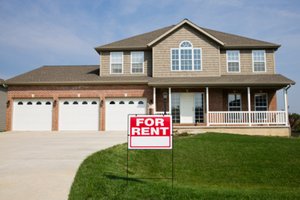
INSURANCE: Renting Out Your Home? Get Landlord Insurance


Maybe you’re moving up to a bigger home and holding on to your former residence as a rental property. Or maybe you’ve tried to sell your home without success. Whatever the reason, if you’re thinking about renting out your home, you need to look into landlord insurance.


Homeowners insurance covers your house if it burns down, your possessions if there’s a break-in, and medical and legal bills if someone gets hurt on your property. Problem is, homeowners insurance might not offer protection if you decide to rent out your home. Landlord insurance does. Set aside half a day to research policies.
 Renting out your home raises risks
Homeowners insurance typically covers owner-occupied, single-family residences, says John W. Saunders, president of Slemp Brant Saunders, an independent insurance brokerage in Marion, Va. When your home doesn’t meet that definition because it’s being rented out regularly, it’s no longer covered.


Most homeowners policies will cover an occasional short-term rental if, say, you’re going away for a few weeks, says Dave Millar, a partner at Riley Insurance Agency in Brunswick, Me. “But if you have a summer home you’ve decided to use as an income property and are putting different people in there every week,” he explains, “that’s a lot higher risk for the insurance company.”


The risk is also higher for both you and your insurer when you rent out your home on a full-time basis. You have an increased responsibility for injuries on the property, whether to your tenants or your tenants’ guests, says Bob O’Brien, vice president of Noyes Hall & Allen Insurance in South Portland, Me.


Insurers also experience more claims on tenant-occupied properties because tenants typically don’t care for properties as well as owners would. Renters are less likely to either identify or report maintenance needs, says O’Brien, and may be unfamiliar with a home’s systems like the location of the water shut-off.


Look into landlord insurance
When you decide to become a landlord, inform your insurer and ask about a specific landlord