Showing posts with label Safe Neighborhoods. Show all posts

Sunday, January 27, 2013

NEIGHBORHOOD NEWS: Panera opens nonprofit Hub cafe

Customers pay what they can afford here

Jonathan Diotalevi wasn’t sure what to expect when he walked into Panera Cares near Government Center on Wednesday, the restaurant’s first day of business. The recent UMass Dartmouth graduate said he doesn’t have a lot of cash and was just looking for a cheap lunch.

A smiling employee greeted Diotalevi at the door, he waited in line, ­ordered a tomato- mozzarella panini, and then asked the clerk, “So, can I, like, just give you two bucks?”

Yes, he could. And he did, dropping the money into a nearby donation bin.

The restaurant at 3 Center Plaza may have been as busy at lunch time as any of the chains’s other cafes nationwide — more than 1,600 of them — but there’s a reason cochief executive Ron Shaich calls this one “a test of human nature.”

The nonprofit outpost of Panera Bread Co. doesn’t have any cash registers, or set prices. Instead, it depends on donations from customers who pay whatever they can afford. The Government Center shop is the fifth of its kind for the St. Louis-based company — the first in this region.

“I think it’s awesome because it’s obviously beneficial for people who are a little less fortunate,” said customer Yanick Belzile of Lowell. “We can ­afford to, so we put in a little bit extra. If we can help someone else who can’t pay for a meal, why not?”

Belzile said he donated about $3 more than the suggested donation, or regular retail price,

Friday, January 11, 2013

NEIGHBORHOODS: Ariad to add HQ, jobs in Kendall Square

Drug maker consolidating after winning approval to market leukemia treatment

Ariad Pharmaceuticals Inc. will build a new corporate headquarters and laboratory complex in Kendall Square, adding to a biotech building boom that is rapidly filling that part of Cambridge with jobs and modern buildings.

The company, which recently won federal approval for its first major drug, will occupy most of two five-story buildings to be built on Binney Street by Alexandria Real Estate Equities Inc.

The new offices will allow Ariad to consolidate its operations and usher in an era of expansion following the launch of Iclusig, which won Food and Drug Administration approval last month as a treatment for chronic myeloid leukemia. The company is awaiting approval in Europe, too.

Ariad’s workforce has more than doubled to about 300 employees since the start of 2012, and the company expects to add at least 100 jobs in Cambridge over the next two years.


Ariad’s buildings will be part of a larger complex called Alexandria Center at Kendall Square , a 1.9-million-square-foot development that will eventually include four office and lab buildings, residences, stores, and restaurants.

Tom Andrews, an Alexandria Real Estate executive, said the project will bring new life to vacant lots along the eastern end of Binney Street and upgrade the area with bike paths, a public park, and fresher landscaping.

“These improvements will really transform that corner of Kendall Square,” Andrews said, adding that the Ariad buildings, to include at least one restaurant or retail shop, are scheduled to be completed in early 2015. The company has signed a 15-year lease to occupy about 60 percent of the 386,000-square-foot buildings at 75 and 125 Binney St.; much of the remainder will be available for lease by other technology or life sciences companies.

Several biotechnology companies are also moving forward with new office and laboratory complexes, including Novartis AG, Pfizer Inc., Millennium Pharmaceuticals Inc., and Biogen Idec, which will occupy another building under construction at Alexandria Center.

The rush of building activity is being fueled by the discovery of drugs to treat neurological

Saturday, December 22, 2012

BOSTON HOUSING NEWS: Hopes are high for new development in Roslindale

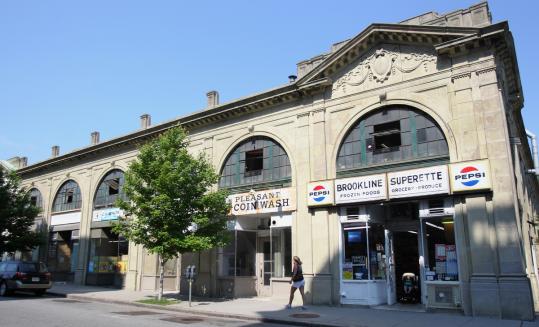
The hulking power substation stands vacant at the edge of Roslindale Square, a bleak remnant of the network that powered trolley cars in Boston more than a century ago.


The Roslindale substation was one of several in Boston neighborhoods that supported the old streetcar network.
Out of use for 40 years, the brick building has slowly deteriorated into an eyesore that belies both its proud history and prime spot overlooking an active business district.

Now, after years of false starts, the city-owned substation is poised for a dramatic transformation: a mixed-use complex with dozens of apartments, restaurants, and a produce market.

The project, led by local nonprofits and a Rhode Island developer, involves restoring the original details of the 1911 building, designed by the prominent Boston architect Robert S. Peabody, and constructing about 40 apartments on an adjacent lot.


The substation itself will house a restaurant, small cafe, and the produce market. Pending city approvals, the developers hope to begin construction next fall.
The project would refurbish the building’s massive arched
windows, many of which were bricked over years ago.
 About 40 apartments would be built on an adjacent lot.

“This is going to completely change the way people see that corner,” said Kathy Kottaridis, executive director of Historic Boston Inc., one of the nonprofits leading the project. “It’s an exciting economic opportunity for this building.”

The project would refurbish the building’s massive arched windows, many of which were bricked over years ago. About 40 apartments would be built on an adjacent lot.

The project will refurbish the building’s massive arched windows — many of which were bricked over years ago — and create a stronger visual connection to Adams Park at the center of Roslindale Village. Mayor Thomas M. Menino, a longtime supporter of the substation’s revitalization, said the effort will save a key piece of Boston’s history and bring the dilapidated building “back to active life in the community.”

The substation was one of several in Boston neighborhoods that supported the old streetcar network that led to a period of rapid growth in the city.

Historic Boston is working on the project with Roslindale Village Main Street. Those groups

Friday, June 29, 2012

MARKET TRENDS: 10 Things That Make a Home a Good Home


Buyers spend a lot of time looking at properties online, touring homes on the Sunday open house circuit, and talking to their real estate agent. They’re laser-focused on finding the best home that meets their needs. The problem is, buyers sometimes don’t take the long view of a property. They’re only looking at a home as a potential buyer — and not as someone who, years down the road, may also have to sell the property. Given that homes are such a big investment, there should be a little inside your head, picking away at your options and decisions.
As the home buying market starts to heat up again, here are ten things you should consider when choosing your next home.

1. Location, location, location

Perhaps nothing is more important than the three L’s, and there’s a reason why it’s said three times.
Location is extremely important when it comes time to sell. You can have the worst house in the world with the ugliest kitchen and bath. But put it on a great block or in a good school district, and your home will be coveted.
Location location location matters on so many different levels. At the highest level is the town where the house is located, then the school district, then the neighborhood and the block — right down to the location of the lot on the block. Keep all of this in mind when shopping. Also remember that while real estate markets rise and fall, no one can take a great location away from you.

2. The school district

The school district is right up there on the list of what’s most important to many buyers. It’s not uncommon for buyers to start their search based solely on the school district they want to be in. Parents want their kids to go to the best school, which can drive up prices of homes in those districts. Even though you might not have children, buying a home in a good school district is always smart. If the schools are desirable, homes tend to hold their value. As a homeowner, you should always be aware of how the schools are doing, not unlike being aware of your roof’s condition, the neighborhood development or city government.

3. The home’s position on the lot

Where the home sits on the lot in relation to the street or the overgrown oak are key elements in picking out a home. In the case of a condo, an end unit vs. an interior unit is a key consideration. You may have chosen the most beautifully renovated home in the best school district and figure all is good. But if the main living areas are shaded by a neighbor’s extension or the master bedroom looks into the neighbors’ family room, you may have a location problem. Light or privacy may not be a hot button for you, but chances are, they might be concerns for a future buyer.

4. Crime

It’s a good idea to check the latest crime figures for a neighborhood. It can give you a good snapshot about the number and severity of crimes over a time period. So much information is online nowadays that when you find your perfect home, a quick Internet search on the area should provide you with the much-needed information.
Most municipalities post their police blotters or crime statistics online these days.  Don’t freak out if you notice more crime than what you’d have expected. Crime, especially petty crime, is everywhere. If you’re new to the area, consult with your real estate agent if you have concerns.

5. Walkability

More than ever, ‘walkability’ is becoming a key factor in the search process.  There are entire websites, apps and algorithms that help people figure out how walkable their future home is. As a matter of fact, Zillow even has a Walk Score for most homes.  As people get out of their cars and slip into their Keds, they want a home in a walkable neighborhood. People put high value on the ability to walk to a store, school, work or public transportation.  The more we move away from cars and the more we see invested in public transportation over the coming decades, the more of a huge value-add walkability will become.

6. The neighborhood’s character

You may have found the absolute most perfect home, on the best block, in the best school district and on a great lot. But there could be circumstances outside your control that may give you pause — specifically, the character of the surrounding neighborhood.
Check out the area late at night, early morning and in the middle of the day. See if there are any odd weather or traffic patterns and try to observe some of the neighbors. You may even go so

Saturday, May 19, 2012

NEIGHBORHOODS: Walk Score wants to get you on your bike, too


Walk Score -- the Seattle-based developer that helps homebuyers and renters find "walkable" and transit-friendly communities -- is celebrating Bike to Work Week by expanding its scope to include "bikeability" ratings. 

The new Bike Score -- which is based on the factors like bike lanes, hills, road connectivity, and the percentage of people in an area who bike to work -- is initially available for what Walk Score has identified as the nation's "top 10 most bikeable cities."
Bike Score generates a rating of 0-100, with cities with scores of 70 or higher considered "very bikeable," those with scores between 50 and 69 "bikeable," and those with scores below 50 "somewhat bikeable."
Top 10 Most Bikeable Cities 
1. Minneapolis (79) 
2. Portland (70) 
3. San Francisco (70) 
4. Boston (68) 
5. Madison (67) 
6. Washington, D.C. (65) 
7. Seattle (64) 
8. Tucson (64) 
9. New York (62) 
10. Chicago (62)
Source: Walk Score
Bike Score "heat maps" are also available for 10 of the largest Canadian cities, including Toronto, Montreal and Calgary.
Walk Score said it will compute Bike Scores for 10 more cities receiving the most votes from May 14 to May 31. CEO Josh Herst said in a blog post that the company developed the Bike Score methodology in collaboration with professor Meghan Winters of Simon Fraser University, and professors Michael Brauer and Kay Teschke of the University of British Columbia, under a grant from the Canadian Institutes of Health Research.
Brauer said Bike Score will help cities measure and improve their cycling infrastructure -- a key to increasing ridership. Surveys showing bike commuting increased 43 percent between 2000 and 2010, but that 71 percent of Americans say they would like to bicycle more than they do now.
Walk Score says it delivers more than 6 million scores for apartment and home addresses per day across a network of more than 15,000 real estate sites, including Zillow.comZipRealty.comForRent.com and Windermere Real Estate.
Several multiple listing services (MLSs) have integrated Walk Scores into listings. Metrolist, a regional MLS in Colorado, was one of the first MLSs to integrate Walk Scores into its public-facing website, Recolorado.com, in 2008. Visitors to the site can search for properties by Walk Score.
Another Walk Score MLS partner, San Diego-based Sandicor, also displays Walk Scores on its public listing portal. Lisle, Ill.-based Midwest Real Estate Data LLC (MRED) integrated Walk Scores into listings in February.
Walk Score announced in January that it had raised $2 million from investors. Chief Technology Officer Matt Lerner said at the time that Walk Score aims "to build another great Seattle real estate company" like Zillow, Redfin and Windermere Real Estate.

Monday, April 16, 2012

NEIGHBORHOODS: Trayvon Martin Death Puts HOA's and Neighbor Watch Programs on Notice


Even if George Zimmerman is never charged with or convicted of Trayvon Martin's death in a criminal trial, Zimmerman's homeowners association (HOA) could be open to a Martin family civil suit that could cost the association (read: HOA members) millions -- just to defend the case.

Zimmerman faces a grand jury on April 12. His HOA community allegedly assigned him the role of community watchman. Even if
"stand-your-ground" law absolves Zimmerman in a criminal trial, he and his HOA likely won't escape a civil suit for negligence.Martin died of a gunshot wound Feb. 26 in an encounter with Zimmerman on the property of Zimmerman's HOA, the Retreat at Twin Lakes, in Sanford, FL.

If Zimmerman was named watch captain and there are questions about the HOA exercising due diligence in preparing Zimmerman for his role as a community representative, specifically as a Neighborhood Watch leader, negligence can easily make a civil case.

Just for this reason, at least one real estate company selling properties at The Retreat has distanced itself from the HOA in an online statement that says "We are an independent brokerage firm NOT affiliated in any way with the Home Owner Association."

"The death of Trayvon Martin, a 17-year-old high school student in Sanford, Fla., is a vivid reminder that neighborhood watch programs, even with the best intentions, can trigger tragic results for families, residents and entire communities," says Thomas M. Skiba, CAE, chief executive officer of Community Associations Institute (CAI).

"We know neighborhood watch programs can reduce crime and ease the fears of residents, but they also pose major risks when appropriate procedures aren’t followed. It’s essential that those who organize and lead watch programs work with local law enforcement authorities to ensure that all volunteers understand and accept the extent and limitations of their responsibilities," said Skiba.

Skiba said it’s not CAI’s place to pass judgment on the criminality of the events in Florida or the state’s stand-your-ground law.

"But the horrible fact remains that family and friends now grieve for a young man," he says. "As the father of a 17-year-old son, I can’t begin to imagine the horror facing Trayvon’s family. If nothing else, the regrettable confrontation that night reminds us that such programs must be carefully implemented and rigorously monitored."

Skiba urges all community associations—even when a watch program isn’t managed by the association—to review procedures and to do everything possible to prevent confrontations that should be handled by police.

For communities considering neighborhood watch programs, Skiba offers the following advice:
• Contact the local police department for start-up support, guidance and training. Volunteers who skip this critical step can find themselves on the wrong side of the law—or worse.
• Seek the advice of an attorney with expertise in community association law.
• Create processes for recruiting only responsible volunteers who will follow all procedures.

Sunday, March 11, 2012

NEIGHBORHOODS: Boston #2 US City For Seniors

Bankers Life and Casualty Company Center for a Secure Retirement recently commissioned a survey of the Best U.S. Cities for Seniors. Conducted by research firm Sperling’s Best Places, the July 2011 study ranked 50 cities and their surrounding metropolitan areas on a universal set of criteria, from transportation and housing to Healthcare and the environmen

To determine the rankings, Sperling’s Best Places assembled and reviewed independent data from existing city and state government records, the Bureau of Labor Statistics, the American Medical Association, the Environmental Protection Agency, the Centers for Disease Control and Prevention, Medicare databases and a number of other verified sources.
Top 25 U.S. Cities for Seniors 2011
  1. Minneapolis-St. Paul, MN
  2. Boston, MA
  3. Pittsburgh, PA
  4. Cleveland, OH
  5. Denver, CO
  6. Milwaukee, WI
  7. San Francisco, CA
  8. Portland, OR
  9. Kansas City, MO
  10. Newark, NJ
  11. Nassau-Suffolk Cty, NY
  12. Philadelphia, PA
  13. Edison, NJ
  14. St. Louis, MO
  15. Baltimore, MD
  16. Oklahoma City, OK
  17. Salt Lake City, UT
  18. Providence, RI
  19. Seattle, WA
  20. Indianapolis, IN
  21. Cincinnati, OH
  22. Columbus, OH
  23. Washington, DC
  24. Austin, TX
  25. Chicago, IL

Criteria

In order to rank the 50 metropolitan areas in terms of their suitability for seniors, we examined data in nine categories that are key to seniors’ quality of life: healthcare, transportation, housing, social, environment, economy, health and longevity, spiritual life and crime.
High scores in these areas correlate with cities and their surrounding metropolitan areas that offer places to live that are conducive to senior living and healthy aging. Ranked on a scale of 1 to 10, categories that have a greater impact on seniors are more heavily weighted in determining a city’s total score and ranking.
Healthcare (Weight: 10)
Widespread availability of physicians specializing in geriatric issues—such as cardiology, oncology and orthopedics—is critical to supporting a senior population. The study also examined the number of hospitals per capita and their ratings based on patient reviews, the number of nursing homes per capita and their ratings, and the presence of continuing care retirement communities.
#1 metro for healthcare: Indianapolis, IN
Economy (Weight: 8)
This category presents a snapshot of the region’s economic health, taking into account everything from average consumer prices and sales tax to the local unemployment rate.
#1 metro for economy: Pittsburgh, PA
Health and Longevity (Weight: 8)
In the category of health and longevity, the study looked at depression rates and mortality from cancer and heart disease in addition to life expectancy at birth and at age 85.
#1 metro for health and longevity: San Jose, CA
Social (Weight: 8)
A satisfying social life depends on numerous factors, from the existence of a sizeable peer group to recreational opportunities. The study first determined what percentage of the overall

Monday, August 8, 2011

NEIGHBORHOOD SAFETY: Protect Your House While you Enjoy Summer Vacation

Crime rates across the country can peak as temperatures rise during warm weather months —
the same time that many families leave their homes unoccupied and unprotected.


Try these simple precautions from Florida Realtors® to make your home less of a target for criminals:


No Home Alone
Before leaving your home during the day, make it look as if someone is still at home by using timers on lights in various rooms. Even though daylight hours are longer during the summer, it may still get dark faster than you expect or you may return home later than anticipated, and taking this step ensures that your home appears occupied at all times.


No open door policy
Ensure that all doors leading to the home and garage are locked, even when leaving for a short time. The typical burglary takes less than five minutes, and unlocked doors, combined with an empty home, put out the welcome mat for criminals.
Someone to watch over me


Be landscape smart. Shrubbery and other plants can grow very rapidly during the warm, wet summer months, so keep them trimmed to allow your neighbors to keep an eye on your home. Also, an unkempt yard could be viewed as a sign of an empty home to a burglar
.
A key reminder
When leaving home, take your house keys along or leave a spare set with a trusted neighbor. Never leave a key under a welcome mat, in a mailbox, or other hiding spots — most burglars know where to look.


Crime doesn’t take a vacation
If you’re planning to be away from home on vacation for more than a day or two, ask a neighbor to park a car in your driveway and pick up your mail and newspapers if you’re not going to cancel the paper and hold the mail. Disable your garage door opener and manually lock it from the inside then check that the door leading from the garage to the home is locked, too.


Source: Florida Realtors®
Read more: http://www.houselogic.com/news/articles/protect-your-house-while-you-enjoy-summer-vacation/#ixzz1TPJamtjk

Saturday, July 2, 2011

NEIGHBORHOOD NEWS: Ambitious plan for Government Center Garage site

Vast project calls for shops, housing

The hulking Government Center Garage in Boston would be torn down and replaced with a massive complex of residences, offices, and stores under an ambitious plan made public yesterday.


The project — which, if approved, would be one of the largest to proceed in downtown in decades — comes from HYM Investment Group LLC, and would bring 2.4 million square feet of development to a key 4-acre plot between Boston City Hall, the TD Garden, and the Rose Fitzgerald Kennedy Greenway. For 40 years the garage has acted as a wall between the area around Faneuil Hall and a reemerging neighborhood in the city’s West End.


“The proposed project will remove the unsightly barrier of the Government Center Garage from its current prominent position over Congress Street ,’’ HYM chief Thomas N. O’Brien, a former Boston planning chief, wrote in a two-page letter to the Boston Redevelopment Authority. The letter, released by the BRA yesterday, also said the de velopment would include a hotel, a “major residential component,’’ and retail stores that would complement a planned food market above the Haymarket MBTA station.


O’Brien has not said how tall the proposed complex would be. The current garage, which is topped by several floors of offices, is 11 stories.


Even at its smaller size, the development would be the largest in the current pipeline of construction projects in downtown Boston and would bring hundreds of new residents into an area of the city that goes quiet on nights when the Boston Bruins or Celtics are not playing at the nearby Garden. The project is more than double what another developer has proposed building on the site of the former Filene’s department store in Downtown Crossing.


The garage is located on New Sudbury Street and is bounded by Congress, New Chardon, and Hawkins streets.

Friday, July 1, 2011

NEIGHBORHOOD NEWS: Brookline residents puzzled as prime storefronts languish

Lawyer says he’s helping ill-prepared owners launch a turnaround

Brookline resident Jean Stringham often walks by a strip of vacant storefronts on the edge of the otherwise vibrant Coolidge Corner and asks herself, “Why is this allowed to look so bad?’’


The decaying 42,000-square-foot building has seven street-level storefronts — five of them empty. A sushi restaurant moved out months ago, leaving menus taped to the windows, debris on the floor, and soy sauce on the counter. Washers and dryers in an old laundry two doors down can be seen through a dusty window.


The degradation of the 1920s building — valued by the town at $4.1 million and a prime spot for redevelopment — has been a years-long headache for neighbors and town officials. But until now, its owners, Gladys Goldstein Vinograd and Joseph Vinograd, have been stubbornly resistant to change.


The couple could not be reached for comment for this story. But their attorney, Albert Kramer, told residents at a Town Hall meeting Tuesday that improvements are finally on the way. Kramer — who spoke by speaker phone during the meeting — said he will soon take steps to clean up the building and is talking with several developers about major upgrades. He said the owners, who inherited the property years ago, lack business acumen.


“We will improve the aesthetics of the property, we will have full tenancy, and we will generate better revenues for the people who own it,’’ said Kramer, a retired Quincy District Court judge, who used to live in Brookline. “I am now working at it. I’m dedicated to help.’’


The property — known as Durgin Garage — is a rarity in Brookline, where empty storefronts usually don’t stay that way for long and the median single-family home price tops $1 million. Despite the building’s condition, the landlords have paid their taxes and generally addressed public health concerns such as trash and broken windows, leaving the town with limited ability to take action, public officials said.


“The building is unsightly, it is a nuisance to the neighborhood,’’ said Jeff Levine, Brookline’s planning director. But, he added, “There is no law they have to rent spaces to tenants or make the building attractive.’’


The garage was designed in 1926 to provide long-term parking for nearby residents and is one of the town’s last intact garages built during that era, said Greer Hardwicke, the town’s preservation planner. It currently houses an auto body shop in the back of the building located at the tip of Pleasant Street, a busy thoroughfare that flows into Beacon Street.

Friday, April 15, 2011

LOCAL NEWS: Herald site development is resuming

National Development is shopping a new plan to redevelop the Boston Herald property in the South End, soliciting major retailers to anchor a complex that would also include dozens of residences, the company confirmed yesterday.


The Newton real estate firm struck a deal with Herald owner Pat Purcell in 2007 to jointly redevelop the 6.6-acre site off the Southeast Expressway, but because of the credit crisis and recession they are only now preparing to move forward.


TJX Cos., the Framingham discounter that runs HomeGoods, Marshalls, and T.J. Maxx, is among the merchants interested in the planned project, according to people briefed on the discussions. Whole Foods Market Inc. had considered opening a store in the complex but is no longer interested and has since said it is planning a super market in Jamaica Plain.

Wednesday, March 30, 2011

TECHNOLOGY: Smart Meters Raise Suspicions

Coast to coast, from Maine to Marin County, Calif., the number of homes being outfitted with smart meters that keep a close eye on home owner electricity use is on the rise. And so is the number of folks who think smart meters are a dumb idea.


Some complain about the meters’ accuracy. Some worry about potential burglars watching when they turn off the lights. Others center on fears the radio waves from the meters could trigger ringing ears, headaches, nausea, sleeplessness, and worse. There’s no medical evidence for the concern, but people still worry.


“I’m old enough to remember running behind the DDT trucks as a child (which sprayed the insecticide as a gas cloud to kill mosquitoes), and everyone told us those were safe,” says South Portland, Maine, Mayor Rosemarie De Angelis. She had her home’s freshly installed smart electricity meter removed last fall. “It feels the same way now when people say smart meters are no problem.”


Nationwide, some 3 million homes have smart meters, digital electricity gauges equipped with wireless communications, according to the federal Department of Energy (DOE). According to the utility industry’s Institute for Electric Efficiency, about 65 million smart meters will be working in U.S. homes by 2020.


Giving consumers more power
The meters mean the end of the meter reader wandering into the back yard to record numbers off the whirling gauges. Instead, a radio signal either goes directly to the utility company over power lines or is sent by cellphone signal. The meter puts access to that same information inside for the home owner to see.


“For consumers, it really is about empowering them to make choices about their energy use,” says DOE’s Stephanie Mueller. Hooked to the coming “smart” electrical grid, home owners with smart meters should be able to select pricing plans that let them purchase juice at off-peak hours when it is cheaper, saving them money and the power company the extra cash it spends to run generators during peak afternoon hours.


Boosted by $4.5 billion in federal smart-grid spending over the past two years, 140 power company projects have started installing smart meters in homes.


“A lot of smart meters are being installed quietly, and with no complaints,” says Intelligent Utility magazine’s Kate Rowland. “The success stories aren’t noticed, while a handful of complaints get all the media attention.”


One of the utilities getting attention is Central Maine Power, which installed, and removed, the smart meter in De Angelis’ house. The utility matched a $96 million federal grant last year to start installing 650,000 meters across southern Maine. But with only about 56,000 in place, the meters have become political footballs. The state utility commission will hear complaints in a March 16 meeting, and Maine Gov. Paul LePage says he favors letting home owners “opt out.”


Various complaints dog the technology
Similar protests, including arrests and demonstrations, have bedeviled Pacific Gas & Electric’s rollout of smart meters across Northern California. And in Texas, the power company Oncor received hundreds of complaints about the accuracy of its new smart meters, leading the state utilities commission to hire independent analysts to confirm their accuracy.


Complaints have come in various flavors:


Accuracy. In both California and Texas, higher bills led to independent audits of smart meters. A lawsuit by a Bakersfield, Calif., resident Peter Flores, who said his monthly bills went from $200 to $500, halted installation of meters there. A hot summer in California and a cold winter in Texas seem to be partly at fault for the anger, the audits concluded. But misperforming meters have led to utilities handing out refunds, says Mark Toney of The Utility Reform Network (TURN) consumer group in San Francisco.


Security and privacy. Smart meters can communicate when power demands go up or down at individual houses, leading to more anxiety. “Who is getting the information about when my garage door is going up and down?” De Angelis asks. “I don’t want to come home and find my house has been ransacked by someone who knows when I’m gone.” For this reason, the Energy Department and most states require rules that prohibit sharing such data in smart-grid designs. But with firms such as Google and Microsoft marketing software to manage home power that will rely on smart-meter signals, De Angelis and others worry about private data leaking to the open market.


Health. In an era of cellphone and power-line worries, news that a radio-frequency-equipped meter has been installed on your house worries some home owners. Such concerns led to the California Council on Science and Technology issuing an independent report in January that concluded smart meters delivered less radio frequency energy to home owners than cellphones or microwave ovens. Both the Food and Drug Administration and World Health Organization found no evidence linking such radiation to health problems.


“In the absence of information, people assume the worst,” says Peter Honebein of the Customer Performance Group in San Diego, an industry consultant. Around San Diego, Georgia, Ohio, and the District of Columbia, where smart meters were rolled out only after utilities made intense efforts to educate customers, there have been far fewer complaints.


De Angelis sees the value in that. “I felt like it would be a lot ‘smarter’ if they had answered my questions before they installed it.”


(c) Copyright 2011 USA TODAY, a division of Gannett Co. Inc.
A service of YellowBrix, Inc.


Dan Vergano HouseLogic.com March 9, 2011
Read more: http://www.houselogic.com/news/articles/smart-meters-raise-suspicions/#ixzz1GrlmPJo3

Saturday, February 12, 2011

SAFE HOMES: Winter Storm Safety

Winter weather can be relentless. Ice, snow, and sleet in their many forms mean homeowners can find themselves homebound.


Outlined below are ten easy steps that can help your family make it through a winter snow-in.


1. Keep warm: Temperatures can drop well below zero during major winter storms. If your electricity fails, do you have a backup plan to keep warm? Blankets, warm clothing, and firewood are all great things to have on hand.


2. Water: We can survive on limited food, but we and our pets must have water. Have bottled or jugged water on hand in the case of emergency.


3. Non-perishable food: If you go without electricity, you may find yourself being unable to store food. Stock up on non-perishables before a big storm. And then buy plenty of fruits and vegetables that can keep without refrigeration.


4. Crank radio: You may need to listen to emergency announcements. Crank and battery-powered radios are an essential.


5. First-aid kit: Alcohol, bandages, anti-bacterial ointment, burn salve, and basic pain killers (aspirin and acetaminophen) are staples of a well-stocked first-aid kit. Also be sure that prescriptions have been filled prior to any big storm system.


6. Sidewalks: Be sure to have a snow shovel and a bag of sand on hand before any big storm. You'll need to clear your driveway as well as sand your walkways. There is nothing worse than taking a spill on ice.


7. Candles and lighter/matches: If lights are out, you'll still need candles or a flashlight to find your way around. Plus, candles offer a great ambiance, even when you're stuck inside!


8. Entertainment: Movies, cards, board games, and books can all make the time pass quickly.


9. Sleds: Okay, this isn't a necessity. But nothing brings out the wish for a sled more than a perfectly snow covered hill. Plan ahead and you'll be ready for some great family bonding.


10. Travel: If you must venture out, be sure you have a full tank of gas, a blanket/sleeping bag, water, and kitty litter. Why kitty litter? If you get stuck, kitty litter may offer enough grit for tires to gain traction.


Use these simple tips to make your next snow day successful. And above all else, be sure to stay off icy roads and inside your home when weather is bad.


Carla Hill Realty Times February 3, 2011

Thursday, February 10, 2011

NEIGHBORHOOD DEVELOPMENT: Concord; Work on 350-unit complex begins

Affordable units help town plan

After plodding through years of planning, public hearings, and financing issues, developers are breaking ground on a 350-unit apartment complex in West Concord.


Crews started demolishing two industrial buildings last month, and site work is scheduled to start next month.


“We’re very excited to have finally started after all this time,’’ said Robb Hewitt, who is overseeing the project for Mill Creek Residential Trust. The project’s name has changed from Alexan Concord to Longview Meadow.


The start of construction is good news for Concord officials, who have long supported the affordable housing project because it will ultimately allow for more control over its future residential growth, according to the town’s planning director, Marcia Rasmussen.


The project, built under the state’s Chapter 40B affordable-housing law, will put Concord over a state threshold for affordable housing units. Of the 350 apartments, most of which will have one or two bedrooms, 25 percent would be set aside for lower-income renters, but as rental units all of them qualify for the Chapter 40B requirement. As a result, at least 10 percent of Concord’s housing stock can be considered affordable, meeting the state’s threshold.


Many communities frown on Chapter 40B projects because it allows developers to bypass most local zoning regulations as long as they set aside a percentage of the units as affordable. But with the new apartments under construction, Concord will be able to say no to projects that don’t fit in with its planning goals.


“It’s great because this particular property has been on the table for about four years,’’ said Selectman Jeffrey Wieand, chairman of the Concord board. “It allows us to comply with the state housing statute.’’


The project is being built on a 30-acre parcel on Old Power Mill Road in the town’s southwest corner bordering Maynard, Acton, and Sudbury. Traffic would enter and exit the property through Acton, and the apartments will be adjacent to a Sudbury neighborhood.


When the project was proposed, Acton and Sudbury residents raised concerns about the traffic and density of the project.


But there have been no issues since construction started, officials said.


“We haven’t had many concerns or complaints from neighbors,’’ said Jody Kablack, Sudbury’s director of planning and community development. “For now, we have an open line of communication, and nothing has been flagged yet for an issue.’’


On the site, there will be 11 three-story buildings, each with 28 units, and 42 two-story town house units. In addition, the project will include a 6,000-square-foot clubhouse with pool, fitness center, and other amenities.


Hewitt said the timing for construction isn’t ideal, but the company is trying to get as much done as quickly as possible. Construction is expected to take about two years, though the company plans to start leasing the units in about a year. He said there would be a lottery for the affordable units.


Hewitt said he’s hopeful that the housing market will have rebounded by then.


“It’s poised for a recovery,’’ he said. “Very little has started over the last couple of years, so we think we’ll be in a good position.’’ Concord approved the project’s Chapter 40B comprehensive permit in the spring of 2008, and Acton approved its permit in November 2008.


Concord was allowed to count the unbuilt units toward its affordable-housing stock as long as the developer obtained a building permit within a year. However, the year passed and the developer was unable to obtain financing so a building permit was not issued. As a result, the town had to take those units off its affordable-housing inventory, Rasmussen said, leaving the town once again vulnerable to other 40B projects.


But Rasmussen said the company was able to work out the financing last fall, and returned to Concord for the building permit. Now that it has been filed, Rasmussen said, the town can add the units to its affordable housing inventory.


Rasmussen said she’s relieved that no other developer proposed projects in the meantime.


“I don’t have to hold my breath any longer,’’ Rasmussen said.


Jennifer Fenn Lefferts Boston Globe January 27, 2011

Sunday, January 23, 2011

BUILDING COMMUNITY: Improve the Infrastructure of Your Community

New community infrastructure enriches your neighborhood—and maybe your home value, too. Follow these four tips to get upgrades that boost your neighborhood’s curb appeal. It takes time and effort, but lobbying local government for sidewalks, crosswalks, street lighting, and other community infrastructure:


Creates a sense of community.
Makes an area more desirable to home buyers. Indeed, appraisers keep score of community infrastructure and amenities when valuing homes.
Sets your ‘hood apart from others with similar homes—especially in a competitive real estate market.
A local REALTOR® can tell you which infrastructure upgrades will offer the most value to your community. Then it’s up to you to work with local government.


1. Who controls community infrastructure?
Call your mayor or councilperson’s office to find out which office of your local government handles infrastructure upgrades and additions. Does your city or town have any short- or long-term plans to develop a grid of sidewalks or street lighting?


“Developing a system of sidewalks leading to a downtown, shopping district, or local school adds more value to the neighborhood than disjointed sections of sidewalk,” says Cheryl E. Kuck, public information officer for the City of Portland Bureau of Transportation.


The pitch: Saying that the infrastructure project is something your community needs is better than something it wants.


Example: If you want sidewalks, argue that kids need them to walk safely home from school rather than saying you need them because they’ll improve your home value.


2. What is the community infrastructure approval process?
You might have to get a certain number or percentage of people who live near the project to sign a petition saying they approve.
You might need to hop aboard a lengthy process involving a zoning or planning board.
Once you know the process, figure out how to present your case.


3. Who picks up the tab for community infrastructure projects?
It’s not cheap. Concrete curbs and sidewalks cost about $15 per linear foot for curbing and $11 per square foot for walkways. Streetlight and crosswalk costs differ depending on their design.


Funding sources may include:


Local, state, and federal tax dollars
Assessments charged to home owners (Local officials may be able to offer relief or deferrals to seniors.)
Bonds issued by local government and paid back over many years
Money set aside by government for capital improvements

4. How do I deflate the naysayers?
One strategy: Emphasize health.


As Americans become more conscious of the environment and their health, crosswalks and sidewalks are a good way to get your neighbors out of their cars.
A walking-friendly neighborhood will hold its value better than a similar neighborhood that’s not walkable.

Support for community infrastructure projects can quickly snowball. “Building community support helps to sway local council people to your side,” says Charlie Zegeer, director of the Pedestrian and Bicycle Information Center.


Myra A. Thomas HouseLogic.com December 2, 2010


Read more: http://www.houselogic.com/articles/improve-infrastructure-your-community/#ixzz1AvuvlSqd

Tuesday, January 4, 2011

SAFE HOMES: Congress Moves to Reduce Lead in Drinking Water

WASHINGTON—Congress on Friday sent President Barack Obama a bill that would significantly reduce exposures to lead in drinking water.


Lead contamination can pose serious health risks, particularly to pregnant women and children. It has been linked to health problems such as kidney disease, hypertension, reduced IQs in children, and brain damage.


The House approved the bill on a 226-109 vote. The Senate approved it earlier on a voice vote.


The bill would set federal standards for levels of permissible lead in plumbing fixtures that carry drinking water, with allowable lead content going from the current federal level of as much as 8 percent to 0.25 percent. It limits the amount of lead that can leach from plumbing into drinking water.


Rep. Mike Doyle, D-Pa., said the new standards would nearly eradicate lead in faucets and fixtures. He cited Environmental Protection Agency estimates that lead from these sources contribute to up to 20 percent of human exposure.


The bill becomes effective 36 months after it is signed into law. It would then prohibit manufacturers and importers from selling plumbing fixtures that don’t meet the new standards.


“In 21st century America, we have a responsibility to do more to protect our children and families against lead exposure acquired through plumbing systems,” said Rep. Anna Eshoo, D-Calif., who authored the bill in the House. “Lead-free plumbing is an existing alternative, it’s affordable and it’s time we adopt it across the nation.” Health studies, she said, have estimated that lead exposure costs the nation $43 billion in lost time and health costs.


“Lead, a toxic heavy metal, does not belong in our drinking water,” Senate sponsor Sen. Barbara Boxer, D-Calif., said Thursday night after the Senate passed the bill on a voice vote. “This is a major step forward in the effort to eliminate lead in our drinking water.”


Almost all the opposition came from Republicans. Rep. Cliff Stearns, R-Fla., questioned the necessity of passing a federal law when major producers of faucets are already making safer equipment and some states are imposing their own tough standards.


He added that “people should not mistake this bill as a panacea when studies have shown that lead service lines are the biggest culprits of leaked lead.”


An Associated Press investigation last year found that contaminants have surfaced at public and private schools in all 50 states, with lead among the most frequent causes of unsafe water.


Last month residents in New York City were told to run their taps for 30 seconds before drinking water after tests showed elevated lead levels in some older buildings.


“Lead in drinking water poses a dangerous health risk, particularly to pregnant women, infants, and children, and it is refreshing to see that members of both parties in the Senate and House can agree on making the water we drink every day safer,” said Mae Wu, an attorney at the Natural Resources Defense Council.


Jill Abrams House Logic.com December 20,2010


Read more: http://www.houselogic.com/news/articles/congress-moves-reduce-lead-drinking-water/#ixzz18x4VXQ5c