Showing posts with label Home Design. Show all posts

Sunday, March 3, 2013

DECORATING: The worst colors to use in a home


Emerald may be this year’s color of the year and hot hue, but which colors should you avoid?
Color research tells us some colors to avoid. Colors that can be considered, as some researchers note, “eye irritants” and can even cause headaches or mess with your vision.
According to color research, the worst offending color:
Yellow as a “pure bright lemon.”
“More light is reflected by bright colors, resulting in excessive stimulation of the eyes,” researchers note. “Yellow is an eye irritant. Babies cry more in yellow rooms, husbands and wives fight more in yellow kitchens, and opera singers throw more tantrums in yellow dressing rooms.”
That said, yellow is the first color the human eye tends to notice so in small doses it may be effective. It can help you draw attention to an item when used as an accent color. Also, using yellow in softer tints or in small quantities may not be such a turn-off.
A recent article at Homesessive.com (“Paint Color Trends to Avoid”) pinpointed trendy color combos that may have once been a turn-on that are now becoming a turn-off in home interiors. San Francisco color expert Kelly Berg recently weighed in at Homesessive.com about some trendy color combinations to avoid, such as:
  • “Greige”: The gray and beige combo in a space to create a monochromatic effect. Instead, Berg recommends pulling in some accent colors, likegrassy greens, to make the space more warm and inviting. She also recommends mixing in reflective surfaces, such as glass and metal, to lighten up the room since gray tends to absorb more light than other hues.
  • Chocolate brown and blue: This trendy color combo of a chocolate brown and Tiffany’s blue may be growing tiresome in home interiors. Berg recommends freshening up the look

Tuesday, February 5, 2013

HOME IMPROVEMENT: Home Improvement Growth Latches Onto Housing Recovery

Remodeling is rebounding and it's about time.

Just as the sales-driven housing recovery is bringing home the equity bacon for many underwater homeowners, home improvements can further boost home values and help sustain both the housing recovery and economic growth.

Spending on home improvements increased 9 percent in 2012, the first increase since 2007, according to the Joint Center for Housing (JCH) Studies at Harvard University.

When housing crashed in the late 2000s, so did the home improvement sector, leaving in its wake some 2.4 million so-called "inadequate homes."

These properties were likely converted to rentals or nonresidential use, became vacant or were permanently erased from the housing inventory, JCH says.

"With the US economy and housing market now recovering, investment in the nation's housing inventory is also picking up. Lenders and new owners are rehabilitating millions of foreclosed properties. Older homeowners are retrofitting their homes to accommodate their future needs... And with the huge echo-boom population moving into the home buying market over the coming decade, the remodeling industry can look to an even more promising future," the JCH report found.

The National Association of the Remodeling Industry (NARI) says property owners are feeling more secure about their economic future, according to its fourth quarter 2012 Remodeling Business Pulse Data.

Many property owners are using home improvements to increase their home's value, improve salability and enhance their investment in their home, but others are catching up on deferred maintenance, repairs and upgrades.

"Remodelers are indicating major growth in the future, with many saying that clients are feeling more stable in their financial future and their employment situations; therefore, they are spending more freely on remodeling needs,” says Tom O'Grady, chairman of NARI's Strategic Planning & Research Committee.

Among industry growth indicators NARI's membership found from the third quarter 2012 to the fourth quarter 2012, current business conditions were up 2.1 percent; customer inquiries up 3.9 percent; requests for bids up 3.7 percent; conversion of bids to jobs, up 3.5 percent and value of jobs completed up 4.3 percent.

In many cases, homeowners are remodeling instead of moving. That's especially true among homeowners with mortgages that are larger than the value of their home, even with a recovery underway.

These homeowners couldn't sell for a profit and rather than taking a loss, are hunkering

Saturday, February 2, 2013

Architecture: Small-house philosophy attracts big interest

For a man who thinks small, Ross Chapin is in big demand.

The American architect and author from Whidbey Island, Wash., has been busy fielding calls from around the world, from Japan and Australia to Spain, England and right next door in Canada.

Everyone wants to know more about the small-house philosophy he’s helped to pioneer across the border and what he calls “pocket neighbourhoods,” an old-fashioned community-planning concept repurposed (and newly coined) to fit with modern urban demands.

“Perhaps this is in response to ‘big,’ ” Chapin said of the global interest in small housing in an interview earlier this week in Vancouver, where he delivered a talk on the small-housing trend at the University of B.C.

“I think there are people all around the world who are trying to find approaches that are more sustainable, more humane, more livable. That’s a challenge for all of us in a finite world.”

Livability and sustainability — not to mention affordability — are key words in the Vancouver region right now as cities struggle to balance a need to accommodate an estimated one million more residents over the next 25 years with a desire to preserve green space and limit urban sprawl.

That discussion has encouraged a range of new housing options to spring up in recent years in what had been predominantly single-family home neighbourhoods from the west side of

Tuesday, December 4, 2012

HOME DECOR: Avoiding 3 Common Mistakes Even Savvy Decorators Make When Choosing Art


In the realm of interior design, the works of art you choose should frame your decor and go beyond matching the furniture, being “cool,” or displaying status symbols.

Consider these tips for choosing art for your home.
Mistake No. 1 Choosing artwork to match the sofa
Find work that compliments your mood and the style of your décor. To that end, here are some important questions to consider.
  • Does the art make your energy feel light or heavy?Try experimenting. Grab a National Geographic or some other magazine with a wide variety of images and take a look through the pictures. Become aware of the photographs that weigh you down and those that create an effervescent effect in your energy. Once you learn to recognize these feelings, have a look at the pictures on your walls.
    Give away or donate the ones that weigh you down. Find others that bring you the greatest joy. Position them in locations with the greatest visual impact.
  • What do the images evoke?If you are single and want a relationship, surround yourself with images of pairs and lovers. If you want to increase prosperity, surround yourself with images that create a sense of wealth and abundance. If you are going through a career change, surround yourself with images that bring a sense of enthusiasm, success. Consider portraits of role models in your field.
    Surround yourself with images that are symbolic of who you are, who you want to be.
  • Why do you like the images that you like?Sometimes we choose images that inspire us and make our energy hum with delight. Other times we choose images that make us feel comfortable in a way that is not productive, but locks us into unconscious habits and self-limiting beliefs.
    Dullness does not inspire you to be the vibrant, exceptional. Become aware of why you are drawn to a particular image. Consciously choose images that will support you in becoming all you can be.

    Mistake No. 2: Choosing art that 'looks cool'
    Art that looks cool or is created with interesting materials is a good place to begin. But you can have a deeper relationship with art.
    Take it a step further and find art that really resonates through you. The most powerful experiences from art come from finding work that speaks to your most primal essence.
    Do a little home work and then choose work that you love. Love love. Love that makes you feel all shivery, like that first high school crush. Love that lights you up on the inside so much
  • Monday, December 3, 2012

    REMODELING: Bathroom Remodels Add Value


    Homeowners looking to add value to their home should start in one of the most central rooms of the home -- the bathroom.

    HouseLogic, supported by the National Association of Realtors (NAR), reports that the top bathroom trends can even be real money savers.According to C.P. Hart, one of the UK's leading contemporary bathroom retailers and suppliers of bespoke bathrooms since 1937, a great bathroom can add real value to your property.

    First, take note of energy conservation. Low-flow toilets can use a fraction of the amount of water of standard versions. Low-flow shower heads and faucets can also conserve water, a prime consideration for homeowners all across the drought-ridden Midwest and beyond.

    The next trend will tug at the heart of every tech geek. HouseLogic reports it's all about technological advances. "You'll be able to create a custom showering experience more affordably than ever. For $300 for simple controllers to $3,500 or more for a complete luxury installation, programmable let you digitally set your preferred water temperature, volume, and even massage settings before you step in. To achieve a personalized showering experience, you'll need a 120-volt power source, and a thermostatic valve and controller in addition to your standard shower head or heads. Luxury models may include a steam system, a wi-fi source for music, multiple body spray outlets, tankless water heater, and a secondary controller to start the system from another room."

    Take it a step further with docking stations for your iPod and integrated television screens in your mirrors!

    C.P. Hart say it goes beyond saving energy and geeking out, however. Bathrooms can have focal points and finishes that can be real show stoppers. "Fittings and accessories should never be ignored when furnishing your washroom. A key piece, such as a basin, can really enliven the look and bring a touch of luxury to any space. Glass Design create bespoke washbowls that are a great example of cutting-edge design meets decadence. Each piece is uniquely designed, using materials that capture the soul of the product, adding a new lease of life to your abode."

    Today's bathroom designs are about clean lines and organized beauty. Less is more, letting

    Thursday, November 29, 2012

    EMPTY NESTERS: Empty nesters carve out ‘boomer caves’

    Those looking to get away without leaving home are creating rooms to watch movies, sip wine, or otherwise relax.

    Preparing to renovate their new Back Bay condo, Bill and Lisa Vanderweil were sure about one thing: They wanted one cozy “getaway” room where they could relax, watch TV, read, or just talk.
    Bill and Lisa Vanderweil converted a bedroom in their Back Bay condo into a cross between an entertainment room and a den where they can enjoy movies or sports.


    So they converted one of the three bedrooms into a cross between a small entertainment room and an old-fashioned den, complete with wood paneling, big-screen TV, wet bar with a small sink and refrigerator, large chenille couch, club chairs, and other items to give the room a relaxed feel.

    “This is the spot where I just want to hang out,” said Bill Vanderweil, 67, managing principal at Vanderweil Engineers LLP. “The room is so much fun,” added his wife, Lisa Vanderweil, 52. “We love going in there and watching Pats games and movies.”

    Empty nesters such as the Vanderweils are carving out special spaces within, or outside, their homes — favorite spots to call their own or intimate spaces they can share with family and friends.

    Call them “boomer caves,” such “getaway” spaces come in all sizes, shapes, and varieties — movie rooms, wine-tasting alcoves, intimate patios for alfresco dining, gardening sheds, basement exercise rooms with saunas, studies for work and pleasure, free-flowing kitchen-into-living-room spaces.

    “We’re doing a lot of our work for empty nesters and others over 50,” said Greg Childs, business development manager for Concord’s Gallagher Home Builders Inc., which handled the Vanderweils’ recent condo renovation. “People are less formal than they used to be. They want more intimate and yet communal spaces, for themselves and family.”
    Whether it’s the perfect reading nook or a casual place to enjoy a glass of wine and good conversation, here are some of the more popular indoor and outdoor caves that people are creating for themselves.
    The room features wood paneling and club chairs to make it a “spot where I just want to hang out,” Bill Vanderweil said.
    Yoon S. Byun/Globe Staff
    The room features wood paneling and club chairs to make it a “spot where I just want to hang out,” Bill Vanderweil said.

    Indoor caves

    Movie/entertainment rooms. They’re classic — and come in many different sizes and styles and prices. Paul Apkarian, owner of Paul Apkarian Architects Inc. in Westborough, said movie rooms ­— also known as “home theaters” or just plan “entertainment rooms” — remain the most popular dream of people trying to create that ultimate comfy, escape room. Depending on how extravagant people want to get with the electronics and furniture, the

    Monday, October 8, 2012

    HOME IMPROVEMENT: Home remodeling projects that pay you back


    Are you eager to renovate parts of your home but aren't sure which projects will actually add value to it? Before you start ripping out walls or buying expensive faucets, learn which remodeling projects can actually pay you back when you decide to sell.
    Homeowners across the country are trying to increase the value of their homes through remodeling projects.
    In fact, 30 percent of homeowners say their main reason for a home remodel was to increase the value of their home, according to an October 2011 national survey of homeowners and renters, commissioned by Hanley Wood LLC, a media and information company in the housing and construction arena.
    But just what is a home renovation worth?
    "Everything you do to improve your home can add some value," says Steve Melman, director of economic services for the National Association of Home Builders in Washington, D.C. But Melman adds an important caveat: "Paybacks for remodeling have been falling, just like the price of homes," so it's important to know which projects will give you the most bang for your buck.
    Fortunately, there are certain remodeling projects that could pay off big down the road. Keep reading to learn more...

    Remodeling Investment #1 - Replace Siding

    One of the top remodeling projects for adding value to your home isn't anything too complicated or arduous. It's as simple as replacing the siding on the outside of your home.
    Just like we dress for success on job interviews, your home needs to make a good first impression on potential buyers when they see it from the street. In the real estate world, this is called curb appeal.
    In fact, if you replace your exterior siding with fiber-cement - a composite material made of sand, cement, and cellulose - your home could recoup 78 percent of the average nationwide cost of the project, $13,641, according to a 2011-2012 "Cost vs. Value Report" conducted by Remodeling magazine.
    If you want to shell out a little less, try vinyl siding, which costs about $11,729 and has an average recoup percentage of 69.5. Foam-backed vinyl siding is also available for a similar recoup value, though it comes with a higher price tag of $14,274.
    Seven of the top 10 projects in Remodeling's report are classified as siding, window, or door replacement. These projects cost less than $19,000 and boast an average cost-to-value ratio between 69 and 78 percent. Clearly, making a home's exterior look good can entice more potential buyers to see what else it has to offer.

    Remodeling Investment #2 - Replace Old Windows

    Want to make a great remodeling investment in your home and feel good about it?
    Updating your windows could be the answer. Whether you select vinyl or wood windows to replace drafty old ones, you can recoup up to 69.1 percent of the project's cost on your home's resale value, according to Remodeling's "Cost vs. Value Report." Window replacement costs average from a low $11,000 to $19,000.
    New windows do so much for the look of a home inside and out, and as Melman points out, they make cleaning a breeze (pun intended).
    "I have a 90-year-old home with old windows," says Melman. "When you try to clean them, the ropes that lift them up usually break. It's a pain, and they aren't insulated like the new windows." If this scenario sounds all too familiar, you're not alone.
    According to the Hanley Wood survey, "More than half of the nation's 76 million owner-occupied homes were built prior to 1970." That means there are a lot of old windows out there that need some serious TLC.

    Remodeling Investment #3 - Install a New Roof

    Frosting on a cake - it's what buyers see when they drive up to a home with a brand-spanking-new roof.
    If missing roof tiles are making your home look like it's seen better days, it might be time to invest in something new and attractive that could pay back more than half of the construction costs.
    An upscale new roof using standing-seam metal can be quite costly, demanding a $37,481

    Sunday, October 7, 2012

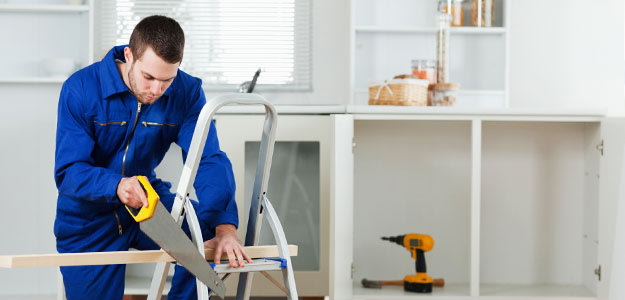
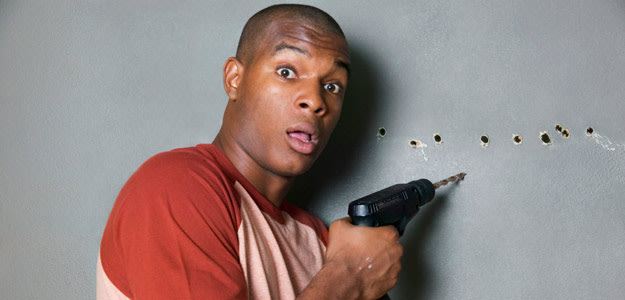
    HOME MAINTENANCE: Five tips to help you avoid DIY disasters


    Do-it-yourself (DIY) home improvement projects can be fun, empowering, and cost-effective. When everything goes right, that is. But when things go wrong, a DIY improvement can turn into a B-I-G disaster.
    That's why it may sometimes be wiser to hire a professional contractor, says Marie Leonard, owner of her own home improvement business and author of the DIY book "Marie's Home Improvement Guide."
    She encourages people to ask themselves if they have the skills, tools, and attitude to deal with their proposed project. "If you answer yes to all of them, go for it," Leonard says.
    If you answer "no" to any of the above, Leonard suggests hiring someone else to get the job done.
    Not sure where you fall on that scale? Read on for some tips that could help you avoid a DIY disaster and clues that it might be time to call in the pros.

    Tip #1 - Make Safety Your First Priority

    Quick: How do you know if a contractor is good? Answer: He's got all his fingers. Yes, home construction projects can be dangerous, which is why the best contractor might be considered the one who has the fewest disasters. So if you do want to go the DIY route, follow their lead and put safety first.
    Here are a few safety tips from Leonard to get you started:
    "Get goggles if you don't have them, and wear them as a matter of course," Leonard advises. "I keep a pair of safety goggles with my tools in a protective case because they get scratched easily."
    Wearing goggles when sanding or sawing wood can keep particles from getting into your eyes